

This is Optimizer, a weekly newsletter sent from Verge senior reviewer Victoria Song that dissects and discusses the latest gizmos and potions that swear they’re going to change your life. Opt in for Optimizer here.
For the past week, I’ve been testing the Google Pixel Watch 5. In many ways, it’s a typical, modern smartwatch. In others, it feels like one part of a wearable future that’s increasingly in flux. Everyone I’ve spoken to in wearable tech has roughly the same goal — soon, your tracker of choice will feature a helpful AI coach, “check engine” alerts that preventively flag hard-to-detect health conditions, and personalized health recommendations based on your lived experiences and needs.
That’s certainly what’s being pitched. But so far, it seems like most companies don’t know how exactly we’re going to get there.
AI coaches? Even the best ones are too chatty, fixate on one random detail you shared during setup, and require a ton of hand-holding. “Check engine” alerts can be useful and have been documented as saving lives. They can also spark health anxiety and the regulatory quagmire can be expensive to navigate. Personalized health holds great promise, but requires so much of your private data while also being subject to AI’s myriad shortcomings. Even now, most people think of wearable devices as fancy step trackers.
“Historically, wearables have been very focused on hardcore health enthusiasts,” Rishi Chandra, Google’s vice president of health and home, tells me at a roundtable of tech reporters in New York ahead of Made by Google. Usually, tech companies like to keep mum on future ideas and plans. But recently, Google seems eager to lay out its particular vision.
“There’s a huge market of people who are not thinking about their health every day. Today, wearable penetration is about 30 percent — 70 percent of the population has no notion of wearables,” Chandra adds.

In other words, wearable tech is still in its early days with a lot of untapped potential. The smartwatch is not the end-all, be-all. The fact that wearables can also capture a vast array of personal data compounds that. That’s one reason why, during last year’s Made by Google event, Chandra and Sandeep Waraich, Google’s senior director of wearables, told me that the future of AI gadgets won’t just be a single device. It’ll be an entire ecosystem of diverse accessories.
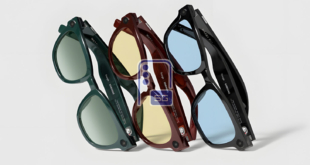
Since that chat, I’ve already seen several signs supporting Google’s multi-wearable ecosystem thesis. Multiple companies have pivoted to AI glasses (or as Google calls it, “intelligent eyewear”). But we’ve also seen other wearable form factors start gaining steam. See: the horde of screenless Whoop dupes and smart rings. In the AI sphere, some wearable makers are eschewing the health tracking aspect altogether. Some smart jewelry startups like Vocci, Taya, and Sandbar envision rings and pendants as a way to record and transcribe your thoughts using AI.
These are not proven ideas. That there are so many different approaches is a pretty big indication that the entire industry is in the process of throwing wearable spaghetti at a wall, desperately hoping that something will stick and be the next smartphone. It’s enough to make a senior wearable reviewer excited — because yay! Weird experimental products — and also mad — because no! Weird experimental products that don’t work as advertised! Still, there’s a nugget of truth in this new search for new wearable form factors and use cases.
“Wearables are a great conduit for presence. And it goes both ways. As AI reaches you in a respectful way, and as you want to interact with it, these interactions will become more frequent, but also quicker and glanceable,” says Waraich, noting that Google views seven seconds as its current benchmark for any one wrist-based interaction. The question now is figuring out the ideal surface for each specific technological task. For example: What device should you use to check your calendar? Your phone, tablet, or laptop? Or, with the addition of the Proactive Assistance feature on the Pixel Watch 5, should it be your smartwatch?

According to Chandra and Waraich, Google has had deep internal discussions about the pros and cons of various wearable form factors. Smart rings, for instance, are something that Google consistently gets asked about but won’t be pursuing in the short term.
“To be clear, we’re not closing the door on [smart rings],” Chandra says. “But our belief right now is that there’s so much headroom on a wrist-worn wearable … I think the Fitbit Air is going to have far bigger expansion opportunities given how simple and easy it is for everyone to use it.”
Okay, so Google just introduced the minimalist Fitbit Air and for now is passing on smart rings. Perhaps then the next step is an “Ultra” Pixel Watch as Samsung and Apple have done. Not so. When I ask, Waraich explains the current Pixel Watch is where Google sees its premium offerings. Chandra adds that the company is wary of spreading itself too thin.
Google certainly has a hypothesis of what wearable tech ought to be. It’s placing its bets through product launches and software updates, watching carefully to see how we — the wearable lab rats — react to specific ideas. The experiment continues.
Another wearable debate: whether it makes sense to add in microphones just because you can. For example, putting mics in something like the Fitbit Air so that it can also double as your AI memory — something akin to Amazon’s Bee device.
“At this point, it’s not a technology issue. It’s a user-sentiment, privacy issue. If you [add] a mic, it’s not just that it’s learning from you. It’s learning from the environment. So I think we’re being cautious about how to push that in the right way,” Chandra says, noting it’d have been easy for Google to stuff microphones into the Fitbit Air but the actual problem is whether doing so would add any customer value. “I don’t know yet if we have, as a tech industry, have figured out the right balancing act there.”
Having tested several AI wearables, my answer is a resounding hell no. As I’ve written on the site, this type of AI wearable tech often makes me feel like a spy. Similarly, I’ll simply point to the defunct Amazon Halo trackers, which not only tracked your emotions based on the tone of your voice but also created highly cursed, self-esteem-obliterating 3D models of your body to estimate fat percentages. Just because AI wearables can track new things doesn’t mean they should.

This problem also plagues smart glasses, as seen with the recent privacy backlash toward Meta’s “pervert glasses.” Some of that is Meta’s penchant for sticking its foot in it. Some of that, Google argues, is perhaps a matter of time and place. Perhaps, Chandra notes, people are more amenable to ambient computing — where your devices are always listening — inside the home instead of outside of it.
Even so, Google is committed to experimenting. What if, Waraich posited, the camera in smart glasses simply acted as a sensor without recording? As in, the glasses see what you see and can answer questions about your environment, but nothing gets recorded for posterity. In theory, this might mean the ability to automatically log your food without ever having to take a picture. A blind person might be able to ask an AI questions about their surroundings, and passersby wouldn’t have to worry that a photo of them exists in someone else’s camera roll.
To that, I say: Love the concept, good luck communicating how that’s different to the masses.
This is part of the existential problem facing my beat. How can any AI wearable be versatile enough to account for every individual’s privacy preferences and health journey? It’s easy enough to differentiate the hardware. Casual users? You get a Fitbit Air or Oura Ring. Tech nerds tired of their phones? Depending on your phone, I’ll point you to a Pixel Watch or Apple Watch. Oh, you’re entering an Ironman? I already know you’re wondering which flavor of Garmin or Coros suits you best.
But the software experience is a whole ’nother beast. Right now you can pick from multiple wearable form factors, but they all pretty much give you the same cluttered app and whap you over the head with data fatigue. That’s hardly a recipe for personalized health. I’ve shared over the course of several Optimizers that my current health journey relates to fixing my borked metabolism. That requires one set of advice. A cancer patient would need something wholly different. So would a hypochondriac or a young college athlete. Maybe you like a drill-sergeant-type coach. Or, if you’re like me, that type of tough love would make you want to throw up your hands. It’s already hard enough for people to learn how to be wise and judicious about their health, to accept limits and practice compassion without veering into overindulgence. How the hell can any one LLM achieve that wisdom? How can we expect one cluttered, unified software experience to meet the needs of an infinite number of individual needs?

I asked both Chandra and Waraich this. Both were optimistic that AI will one day get there, but it isn’t there currently. They acknowledged that this is a yearslong journey that will require lots and lots of work. That there are a lot of societal and cultural questions that’ll have to be debated internally and externally. After a decade, my wearable bullshit radar is strong, and since Wear OS 3, Google has genuinely welcomed a good wearable grilling whenever I (or other reporters) have offered frank feedback. I can’t say the same for every gadgetmaker on my beat.
I also can’t tell whether Google’s making all the right wearable bets with the Pixel Watch 5, Fitbit Air, or its AI coach. Maybe it’s a whiff to pass on smart rings. I still think I need to see more proof that an AI hardware ecosystem of diverse accessories is the ultimate move. I’ll give Google credit for being so candid about the multiple layers of privacy, culture, design, and tech logistics that go into the current era of wearable gadgets. That said, whenever I zoom out, I can’t help but feel like I’m caught in the proverbial hamster wheel. Testing each new smartwatch, smart ring, or smart glasses, I keep running toward this vaguely defined, AI-powered wearable future. I just don’t feel any closer to reaching it.

Khamrah by Lattafa for Men - 3.4 oz EDP Spray
4% Off
Ghost Sweetheart Eau de Toilette | Pineapple, Jasmine and Sandalwood | Perfume for Women 50 ml
50% Off
Marc Jacobs Dot Eau De Parfum for Women, 100 ml
42% Off
Ted Baker W Eau de Toilette for Her, Fig Leaf, White Peony and Violet Top Notes, Pink Orchid and Raspberry Middle Notes, 75ml
£11.77 (£15.69 / 100 ml) (as of 13/10/2026 06:34 GMT +01:00 - More infoProduct prices and availability are accurate as of the date/time indicated and are subject to change. Any price and availability information displayed on [relevant Amazon Site(s), as applicable] at the time of purchase will apply to the purchase of this product.)
Ted Baker Woman Pink Eau de Toilette Spray Floral Green Feminine Fragrance, Opening Notes are Fresh Peach, Bergamot and Tangerine with Warm Musk, Vanilla and Vetiver Base, 100ml
11% Off
Vera Wang Princess Eau de Toilette - 30 ml

Choco Musk 50ml Eau De Parfum for men and women | Chocolate Musk by Jannat Aromas
17% Off
Christina Aguilera Signature Eau de Parfum (50ml) Floral, Fruity & Exotic Scent, Luxury Fragrance for Women
9% Off
Calvin Klein - Eau De Toilette CKIN2U - Calvin Klein Women, Ladies Perfume, Women's Perfume, Calvin Klein Perfume, Calvin Klein One - 150 ml
5% Off
Jimmy Choo Flash Eau de Parfum, 60 ml (Pack of 1)
3% Off
Fruit of the Loom Men's Heavy T Shirt, White, XL UK
28% Off
ATNKE LED Lighted Beanie Cap,USB Rechargeable Running Hat Ultra Bright 4 LED Waterproof Light Winter Warm Gifts for Men and Women/Pink
17% Off
Men's 1/4 Zip Pullover UK Sale Clearance, Fleece Sweatshirt Casual Jumper Long Sleeve T-shirt Top Stand Collar Sweater Plain Pullover Sports Leisure Workwear Quarter Zip Sweater Lightweight Jumpers
£5.88 (as of 12/11/2025 00:52 GMT +01:00 - More infoProduct prices and availability are accurate as of the date/time indicated and are subject to change. Any price and availability information displayed on [relevant Amazon Site(s), as applicable] at the time of purchase will apply to the purchase of this product.) amazon.com/images/I/31CTi-29iiL._SL160_.jpg" alt="【Crevice Cleaning Brush Material】 Hard-Bristled Cevice Cleaning Brush is ultra-fine PET bristles that are much harder than a toothbrush, the Gap Brush can deep into cracks as well 【Gap Cleaning Brush】They have a long and thin handle, so these Grout C..." style="max-height:160px" />
Crevice Cleaning Brush, Bathroom Tile Groove Gap Cleaning Brush,Premium Crevice Cleaning Tool Aluminum Support with 15° Angle Magic Brush, Thin Brush for Home Kitchen
19% Off
Wireless Earbuds, Bluetooth 5.3 Headphones in Ear with HiFi Stereo Deep Bass, 4 ENC Noise Cancelling Mic Wireless Earphones 40H Playtime, Bluetooth Earbuds Dual LED Display, IP7 Waterproof, USB-C
42% Off