The number of complaints about advertisements for health supplements filed with Britain’s watchdog has more than doubled in just two years, the Money team can reveal.
Some 512 complaints were raised with the Advertising Standards Agency (ASA) last year – jumping up from 255 in 2023 – and the number of ads it acted against almost quadrupled from five to 19.
Money blog: Follow latest
Woolly, bewildering and sometimes downright misleading health claims have become more commonplace on billboards, social media and TV screens as the size of the supplement industry has exploded.
The Money team spoke with doctors, dieticians and regulators to find a path for you and your wallet through a marketplace that has become, in the words of one expert, a “wild west”.
Some £552m was spent on supplements in the UK last year, up 8.7% on 2023, according to Mintel data shared with Money.
In the same time period, the proportion of Britons who say getting their daily allowance of vitamins and minerals is very or extremely important rose from 61% to 70%.
“There’s been an overwhelming increase in supplement intake,” says Dr Jonathan Sinclair, reader in nutrition and exercise sciences at the University of Lancashire.
“You just have to look at how many companies there are that you never heard of five years ago that make supplements.”
In another four years, Mintel forecasts the supplements market will grow by 11.6% to £616m.
The most popular vitamins driving the trend are D, C, B12 and A, according to a survey by supplements firm W-Wellness.
Among minerals and other dietary supplements, the table was topped by calcium, fish oil, iron, magnesium and zinc, Mintel said.
“Almost everyone takes some kind of dietary supplement at some point. It’s a generational shift in supplement intake, no question.”
Big promises, finely worded
Registered dietitian Nichola Ludlam-Raine, a spokesperson for the British Dietetic Association, thinks “ultimately” it’s “the marketing and the ads and the influencers” driving the industry’s growth.
Commute through London and you will pass billboards and posters trying to convince you that iron could increase your energy levels or that matcha and collagen will bring on a personal “transformation”.

This Reformed ad reads: ‘Matchamorphism: A transformation brought on by matcha with collagen’
A cursory search on TikTok or Instagram shows posts with hundreds of thousands of likes promising vitamins and minerals can do everything from giving you “glass skin”, to reducing stress and treating symptoms of ADHD.
“We’ve definitely seen much more advertising for supplements in recent years and particularly in the online space,” says Nicky Baker, manager of regulatory projects at the ASA.
The agency regulates all British media, with the important exception of social media posts where no payment has exchanged hands.
“The key thing to understand is that these supplements are legally classed as foods, not medicines, and that means they absolutely cannot and should not claim to prevent, treat or cure medical conditions.
“You’ll see that they’re very, very finely worded. So often the language is around ‘contributes to normal’ or ‘helps support’.”
Baker adds: “If an ad suggests that a supplement could treat things like ADHD, IBS, anxiety, menopause symptoms, or prostate problems, then that clearly crosses the line and we would count that as a clear breach of the ad rules.”
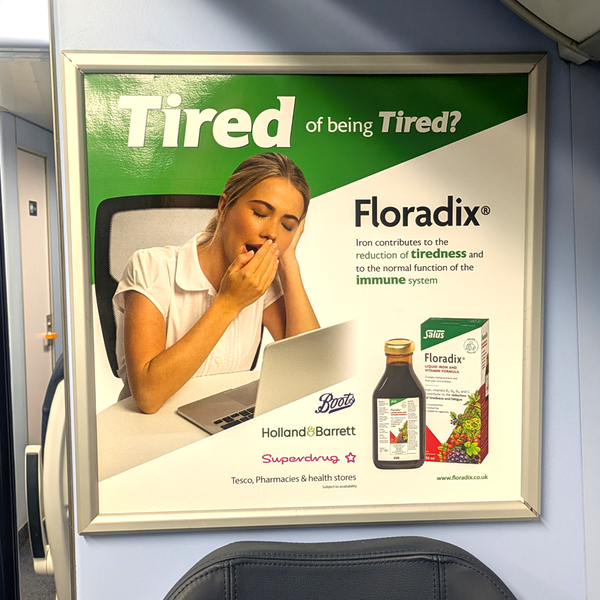
A compliant Floradix advert on a South Western Railway train reads: ‘Iron contributes to the reduction of tiredness’
‘It’s like the Wild West’
Any links to health benefits must be authorised by the ASA’s official list of approved claims related to the relevant ingredient or nutrient.
“Most advertisers do follow the rules, but we still come across an awful lot of ads that make really quite big promises about what these products can do,” says Baker.
The ASA banned a Nothing Fishy ad in 2024 that claimed Omega-3 could treat COVID effects.
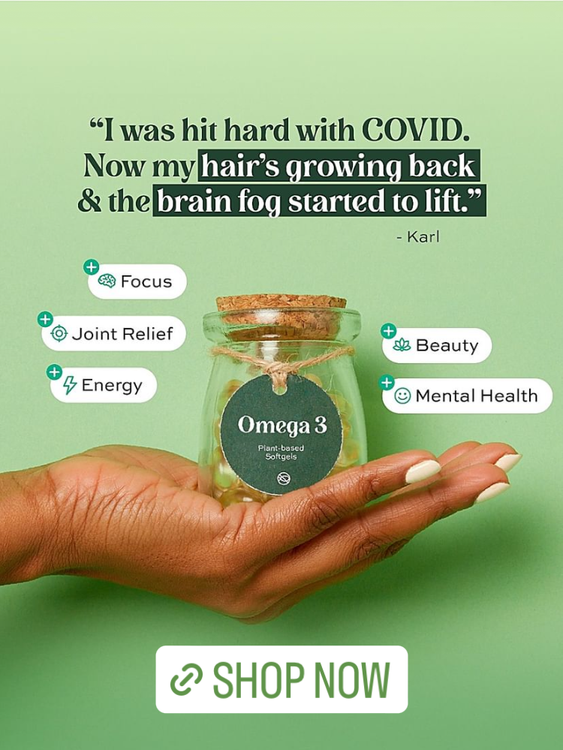
The ASA banned a Nothing Fishy ad in 2024 that claimed Omega-3 could treat COVID effects. Pic: Instagram
In 2025, it told the brand Dr Vegan to stop running an ad that implied its multivitamin could treat menopause symptoms.
Nothing Fishy did not respond to a request for comment, while Dr Vegan’s chief executive, Gordon Lott, said: “We removed it the same month and had lengthy, good discussion with the ASA about the ad following their change in advertising guidelines around menopause supplements.”
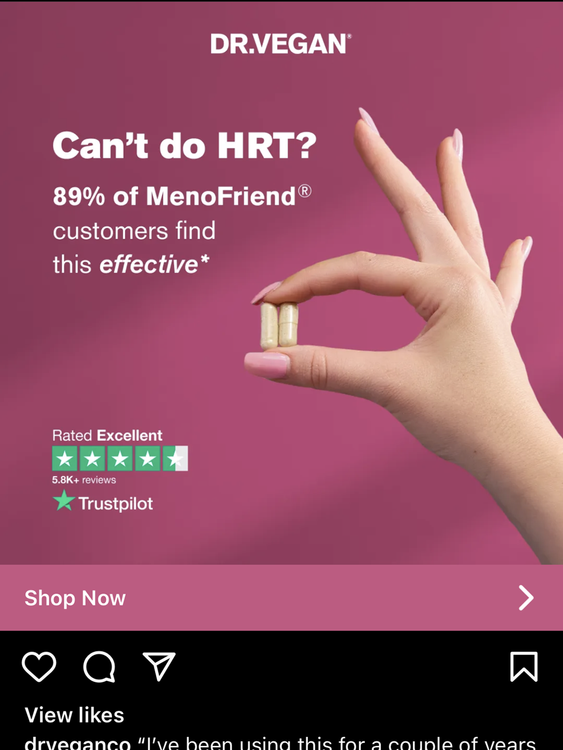
In 2025, the ASA told the brand Dr Vegan to stop running an ad that implied its multivitamin could treat menopause symptoms. Pic: Instagram
While the ASA may shield health-conscious customers from outlandish claims, some experts say many supplements featured in authorised ads are a waste of money for most.
“It’s like the Wild West when it comes to vitamin supplementation; they’re not as tightly regulated as prescription supplements,” says Ludlam-Raine.
Does the ‘most popular’ supplement work?
“Probably a multivitamin is the most commonly purchased supplement and has the least evidence of benefit to it,” says Dr Jonathan Sinclair.
Multivitamins, also known as “A-Zs”, tend to include vitamins A to D and essential minerals like zinc, folic acid and iodine.
“The major ingredient in multivitamins is vitamin C. I’m not certain how common vitamin C deficiency is,” says Sinclair.
“I think the evidence is weak that taking a multivitamin has any benefit in anyone who doesn’t have a vitamin deficiency.”
Don’t write them off quite so fast, says dietician Ludlam-Raine.
“Sometimes you want to take a supplement because it may support an optimum lifestyle. So you’re not deficient, but it may confer benefit,” she says.
“I’m quite a fan of taking an A to Z, because… it usually has got small amounts of those micronutrients which add as a top up.”
Top-up and optimisation
This “top-up” trend refers to people taking a supplement even though they already have a sufficient amount of the nutrients it contains.
Take this blood test result, which shows B12 levels are within a normal range, indicated by the turquoise bar.
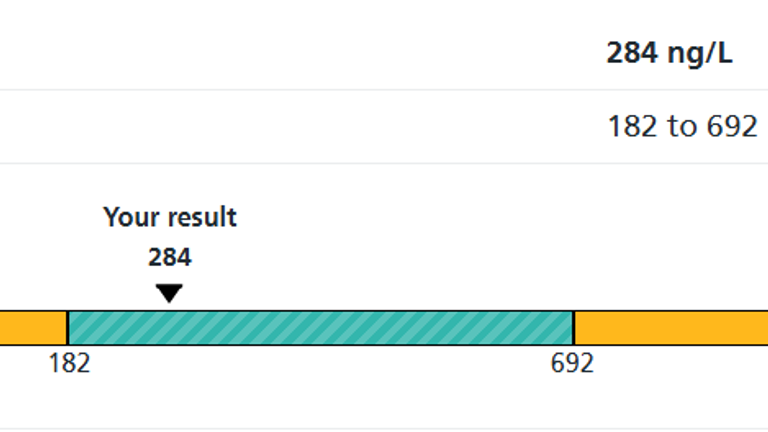
An example blood test result
“Optimisers” would believe increasing the B12 level nearer to the bar’s top end, 692, would have a noticeable positive effect on their energy and mood.
“What I probably would recommend, if people wanted to get serious about what supplements they need, is to do a personalised blood test because that will tell you all you need or offer reassurance,” says Ludlam-Raine.
She stressed the results and any potential supplementation should be discussed with your doctor.
But despite the number of (unverifiable) testimonials posted on social media, the scientific jury is out on optimisation – in fact, according to Dr Sinclair, they have never been summoned in the first place.
“I’m not certain if that’s even been researched,” he says.
“I’d be surprised if going to the higher end of normal would have any perceivable effect in health for anybody.”
He adds: “What people should do is go and get a blood test and see if they’re deficient in something.”
Testing patients, testing patience
Blood tests can do more harm than good, according to Dr Adrian Hayter, a GP of 30 years at Runnymede Medical Practice and the medical director for clinical policy at the Royal College of GPs.
He’s seen a definite increase in the number of patients asking him about supplements and the results of blanket blood tests carried out privately.
But there’s a good reason GPs assess patients’ symptoms and order bespoke testing for specific nutrient levels relevant to those symptoms, he explains.

Adrian Hayter. Pic: Grainge Photography
“Blood tests aren’t black and white,” Dr Hayter says.
“Doing blanket blood testing sometimes gives [patients] results which [they’re] not expecting. That can lead to over-worry and concern.”
Patients may then pursue unnecessary investigations that aren’t in their interest or in the interest of the NHS’s finite resources, he says.
“It leads to some worry that we have as a college around overdiagnosis.”
The supplement ‘everyone’ should be taking
That’s not to say there isn’t widespread clinical need for several supplements.
“Everyone in the UK needs to be taking vitamin D,” says Ludlam-Raine.
The Department of Health and Social Care recommends 10 micrograms of vitamin D during autumn and winter, and that people with darker skin should consider a year-round supplement, as some research suggests melanin pigment slows down vitamin D absorption from sunlight.
The 1.4 million Britons thought to be taking weight-loss jabs in the UK should also be careful to ensure they’re still consuming enough essential vitamins and minerals, adds Ludlam-Raine.
“People who take GLP1s should take a decent A to Z. And when I say decent, from a reputable brand that does third-party testing.”
She adds vegans and those with plant-based diets may want to consider B12, which supports the nervous system and energy levels – that’s around two million people, according to the Vegan Society.
They may also be missing out on Omega-3, a fatty acid that keeps your heart healthy, with the NHS recommending two portions of fish a week as the best food source.
Pregnant women, of which there are around 600,000 in England and Wales each year, may benefit from taking 400 micrograms of folic acid three months before conception and for the first trimester to reduce the risk of birth defects, the NHS says.
The dosage required may increase if those women have a BMI over 30, are diabetic, or take anti-epileptic medication, adds Ludlam-Raine.
The ‘scatter gun’ problem
If you do decide to take a supplement, it’s likely to fall short of the quick fix promised by adverts once it’s inside the human body.
Take Boots A-Z Tablets or Holland & Barrett ABC-Z Multivitamins and Minerals, for example. Both contain the recommended daily quantity of Vitamins A, C and D.
That sounds sufficient, but research on how much would actually be absorbed by the body is thin on the ground, and studies that have been carried out suggest there are lots of factors to consider when choosing a supplement.
- Around 70-90% of the vitamin A in tablets is absorbed, according to a Journal of Nutrition review published in 2016;
- Vitamin D is absorbed more efficiently from gummies than tablets, and the preservative coating on either product has an impact, a study in the Nutrients journal found in 2019;
- And there’s evidence liquid vitamin C products could enhance absorption, a 2022 study in the Journal of Food Science said.
“The nutrients from food are always better absorbed,” says Ludlam-Raine.
“I am pro-supplementation, but it’s got to be a food-first, supplement-to-enhance approach.”
Dr Hayter questioned whether taking these vitamins in supplement form was doing more “harm to your pocket” than good.
“Wouldn’t it be better to think about what food you’re eating, rather than pay a lot of money for supplements, where you’re just hitting it with a bit of a scatter gun approach?”
The risks of supplement stacking
The under-researched interaction between nutrients and your digestive system adds another layer of complexity.
Taking one kind of vitamin alongside another can modify or nullify their effects, says Ludlam-Raine.
“If people are supplement stacking in the morning, spending all the money on this and then taking all supplements at once, that’s doing a disservice.”
Iron is a prime example, she explains. Calcium and tannins inhibit its absorption – so don’t take it with a cup of tea.
“Studies of combination therapy in terms of supplementation are actually quite rare,” adds Dr Sinclair.
“That’s probably not a good thing, to be honest.”
On the flipside, very high levels of iron can induce a copper deficiency because these metals compete for absorption, according to Ludlam-Raine.
And not all iron is the same: Ferrous sulphate is more likely to cause nausea or constipation than ferrous fumarate, she says.
Overdose warning
“This idea that more is better is certainly not true,” says Dr Sinclair.
“If you take too much, it can be equally bad, probably worse, than not taking enough.
“‘Natural-equals-safe’ is potentially problematic as well.”
His study into the effects of peppermint oil on high blood pressure found just two drops a day reduced hypertension by eight points on average.
Overdosing would be easy, he says, and low blood pressure is just as dangerous as high.
The seriousness of supplement overdosing cannot be overstated.
In May 2023, a vitamin D overdose caused 89-year-old David Mitchener to suffer toxicity, hypercalcaemia, and cardiac and kidney failure, killing him.
Assistant coroner Jonathan Stevens raised concerns that vitamin supplements could have “potentially very serious risks and side effects when taken in excess” and that this was not written clearly enough on packaging.
Consumers looking for accessible and accurate guidelines should visit the NHS website, says Sinclair.
This article is not intended as medical advice. If you are considering taking a supplement, speak to your doctor first.
Money reached out to both Reformed and Floradix because we used images of their ads in this piece to illustrate the prominence of supplement advertising.
We didn’t receive a response from Reformed in time for publication but Floradix said: “Our products are classified as food supplements in the UK and are marketed in full compliance with EU and UK regulations. All claims used in our advertising, are based on authorised health claims, supported by the European Food Safety Authority (EFSA) – including the claim that iron contributes to the reduction of tiredness.
“We take our responsibility to consumers seriously and aim to communicate clearly and transparently, without implying that our products prevent, treat or cure medical conditions.
“We support high standards across the sector and welcome guidance that helps consumers navigate health-related claims with confidence.”
Source link

Khamrah by Lattafa for Men - 3.4 oz EDP Spray
4% Off
Ghost Sweetheart Eau de Toilette | Pineapple, Jasmine and Sandalwood | Perfume for Women 50 ml
50% Off
Marc Jacobs Dot Eau De Parfum for Women, 100 ml
42% Off
Ted Baker W Eau de Toilette for Her, Fig Leaf, White Peony and Violet Top Notes, Pink Orchid and Raspberry Middle Notes, 75ml
£11.77 (£15.69 / 100 ml) (as of 03/06/2026 03:26 GMT +01:00 - More infoProduct prices and availability are accurate as of the date/time indicated and are subject to change. Any price and availability information displayed on [relevant Amazon Site(s), as applicable] at the time of purchase will apply to the purchase of this product.)
Ted Baker Woman Pink Eau de Toilette Spray Floral Green Feminine Fragrance, Opening Notes are Fresh Peach, Bergamot and Tangerine with Warm Musk, Vanilla and Vetiver Base, 100ml
11% Off
Vera Wang Princess Eau de Toilette - 30 ml

Choco Musk 50ml Eau De Parfum for men and women | Chocolate Musk by Jannat Aromas
17% Off
Christina Aguilera Signature Eau de Parfum (50ml) Floral, Fruity & Exotic Scent, Luxury Fragrance for Women
9% Off
Calvin Klein - Eau De Toilette CKIN2U - Calvin Klein Women, Ladies Perfume, Women's Perfume, Calvin Klein Perfume, Calvin Klein One - 150 ml
5% Off
Jimmy Choo Flash Eau de Parfum, 60 ml (Pack of 1)
3% Off
Fruit of the Loom Men's Heavy T Shirt, White, XL UK
28% Off
ATNKE LED Lighted Beanie Cap,USB Rechargeable Running Hat Ultra Bright 4 LED Waterproof Light Winter Warm Gifts for Men and Women/Pink
17% Off
Men's 1/4 Zip Pullover UK Sale Clearance, Fleece Sweatshirt Casual Jumper Long Sleeve T-shirt Top Stand Collar Sweater Plain Pullover Sports Leisure Workwear Quarter Zip Sweater Lightweight Jumpers
£5.88 (as of 12/11/2025 00:52 GMT +01:00 - More infoProduct prices and availability are accurate as of the date/time indicated and are subject to change. Any price and availability information displayed on [relevant Amazon Site(s), as applicable] at the time of purchase will apply to the purchase of this product.)
Crevice Cleaning Brush, Bathroom Tile Groove Gap Cleaning Brush,Premium Crevice Cleaning Tool Aluminum Support with 15° Angle Magic Brush, Thin Brush for Home Kitchen
19% Off
Wireless Earbuds, Bluetooth 5.3 Headphones in Ear with HiFi Stereo Deep Bass, 4 ENC Noise Cancelling Mic Wireless Earphones 40H Playtime, Bluetooth Earbuds Dual LED Display, IP7 Waterproof, USB-C
42% Off