
Researchers at the Terasaki Institute for Biomedical Innovation (TIBI) have unveiled a pioneering study shedding light on the intricate mechanisms underlying Alzheimer’s disease (AD). The study, titled “Effects of amyloid-β-mimicking peptide hydrogel matrix on neuronal progenitor cell phenotype,” represents a significant leap forward in understanding the interplay between amyloid-like structures and neuronal cells.
Led by Natashya Falcone and co-first authors Tess Grett Mathes and Mahsa Monirizad, the research team delved into the realm of self-assembling peptide-based hydrogels, renowned for their versatility in mimicking extracellular matrices (ECMs) of diverse microenvironments.
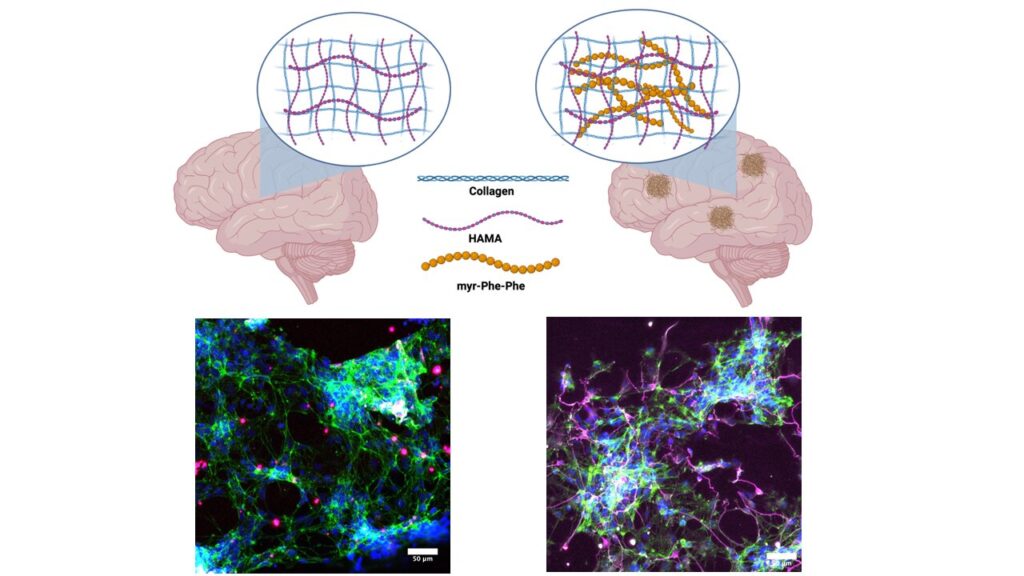
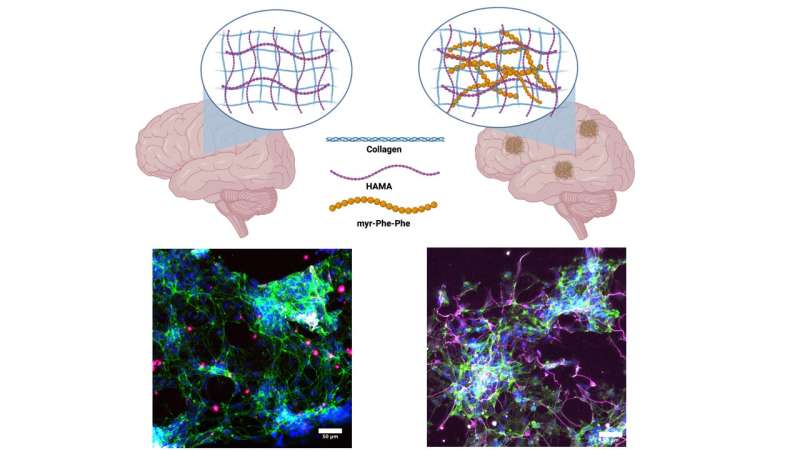
AD presents an intricate challenge in neurodegenerative research. Traditional two-dimensional (2D) models have limitations in capturing the complexity of the disease. Through their innovative approach, the team developed a multi-component hydrogel scaffold, named Col-HAMA-FF, designed to mimic the amyloid-beta (β) containing microenvironment associated with AD.
The study’s findings, published in Acta Biomaterialia, illuminate the formation of β-sheet structures within the hydrogel matrix, mimicking the nanostructures of amyloid-β proteins.
By culturing healthy neuronal progenitor cells (NPCs) within this amyloid-mimicking environment and comparing results to those in a natural-mimicking matrix, the researchers observed elevated levels of neuroinflammation and apoptosis markers. This suggests a significant impact of amyloid-like structures on NPC phenotypes and behaviors.
Dr. Ali Khademhosseini, the study’s corresponding author, said, “This foundational work provides a promising scaffold for future investigations into AD mechanisms and drug testing. By bridging the gap between 3D hydrogel models and the complex reality of AD pathological nanostructures, we aim to understand this interaction on healthy neuronal cells so that we can accelerate the development of effective therapeutic strategies.”
The study represents a crucial step towards unraveling the mysteries of the b-amyloid-like environment which can be found in AD and marks a milestone in the quest for innovative solutions to combat neurodegenerative disorders.
More information:
Tess Grett Mathes et al, Effects of amyloid-β-mimicking peptide hydrogel matrix on neuronal progenitor cell phenotype, Acta Biomaterialia (2024). DOI: 10.1016/j.actbio.2024.05.020
Provided by
Terasaki Institute for Biomedical Innovation
Citation:
Study reveals insights into Alzheimer’s disease mechanisms through novel hydrogel matrix (2024, July 15)
retrieved 15 July 2024
from https://medicalxpress.com/news/2024-07-reveals-insights-alzheimer-disease-mechanisms.html
This document is subject to copyright. Apart from any fair dealing for the purpose of private study or research, no
part may be reproduced without the written permission. The content is provided for information purposes only.

Khamrah by Lattafa for Men - 3.4 oz EDP Spray
4% Off
Ghost Sweetheart Eau de Toilette | Pineapple, Jasmine and Sandalwood | Perfume for Women 50 ml
50% Off
Marc Jacobs Dot Eau De Parfum for Women, 100 ml
42% Off
Ted Baker W Eau de Toilette for Her, Fig Leaf, White Peony and Violet Top Notes, Pink Orchid and Raspberry Middle Notes, 75ml
£11.77 (£15.69 / 100 ml) (as of 16/10/2026 06:35 GMT +01:00 - More infoProduct prices and availability are accurate as of the date/time indicated and are subject to change. Any price and availability information displayed on [relevant Amazon Site(s), as applicable] at the time of purchase will apply to the purchase of this product.)
Ted Baker Woman Pink Eau de Toilette Spray Floral Green Feminine Fragrance, Opening Notes are Fresh Peach, Bergamot and Tangerine with Warm Musk, Vanilla and Vetiver Base, 100ml
11% Off
Vera Wang Princess Eau de Toilette - 30 ml

Choco Musk 50ml Eau De Parfum for men and women | Chocolate Musk by Jannat Aromas
17% Off
Christina Aguilera Signature Eau de Parfum (50ml) Floral, Fruity & Exotic Scent, Luxury Fragrance for Women
9% Off
Calvin Klein - Eau De Toilette CKIN2U - Calvin Klein Women, Ladies Perfume, Women's Perfume, Calvin Klein Perfume, Calvin Klein One - 150 ml
5% Off
Jimmy Choo Flash Eau de Parfum, 60 ml (Pack of 1)
3% Off
Fruit of the Loom Men's Heavy T Shirt, White, XL UK
28% Off
ATNKE LED Lighted Beanie Cap,USB Rechargeable Running Hat Ultra Bright 4 LED Waterproof Light Winter Warm Gifts for Men and Women/Pink
17% Off
Men's 1/4 Zip Pullover UK Sale Clearance, Fleece Sweatshirt Casual Jumper Long Sleeve T-shirt Top Stand Collar Sweater Plain Pullover Sports Leisure Workwear Quarter Zip Sweater Lightweight Jumpers
£5.88 (as of 12/11/2025 00:52 GMT +01:00 - More infoProduct prices and availability are accurate as of the date/time indicated and are subject to change. Any price and availability information displayed on [relevant Amazon Site(s), as applicable] at the time of purchase will apply to the purchase of this product.)
Crevice Cleaning Brush, Bathroom Tile Groove Gap Cleaning Brush,Premium Crevice Cleaning Tool Aluminum Support with 15° Angle Magic Brush, Thin Brush for Home Kitchen
19% Off
Wireless Earbuds, Bluetooth 5.3 Headphones in Ear with HiFi Stereo Deep Bass, 4 ENC Noise Cancelling Mic Wireless Earphones 40H Playtime, Bluetooth Earbuds Dual LED Display, IP7 Waterproof, USB-C
42% Off