

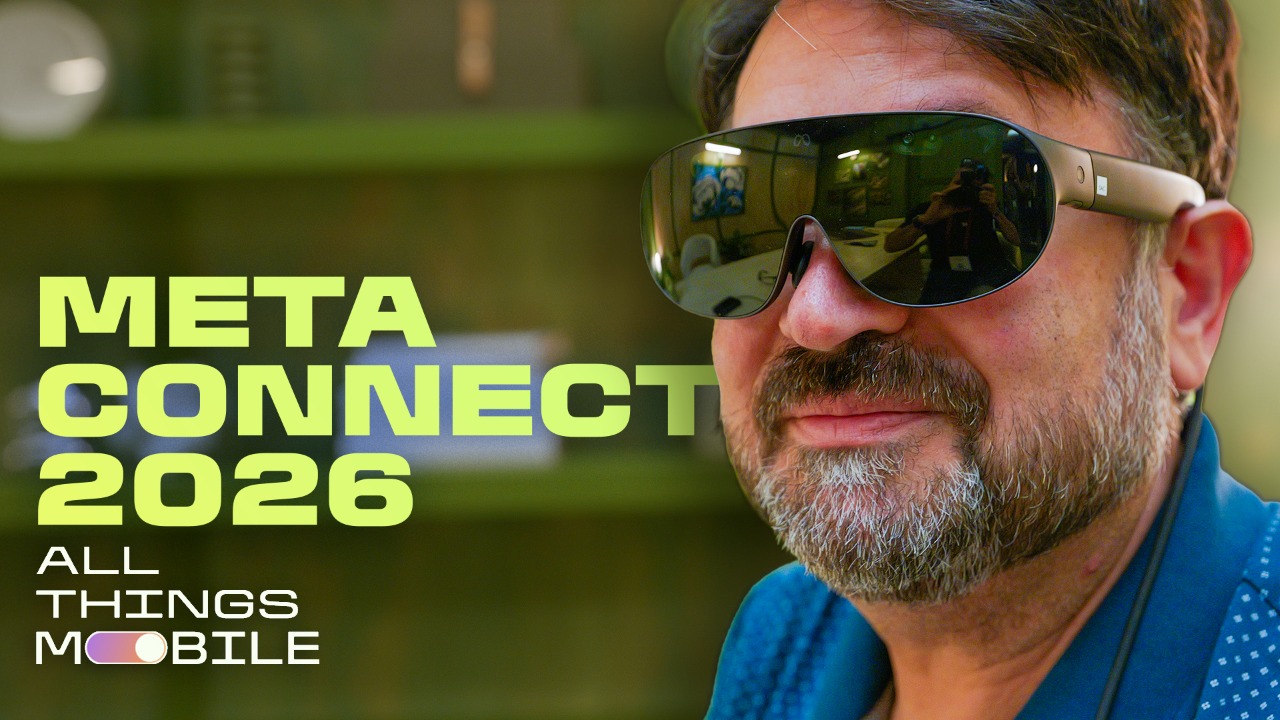
I talked to “Henry,” a Muse agent in my AI glasses, as I stared at a box of Kind bars. Henry was trained as if it were the assistant to a 38-year-old bodybuilding marketing executive. Henry told me whether I should eat Kind bars and also helped me plan my workout schedule.
This was me getting a preview of Muse, Meta’s AI agent that’s already on phones and Macs, but this time it was on Meta’s AI glasses. If you were concerned about AI on what many people are calling “pervert glasses” before, they’re about to get supercharged very soon.
But I also tried on a camera-free pair of Meta glasses that gave me audio assistance, meaning privacy-invading, pervy images aren’t an issue.
This was at Meta’s Connect developer conference this week, where the focus was on AI, VR and glasses and where Meta fired out a whole bunch of updates and many new designs. It was also getting a jump on the launch of Google and Samsung’s own AI glasses, which are just around the corner.
Some of Meta’s new glasses designs come with better battery life, some with added hearing assistance, and some, made by Thai rap star and actor Lisa, come with collectible charms. But amid all of this, there was very little about fundamental changes that would address the privacy concerns and fears surrounding a wearable category that so many companies are diving into.
Every time I wear or talk about smart glasses, people increasingly give me side eye. This has been a very bad summer for global opinions on AI-enabled and camera-equipped glasses, a category in which Meta is a leader. But with Google, Samsung and a ton of others – including Apple – expected to enter the fray next year, it’s going to get crowded and weird fast. Meta’s answer to all of this: more glasses, more features, including literally getting in our faces with its new agentic AI tool, Muse.
There is a new FDA-cleared hearing enhancement mode in Meta’s glasses that I tried, which costs $149 to activate. There are new Meta Ray-Ban Gen 3 glasses with slightly better battery life, and camera-free Meta Ray-Ban Audio glasses with even better battery life (up to 12 hours).
Muse could be the biggest news of all, especially as Meta goes head-to-head against Google and Samsung’s Gemini-infused wearables. But I was also surprised that no new fitness features were announced after Meta’s push into the space with Oakley-branded visors last year, and Meta’s prescription-challenged Ray-Ban Displays, while becoming available to order in more countries, have barely changed at all.
So, let’s break it all down. I’m still trying to digest it myself.

Meta’s putting its Muse AI agent on its glasses
Muse is an agentic AI system that’s been well-received by some early reviewers and in-app downloads since it emerged just a couple of weeks ago. Its appearance on Meta’s glasses now seems inevitable, especially since the faster-responding Muse Spark AI model has given them a performance boost.
The only chance I got to try Muse on glasses was a very quick and pretty canned demo, and the arrival timing for Muse on glasses is still unclear. Also unclear is exactly how capable Muse will truly be or how safe. The agentic AI can already tap into personal accounts of all sorts if you let it, and it can buy things for you or manage your data, but it doesn’t promise encryption or privacy. That’s why I’ve avoided connecting it to anything in my own life, and not all accounts will allow hook-ins: Amazon just blocked Muse from enabling shopping on its sites.
My Muse glasses demo showed very little of meaningful, deeper agent hooks to data I’d recognize, since it wasn’t my own being accessed. I did notice that Muse took a while to complete some actions when rescheduling workouts for the marketing manager Muse agent Henry was set up to serve. Muse worked over audio, with no sense of progress status for completing a task.
Meta is introducing some privacy updates to how its glasses handle data, promising a new Private Processing system in the future that will run on confidential virtual machines in the cloud, a system that Meta’s using now in WhatsApp and Meta AI but plans to extend to all tools for Meta glasses. It’s not here yet, though, and it doesn’t make me feel any more convinced that any of the systems can be trusted, though, and I certainly feel lots of anxiety about handing over any agentic control of my personal data to any system.
But the space is moving fast. Google Gemini can already handle a lot of agentic actions, and Samsung and Google’s glasses will be able to do them. Apple’s new Siri, meanwhile, also has increasingly agent-like actions in its connected AI and apps. And OpenAI could be introducing more wearables with direct support for its services, too. Everyone in tech seems to want something like Iron Man’s Jarvis for your face, and few actually have it. Meta’s casting its hat in the ring.

There are camera-free Meta Ray-Ban glasses now
One way to avoid pervert glasses concerns? Not having cameras on glasses at all. I tried out the new line of camera-free Meta Ray-Ban Audio glasses, which promise 12-hour battery life (a notable bump from 8 to 9 hours on Meta’s recent glasses). There are just two designs for now: Clubmaster, which is a new look, and the more familiar square Burbank.
There’s not a lot new with Ray-Ban Audio glasses. They’re Meta glasses, minus the camera. A programmable action button on top of one arm still activates Meta AI, and one arm still has a touch bar for volume control. The audio sounded as good to me as Meta’s other models, but the battery boost could be a welcome addition. So could the social comfort of not having a camera on glasses.
But they’re not cheap. At $379 to $479, they’re actually more expensive than Meta’s recently launched line of self-branded smart glasses. Oddly, Meta didn’t make a non-Ray-Ban “Meta” branded (and likely less expensive) pair of audio glasses. Not yet, at least.
Nothing’s much changed on the camera front, either. A new landscape mode for photos sounded promising at first, but it works via digital cropping, and I haven’t tried it yet.

FDA-cleared hearing enhancement costs extra
In a move that mirrors a growing trend in hearing tech, Meta’s adding an FDA-cleared hearing assistance mode to its glasses, called Hearing Enhancement, which runs a hearing test to tune the experience for people with mild to moderate hearing loss. Apple’s AirPods Pro earbuds launched a similar feature two years ago.
Unlike Apple’s feature, though, you have to pay to enable Meta’s extra. It’s either $149, with a 30-day free trial to test how it works first, or included with a Meta One subscription that’ll run on glasses soon.
I hate subscriptions, especially for health features. A one-time cost feels more bearable. But it also pushes the total price up for a pair of Meta glasses as potential hearing aids.
To simulate how they work, Meta put foam earbuds in my ears while activating the mode during a conversation I had with Ravish Mehra, Meta’s director of research science. That’s far from a true simulation of actual hearing loss, but I got some sense of how the mode enhanced treble and clarity in sounds and conversations, like a more refined version of Meta’s existing Conversation Focus mode. Hearing Enhancement works in a targeted beam-forming mode that attends to a person, or more ambiently.
Mehra told me that the mode, when running, works for about 4 hours on Meta’s recent glasses models, but longer on the Ray-Ban Audio glasses. The extra fee could have been avoided (as Apple did), but Mehra cited R&D costs as one reason for the upcharge. I’m curious how AirPods and Meta glasses would compare for someone who actually needs the hearing assistance, something I couldn’t vet. With glasses, at least there wouldn’t be a need for any buds in your ears.

Lisa is making a pair of Meta Glasses too
I actually didn’t know who Lisa was, but she’s a famous rapper, actor and social media star who’s making her own custom-branded pair of Meta glasses, in the spirit of the Kylie Jenner glasses Meta launched in June. (My colleague Faith Chihil, one of CNET’s social media producers, flipped out at the Lisa news.)
The Lisa glasses come with a collectible charm, one of 14 types. They’re also decorated with stars on the arms. Lisa fans and collectors might be excited by this. I’m not.
But Meta’s also releasing a bunch more frame designs and colors, including some new Meta Glasses looks. Meta says there are over 100 designs and colors across all types now, and it felt that way when I browsed a bunch of new frames at Meta’s campus.

Gen 3 Meta Ray-Bans have new designs, slightly better battery
There are also new third-gen Meta Ray-Bans, but they’re not nearly as notable as the second-gen ones I wore last year. The battery boost on third-gen models is just an hour more than with Gen 2 — 9 hours total at best. That matches the claims for Google and Samsung’s imminent smart glasses, which is likely no coincidence.
There are a few frame designs, mostly variations on familiar looks. One pops, though: an aviator design that I tried out without my prescription added. They’re bold, kinda interesting, and…I felt a bit sinister wearing them.
The third-gen glasses are also more expensive, ranging from $449 to $529 without a prescription. Meta’s self-branded glasses, released in June, start at $299 and have nearly identical features, except for that tiny battery bump.

Meta Ray-Ban Displays haven’t evolved much at all (except for Holograms)
Last year, Meta made a big deal with its display-enabled Ray-Bans and innovative neural band interface, a setup that seemed to push toward a future where full AR glasses lurk.
And yet, a year later, Meta has no significant improvements for Displays. They’ll be available in more countries this year, and may be easier to buy. But they still don’t work for a larger range of prescriptions, limited to just a -4 maximum. My eyes still won’t work with them.
Meta has been opening up more app development for its glasses and rolling out more features for Displays over the last year. Still, I expected Meta might find a way to blend its neural band with a smartwatch, perhaps one of Garmin’s models, since Meta and Garmin already have a partnership. But that didn’t happen either. The prices of the glasses are also still the same.
The most interesting thing about the Displays is the addition of Holograms, a hyper-realistic video chat avatar system that I tested out at Meta’s campus and was wowed by. It scans your face with a phone app and then projects your presence to the phone screen (or glasses, or VR headset) of whoever you’re calling, to surprisingly realistic effect. It’ll only be available to a limited test group at first in beta and will work on WhatsApp, but deliver the sort of simulated video chat on glasses that has been promised by Meta for years.

Sorry, no watch, new fitness modes or major privacy improvements yet
Meanwhile, I was also surprised that Meta had no fitness updates at Connect, despite introducing Oakley-branded Vanguard visors last year and Garmin-connected workout features.
The Muse agent can connect to fitness and health functions, but a lack of new dedicated fitness features leaves a gap that Google might fill quickly with possibilities for Fitbit integration on its upcoming glasses, and an interconnection between WearOS watches and its glasses to act as a mini control dashboard and even preview photos.
Meta CTO Andrew Bosworth hinted to me last year that the neural band could evolve into a watch, but those plans haven’t yet materialized. Unlike Google and Apple’s wearables, Meta’s glasses are limited in how they connect to phones, using an app and, in the future, agentic hooks via Muse’s AI.
And also, biggest of all, Meta’s privacy issues feel barely addressed. It’s still as easy to take a photo in public as before, and nothing’s changed with how the glasses present themselves to others: They’re easy to confuse with regular glasses (to Meta’s credit, design-wise) and still just show a small LED light when recording.
And while Meta has promises of a private compute layer in the cloud for its future features, can they be trusted, and will third-party observers get access in any way? Will any of these new agentic features misfire unpredictably, as we’ve already seen with AI agents? The answer there feels like a “when” rather than an “if.”
But Meta won’t be alone in the pursuit of agentic AI wearables. It’s just the biggest and first in the door. There’s a lot of potential lurking in wearable AI, and lots of concerns. And Meta’s continuing to roll forward through all of it.

Source link

Khamrah by Lattafa for Men - 3.4 oz EDP Spray
4% Off
Ghost Sweetheart Eau de Toilette | Pineapple, Jasmine and Sandalwood | Perfume for Women 50 ml
50% Off
Marc Jacobs Dot Eau De Parfum for Women, 100 ml
42% Off
Ted Baker W Eau de Toilette for Her, Fig Leaf, White Peony and Violet Top Notes, Pink Orchid and Raspberry Middle Notes, 75ml
£11.77 (£15.69 / 100 ml) (as of 24/09/2026 05:06 GMT +01:00 - More infoProduct prices and availability are accurate as of the date/time indicated and are subject to change. Any price and availability information displayed on [relevant Amazon Site(s), as applicable] at the time of purchase will apply to the purchase of this product.)
Ted Baker Woman Pink Eau de Toilette Spray Floral Green Feminine Fragrance, Opening Notes are Fresh Peach, Bergamot and Tangerine with Warm Musk, Vanilla and Vetiver Base, 100ml
11% Off
Vera Wang Princess Eau de Toilette - 30 ml

Choco Musk 50ml Eau De Parfum for men and women | Chocolate Musk by Jannat Aromas
17% Off
Christina Aguilera Signature Eau de Parfum (50ml) Floral, Fruity & Exotic Scent, Luxury Fragrance for Women
9% Off
Calvin Klein - Eau De Toilette CKIN2U - Calvin Klein Women, Ladies Perfume, Women's Perfume, Calvin Klein Perfume, Calvin Klein One - 150 ml
5% Off
Jimmy Choo Flash Eau de Parfum, 60 ml (Pack of 1)
3% Off
Fruit of the Loom Men's Heavy T Shirt, White, XL UK
28% Off
ATNKE LED Lighted Beanie Cap,USB Rechargeable Running Hat Ultra Bright 4 LED Waterproof Light Winter Warm Gifts for Men and Women/Pink
17% Off
Men's 1/4 Zip Pullover UK Sale Clearance, Fleece Sweatshirt Casual Jumper Long Sleeve T-shirt Top Stand Collar Sweater Plain Pullover Sports Leisure Workwear Quarter Zip Sweater Lightweight Jumpers
£5.88 (as of 12/11/2025 00:52 GMT +01:00 - More infoProduct prices and availability are accurate as of the date/time indicated and are subject to change. Any price and availability information displayed on [relevant Amazon Site(s), as applicable] at the time of purchase will apply to the purchase of this product.)
Crevice Cleaning Brush, Bathroom Tile Groove Gap Cleaning Brush,Premium Crevice Cleaning Tool Aluminum Support with 15° Angle Magic Brush, Thin Brush for Home Kitchen
19% Off
Wireless Earbuds, Bluetooth 5.3 Headphones in Ear with HiFi Stereo Deep Bass, 4 ENC Noise Cancelling Mic Wireless Earphones 40H Playtime, Bluetooth Earbuds Dual LED Display, IP7 Waterproof, USB-C
42% Off