 [
[

Each year, approximately 2,000 people aged 18–39 are diagnosed with cancer in Sweden. Most survive their illness, but for many, life continues with long-term consequences. In a new doctoral dissertation, Charlotta Bergström has investigated how sexual problems develop in young adults following cancer and cancer treatment.
The thesis is based on data from the research project Fertility and Sexuality Following Cancer (Fex-Can) and includes just over 1,000 young adults with conditions such as breast cancer, gynecological cancer, testicular cancer, lymphoma, and brain tumors. Participants were followed up with surveys one, three, and five years after diagnosis, and the results were compared with a group of peers without a history of cancer.
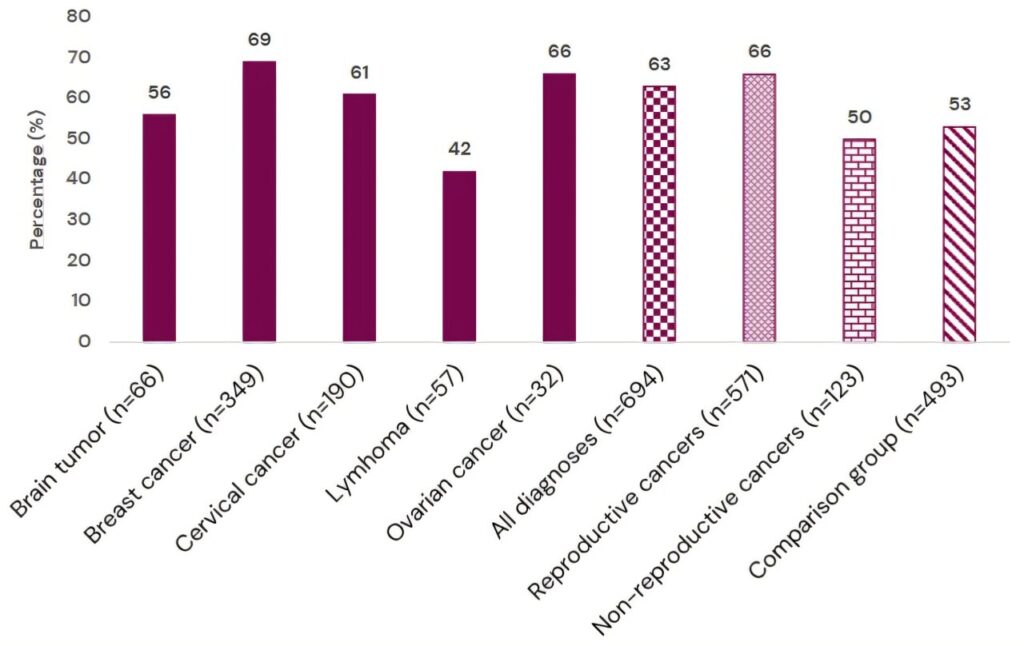
The results show that sexual problems were significantly more common among women with breast cancer and gynecological cancer than among women in the comparison group one year after diagnosis. Common issues included reduced sex drive, low satisfaction with their sex life, orgasm problems, and vaginal discomfort. Women who had received more intensive treatment reported more problems.
“Sexual problems were common, but they varied depending on diagnosis and treatment,” says Bergström, a nurse and doctoral student at the Department of Women’s and Children’s Health, Karolinska Institutet.
For women and men with brain tumors, however, no clear differences were observed compared to the control group. Most people with brain tumors were satisfied with their sex lives, although a smaller proportion reported low libido.
Regardless of diagnosis, sexual problems were linked to emotional distress and a negative body image. At the same time, about half of the women and one-third of the men stated that they did not recall health care providers informing them that cancer and treatment can affect their sex lives.
The dissertation also evaluated the web-based self-help program Fex-Can Sex 1.0. The program did not reduce sexual difficulties, but participants found the content relevant and easy to understand, which provides important lessons for future support initiatives.
“Our results show that sexual health needs to become a more natural part of post-cancer follow-up, with information tailored to both the diagnosis and the individual,” says Bergström.
More information
Charlotta Bergström, Sexual health-support and information to young adults living with and beyond cancer (2026). DOI: 10.69622/31388233


Citation:
Sexual problems common after cancer in young adults (2026, May 19)
retrieved 19 May 2026
from https://medicalxpress.com/news/2026-05-sexual-problems-common-cancer-young.html
This document is subject to copyright. Apart from any fair dealing for the purpose of private study or research, no
part may be reproduced without the written permission. The content is provided for information purposes only.

Khamrah by Lattafa for Men - 3.4 oz EDP Spray
4% Off
Ghost Sweetheart Eau de Toilette | Pineapple, Jasmine and Sandalwood | Perfume for Women 50 ml
50% Off
Marc Jacobs Dot Eau De Parfum for Women, 100 ml
42% Off
Ted Baker W Eau de Toilette for Her, Fig Leaf, White Peony and Violet Top Notes, Pink Orchid and Raspberry Middle Notes, 75ml
£11.77 (£15.69 / 100 ml) (as of 19/05/2026 03:16 GMT +01:00 - More infoProduct prices and availability are accurate as of the date/time indicated and are subject to change. Any price and availability information displayed on [relevant Amazon Site(s), as applicable] at the time of purchase will apply to the purchase of this product.)
Ted Baker Woman Pink Eau de Toilette Spray Floral Green Feminine Fragrance, Opening Notes are Fresh Peach, Bergamot and Tangerine with Warm Musk, Vanilla and Vetiver Base, 100ml
11% Off
Vera Wang Princess Eau de Toilette - 30 ml

Choco Musk 50ml Eau De Parfum for men and women | Chocolate Musk by Jannat Aromas
17% Off
Christina Aguilera Signature Eau de Parfum (50ml) Floral, Fruity & Exotic Scent, Luxury Fragrance for Women
9% Off
Calvin Klein - Eau De Toilette CKIN2U - Calvin Klein Women, Ladies Perfume, Women's Perfume, Calvin Klein Perfume, Calvin Klein One - 150 ml
5% Off
Jimmy Choo Flash Eau de Parfum, 60 ml (Pack of 1)
3% Off
Fruit of the Loom Men's Heavy T Shirt, White, XL UK
28% Off
ATNKE LED Lighted Beanie Cap,USB Rechargeable Running Hat Ultra Bright 4 LED Waterproof Light Winter Warm Gifts for Men and Women/Pink
17% Off
Men's 1/4 Zip Pullover UK Sale Clearance, Fleece Sweatshirt Casual Jumper Long Sleeve T-shirt Top Stand Collar Sweater Plain Pullover Sports Leisure Workwear Quarter Zip Sweater Lightweight Jumpers
£5.88 (as of 12/11/2025 00:52 GMT +01:00 - More infoProduct prices and availability are accurate as of the date/time indicated and are subject to change. Any price and availability information displayed on [relevant Amazon Site(s), as applicable] at the time of purchase will apply to the purchase of this product.)
Crevice Cleaning Brush, Bathroom Tile Groove Gap Cleaning Brush,Premium Crevice Cleaning Tool Aluminum Support with 15° Angle Magic Brush, Thin Brush for Home Kitchen
19% Off
Wireless Earbuds, Bluetooth 5.3 Headphones in Ear with HiFi Stereo Deep Bass, 4 ENC Noise Cancelling Mic Wireless Earphones 40H Playtime, Bluetooth Earbuds Dual LED Display, IP7 Waterproof, USB-C
42% Off