


 National Museums Scotland
A warning has been issued over illegal mineral collection after a woman was convicted of using a hammer to break rocks to collect rare specimens to sell.
At Paisley Sheriff Court earlier this year, Dagmara Lesiow Lasczcewski was found guilty of three charges of causing reckless damage to Sites of Special Scientific Interest (SSSI) in the first conviction of its kind in Scotland.
Government body NatureScot said some of the country’s most vulnerable and important protected mineral sites were being targeted and damaged by people intending to sell them on.
Lasczcewski broke up the specimens extracted and then attempted to sell them online and via her specialist shop in Glasgow.
Two of the sites targeted – Fountainhead SSSI, near New Cumnock in East Ayrshire and Talnotry Mine SSSI, near Newton Stewart in Dumfries and Galloway – are historic mining locations containing limited amounts of mineral-bearing spoil.
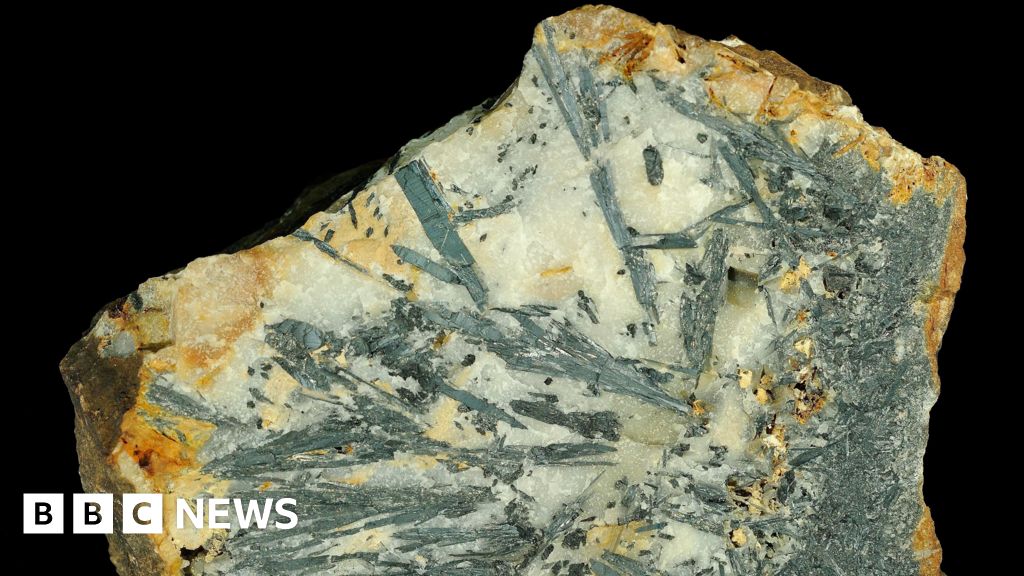
Minerals removed from the Fountainhead site included rare stibnite – a silvery-grey blade-shaped mineral that contains the semi-metal antimony.
NatureScot believes up to 20 other protected mineral sites in Scotland may also be affected by damaging and exploitative mineral collecting by unknown individuals.
Colin MacFadyen, a geological advisor with NatureScot, said the mineral heritage of Scotland was “an irreplaceable aspect of our nature”.
He added: “Exploitative collecting from vulnerable sites is unsustainable, especially if it is commercially driven.
“Rare and important minerals can become lost to science and put beyond public sight. In this case, we have seen some of Scotland’s most vulnerable and important protected mineral sites being targeted and damaged.
“We therefore welcome the verdict in this case and expect that it will serve as a deterrent against further damaging and illegal mineral collecting activity.”
Collecting code
Lasczcsewski posted images on social media showing her at the sites, which a court heard showed her intent to break rocks and extract minerals using hammers.
Efforts are now being made to return the minerals to their rightful owners.
NatureScot said it was currently considering working with the amateur mineral collecting community to develop a mineral specimen collecting code, akin to the Scottish Fossil Code.
The code would provide enthusiasts with best practice guidance on how to collect minerals legally and responsibly.
BBC News

Khamrah by Lattafa for Men - 3.4 oz EDP Spray
4% Off
Ghost Sweetheart Eau de Toilette | Pineapple, Jasmine and Sandalwood | Perfume for Women 50 ml
50% Off
Marc Jacobs Dot Eau De Parfum for Women, 100 ml
42% Off
Ted Baker W Eau de Toilette for Her, Fig Leaf, White Peony and Violet Top Notes, Pink Orchid and Raspberry Middle Notes, 75ml
£11.77 (£15.69 / 100 ml) (as of 08/10/2026 06:27 GMT +01:00 - More infoProduct prices and availability are accurate as of the date/time indicated and are subject to change. Any price and availability information displayed on [relevant Amazon Site(s), as applicable] at the time of purchase will apply to the purchase of this product.)
Ted Baker Woman Pink Eau de Toilette Spray Floral Green Feminine Fragrance, Opening Notes are Fresh Peach, Bergamot and Tangerine with Warm Musk, Vanilla and Vetiver Base, 100ml
11% Off
Vera Wang Princess Eau de Toilette - 30 ml

Choco Musk 50ml Eau De Parfum for men and women | Chocolate Musk by Jannat Aromas
17% Off
Christina Aguilera Signature Eau de Parfum (50ml) Floral, Fruity & Exotic Scent, Luxury Fragrance for Women
9% Off
Calvin Klein - Eau De Toilette CKIN2U - Calvin Klein Women, Ladies Perfume, Women's Perfume, Calvin Klein Perfume, Calvin Klein One - 150 ml
5% Off
Jimmy Choo Flash Eau de Parfum, 60 ml (Pack of 1)
3% Off
Fruit of the Loom Men's Heavy T Shirt, White, XL UK
28% Off
ATNKE LED Lighted Beanie Cap,USB Rechargeable Running Hat Ultra Bright 4 LED Waterproof Light Winter Warm Gifts for Men and Women/Pink
17% Off
Men's 1/4 Zip Pullover UK Sale Clearance, Fleece Sweatshirt Casual Jumper Long Sleeve T-shirt Top Stand Collar Sweater Plain Pullover Sports Leisure Workwear Quarter Zip Sweater Lightweight Jumpers
£5.88 (as of 12/11/2025 00:52 GMT +01:00 - More infoProduct prices and availability are accurate as of the date/time indicated and are subject to change. Any price and availability information displayed on [relevant Amazon Site(s), as applicable] at the time of purchase will apply to the purchase of this product.)
Crevice Cleaning Brush, Bathroom Tile Groove Gap Cleaning Brush,Premium Crevice Cleaning Tool Aluminum Support with 15° Angle Magic Brush, Thin Brush for Home Kitchen
19% Off
Wireless Earbuds, Bluetooth 5.3 Headphones in Ear with HiFi Stereo Deep Bass, 4 ENC Noise Cancelling Mic Wireless Earphones 40H Playtime, Bluetooth Earbuds Dual LED Display, IP7 Waterproof, USB-C
42% Off