A team from the University of Birmingham has reported a significant step forward in public health research, in a study of ectopic pregnancy published in BMC Medical Research Methodology.
The study analyzed data from an “open cohort.” Unlike a closed cohort, which has a fixed number of people in the group under study, an open cohort (also known as a dynamic cohort) allows individuals to enter and leave the study group at different times during the study period.
This means the number of people in the study group can vary over time, and although this complexity makes analysis time-consuming and prone to variability, it is more representative of electronic health record databases.
These records hold a wealth of data that, when used to its full potential, can help understand trends, focus on health care provision for specific groups, and so reduce inequalities in health.
The team behind the study has previously developed the Dexter software platform, which can automate the extraction and analysis of data from electronic health records.
Health researchers use incidence (the number of newly diagnosed cases in a particular time period) and prevalence (the proportion of the population who have received the diagnosis, regardless of when they received the diagnosis).
These calculations are usually automated, but the computer code used to generate incidence and prevalence are not standardized and are often created on a “one-off” basis for individual studies. These variations mean that it may be impossible to compare incidence and prevalence obtained from different studies.
Researchers led by Dr. Neil Cockburn, Clinical Research Fellow from Birmingham’s Institute of Applied Health Research have produced code for incidence and prevalence that can be applied to any open cohort and made these freely available in the paper, which can be downloaded as a standalone program or incorporated into other software packages.
The paper presents a worked example of the prevalence and incidence of ectopic pregnancy from 2006 to 2021.
Overall, the researchers found an increase in both prevalence and incidence of ectopic pregnancy during the period of study, which they believe reflects better recording over time as electronic health records mature.
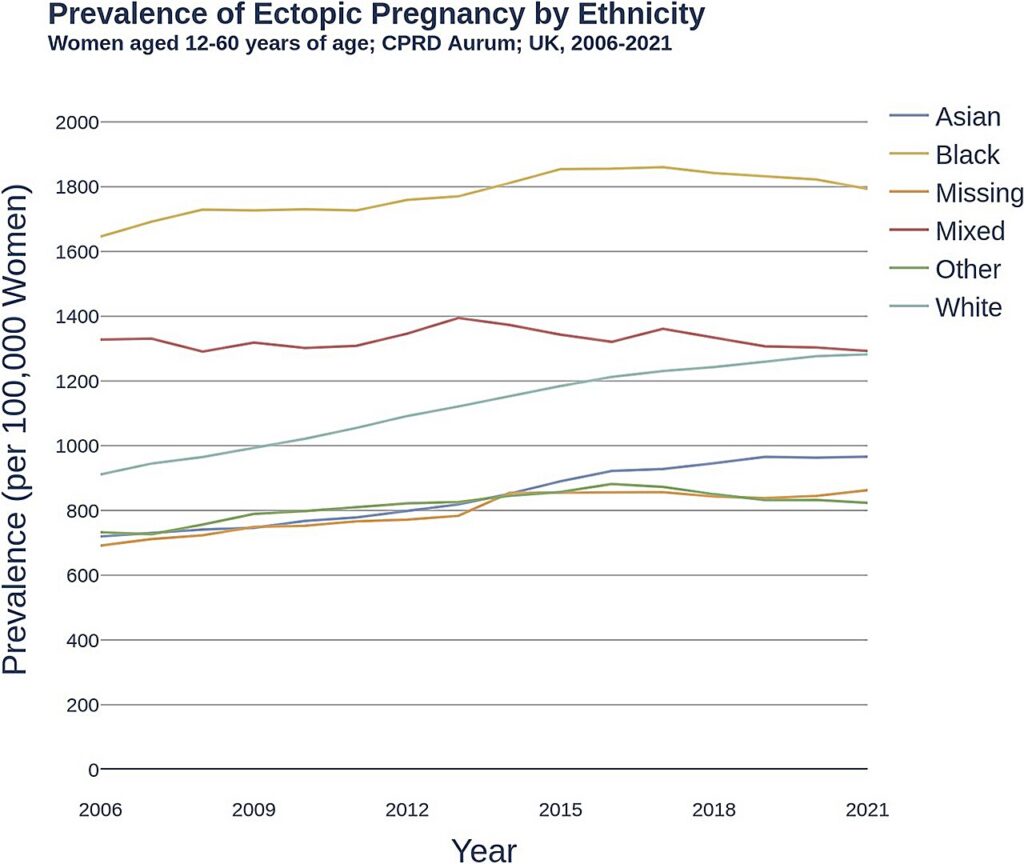
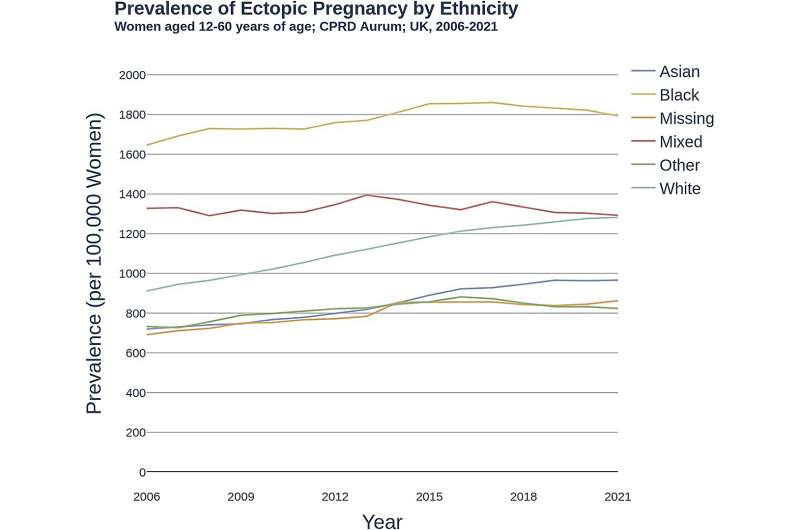
They also found the prevalence of ectopic pregnancy varied by ethnicity: higher in women of black ethnicity compared to white ethnicity, lower for women of mixed and white ethnicity (with no difference observed between the two), and lower still among women of Asian or other ethnicities, or where ethnicity was not recorded.
Dr. Cockburn said, “Despite being a key risk to maternal health, and a leading cause of maternal mortality in the first trimester of pregnancy, UK incidence and prevalence has not been reported in the literature since 2011—and no study has reported the burden in key subgroups.”
More information:
Neil Cockburn et al, Automating incidence and prevalence analysis in open cohorts, BMC Medical Research Methodology (2024). DOI: 10.1186/s12874-024-02266-7
Citation:
Research team releases code for automating incidence and prevalence analysis in open cohorts (2024, July 23)
retrieved 24 July 2024
from https://medicalxpress.com/news/2024-07-team-code-automating-incidence-prevalence.html
This document is subject to copyright. Apart from any fair dealing for the purpose of private study or research, no
part may be reproduced without the written permission. The content is provided for information purposes only.

Khamrah by Lattafa for Men - 3.4 oz EDP Spray
4% Off
Ghost Sweetheart Eau de Toilette | Pineapple, Jasmine and Sandalwood | Perfume for Women 50 ml
50% Off
Marc Jacobs Dot Eau De Parfum for Women, 100 ml
42% Off
Ted Baker W Eau de Toilette for Her, Fig Leaf, White Peony and Violet Top Notes, Pink Orchid and Raspberry Middle Notes, 75ml
£11.77 (£15.69 / 100 ml) (as of 16/07/2026 03:58 GMT +01:00 - More infoProduct prices and availability are accurate as of the date/time indicated and are subject to change. Any price and availability information displayed on [relevant Amazon Site(s), as applicable] at the time of purchase will apply to the purchase of this product.)
Ted Baker Woman Pink Eau de Toilette Spray Floral Green Feminine Fragrance, Opening Notes are Fresh Peach, Bergamot and Tangerine with Warm Musk, Vanilla and Vetiver Base, 100ml
11% Off
Vera Wang Princess Eau de Toilette - 30 ml

Choco Musk 50ml Eau De Parfum for men and women | Chocolate Musk by Jannat Aromas
17% Off
Christina Aguilera Signature Eau de Parfum (50ml) Floral, Fruity & Exotic Scent, Luxury Fragrance for Women
9% Off
Calvin Klein - Eau De Toilette CKIN2U - Calvin Klein Women, Ladies Perfume, Women's Perfume, Calvin Klein Perfume, Calvin Klein One - 150 ml
5% Off
Jimmy Choo Flash Eau de Parfum, 60 ml (Pack of 1)
3% Off
Fruit of the Loom Men's Heavy T Shirt, White, XL UK
28% Off
ATNKE LED Lighted Beanie Cap,USB Rechargeable Running Hat Ultra Bright 4 LED Waterproof Light Winter Warm Gifts for Men and Women/Pink
17% Off
Men's 1/4 Zip Pullover UK Sale Clearance, Fleece Sweatshirt Casual Jumper Long Sleeve T-shirt Top Stand Collar Sweater Plain Pullover Sports Leisure Workwear Quarter Zip Sweater Lightweight Jumpers
£5.88 (as of 12/11/2025 00:52 GMT +01:00 - More infoProduct prices and availability are accurate as of the date/time indicated and are subject to change. Any price and availability information displayed on [relevant Amazon Site(s), as applicable] at the time of purchase will apply to the purchase of this product.)
Crevice Cleaning Brush, Bathroom Tile Groove Gap Cleaning Brush,Premium Crevice Cleaning Tool Aluminum Support with 15° Angle Magic Brush, Thin Brush for Home Kitchen
19% Off
Wireless Earbuds, Bluetooth 5.3 Headphones in Ear with HiFi Stereo Deep Bass, 4 ENC Noise Cancelling Mic Wireless Earphones 40H Playtime, Bluetooth Earbuds Dual LED Display, IP7 Waterproof, USB-C
42% Off