Angie BrownEdinburgh and East reporter

 Geograph/ Kim Traynor
A section of historic path where the founding father of geology arrived at his theory of how and when the world was formed is to reopen in the summer.
Edinburgh’s 200-year-old Radical Road, which is set high along cliffs at Arthur’s Seat, was closed in 2018 over rockfall concerns.
Historic Environment Scotland, which manages the site, plan to have the section where Hutton’s Rock stands open in time for the 300th anniversary of James Hutton’s birth on 3 June.
The path overlooks the parliament and the Palace of Holyroodhouse where senior royals stay when they visit the Scottish capital.
 Getty Images
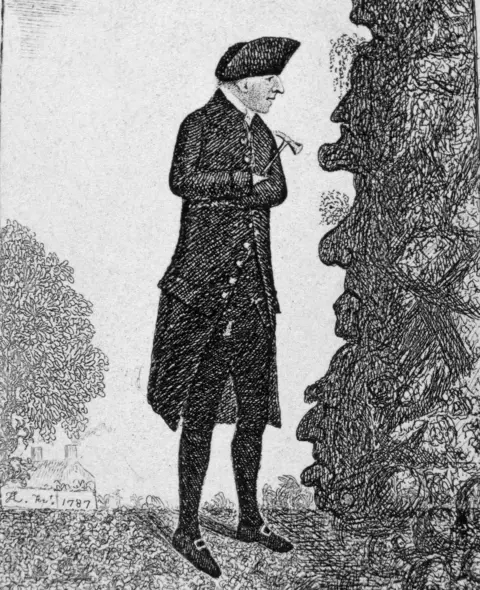
Near the south end of the path is Hutton’s Section, the spot where geologist James Hutton found proof in the late 18th Century for his theory that the world’s landscape had evolved over time.
The layers of rock at Salisbury Crags supported his belief that igneous rocks are formed from magma.
His work is responsible for one of the fundamental principles of geology, and discovered that the Earth was significantly older than had previously been believed.
Applications for scheduled monument consent and planning permission have been submitted for part of the path from the Hawse to the northern end of the South Quarry.
Temporary barriers, which were erected when the path was closed, need to be relocated as well as interpretation and safety signage and vegetation management has to be carried out before it can reopen.

The path got its name from the unemployed west of Scotland weavers who were set to work paving a track round Salisbury Crags – a plan suggested by author Sir Walter Scott in the aftermath of the Radical War of 1820.
Also known as the Scottish Insurrection, this uprising was the result of social unrest among workers who were fed up with what they perceived to be unjust working and living conditions.
An HES spokeswoman told BBC Scotland News that inspection and descaling works, vital rock trajectory modelling and analysis, and necessary ecological surveys and ecological impact assessments had been carried out at the site.
“It remains our commitment to partially reopen the Radical Road, from the Hawse to the northern end of the South Quarry, once it is safe to do so next year to allow visitors to access both Hutton’s Section and Hutton’s Rock during the 300th anniversary of James Hutton’s birth in June 2026.
“In the meantime, park users can continue to pre-book ranger guided access to this area.”
BBC News

Khamrah by Lattafa for Men - 3.4 oz EDP Spray
4% Off
Ghost Sweetheart Eau de Toilette | Pineapple, Jasmine and Sandalwood | Perfume for Women 50 ml
50% Off
Marc Jacobs Dot Eau De Parfum for Women, 100 ml
42% Off
Ted Baker W Eau de Toilette for Her, Fig Leaf, White Peony and Violet Top Notes, Pink Orchid and Raspberry Middle Notes, 75ml
£11.77 (£15.69 / 100 ml) (as of 28/04/2026 03:08 GMT +01:00 - More infoProduct prices and availability are accurate as of the date/time indicated and are subject to change. Any price and availability information displayed on [relevant Amazon Site(s), as applicable] at the time of purchase will apply to the purchase of this product.)
Ted Baker Woman Pink Eau de Toilette Spray Floral Green Feminine Fragrance, Opening Notes are Fresh Peach, Bergamot and Tangerine with Warm Musk, Vanilla and Vetiver Base, 100ml
11% Off
Vera Wang Princess Eau de Toilette - 30 ml

Choco Musk 50ml Eau De Parfum for men and women | Chocolate Musk by Jannat Aromas
17% Off
Christina Aguilera Signature Eau de Parfum (50ml) Floral, Fruity & Exotic Scent, Luxury Fragrance for Women
9% Off
Calvin Klein - Eau De Toilette CKIN2U - Calvin Klein Women, Ladies Perfume, Women's Perfume, Calvin Klein Perfume, Calvin Klein One - 150 ml
5% Off
Jimmy Choo Flash Eau de Parfum, 60 ml (Pack of 1)
3% Off
Fruit of the Loom Men's Heavy T Shirt, White, XL UK
28% Off
ATNKE LED Lighted Beanie Cap,USB Rechargeable Running Hat Ultra Bright 4 LED Waterproof Light Winter Warm Gifts for Men and Women/Pink
17% Off
Men's 1/4 Zip Pullover UK Sale Clearance, Fleece Sweatshirt Casual Jumper Long Sleeve T-shirt Top Stand Collar Sweater Plain Pullover Sports Leisure Workwear Quarter Zip Sweater Lightweight Jumpers
£5.88 (as of 12/11/2025 00:52 GMT +01:00 - More infoProduct prices and availability are accurate as of the date/time indicated and are subject to change. Any price and availability information displayed on [relevant Amazon Site(s), as applicable] at the time of purchase will apply to the purchase of this product.)
Crevice Cleaning Brush, Bathroom Tile Groove Gap Cleaning Brush,Premium Crevice Cleaning Tool Aluminum Support with 15° Angle Magic Brush, Thin Brush for Home Kitchen
19% Off
Wireless Earbuds, Bluetooth 5.3 Headphones in Ear with HiFi Stereo Deep Bass, 4 ENC Noise Cancelling Mic Wireless Earphones 40H Playtime, Bluetooth Earbuds Dual LED Display, IP7 Waterproof, USB-C
42% Off