Researchers at Karolinska Institutet, in collaboration with JLP Health and others, have identified how the tick-borne Crimean-Congo hemorrhagic fever virus enters our cells. The results are published in Nature Microbiology and are an important step in the development of drugs against the deadly disease.
Crimean-Congo hemorrhagic fever virus (CCHF virus) is spread through tick bites and can cause hemorrhagic fever.
The disease is serious and has a mortality rate of up to 40 percent, depending on the health status of the person infected.
Common symptoms include fever, muscle pain, abdominal pain, joint pain, vomiting and hemorrhaging that can cause organ failure.
The disease has spread to Europe
The virus is present in around 40 countries, including Central Asia, the Middle East and parts of Africa. In recent years, the disease has spread to new geographical areas as a result of climate change, including Spain and France.
The tick species that can spread the disease has also been observed in Germany and Sweden. There are currently no effective treatments for the disease.
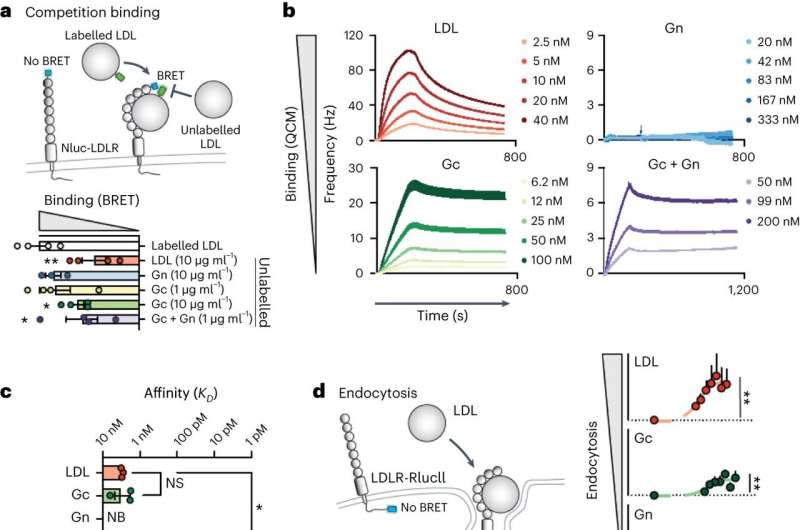
In a new study, researchers at Karolinska Institutet in Sweden and others have found that the virus enters our cells via a protein on the cell surface, the so-called LDL receptors that regulate blood cholesterol levels.
To identify the protein, the researchers used human mini-organs grown in test tubes and an advanced stem cell library from JLP Health. The same platform has previously been used to identify how the Ebola virus enters cells.
The results were also confirmed in tests on mice, which showed that mice lacking the LDL receptor did not get as sick as others.
Researchers want to trick the virus
The discovery is an important step towards developing drugs for Crimean-Congo hemorrhagic fever, according to Ali Mirazimi, adjunct professor at the Department of Laboratory Medicine, Karolinska Institutet, and one of the researchers behind the study.
“Once we know which receptor the virus uses, we can produce the receptor in test tubes and administer it as a drug,” he says. “Then we can trick the virus into binding to those receptors instead of to the cells and thus stop the virus from spreading in our bodies.”
This knowledge is essential if the disease were to become more common and spread to new areas. Normally it takes many years to develop a drug, but the COVID-19 pandemic and the development of the SARS-CoV-2 vaccine showed that it can be done much faster if everyone decides it is a priority.
“This is an important step in our preparedness for the disease,” says Ali Mirazimi. “Crimean-Congo hemorrhagic fever is a disease we would rather not have. Migratory birds spread the ticks and have already been found in Sweden. If the disease starts appearing in more places, we may already have a drug that we can take into clinical trials.”
More information:
Vanessa M. Monteil et al, Crimean-Congo Hemorrhagic Fever virus uses LDLR to bind and enter host cells, Nature Microbiology (2024). DOI: 10.1038/s41564-024-01672-3.
Citation:
New study shows how the Crimean-Congo hemorrhagic fever virus enters our cells (2024, March 28)
retrieved 29 March 2024
from https://medicalxpress.com/news/2024-03-crimean-congo-hemorrhagic-fever-virus.html
This document is subject to copyright. Apart from any fair dealing for the purpose of private study or research, no
part may be reproduced without the written permission. The content is provided for information purposes only.

Khamrah by Lattafa for Men - 3.4 oz EDP Spray
4% Off
Ghost Sweetheart Eau de Toilette | Pineapple, Jasmine and Sandalwood | Perfume for Women 50 ml
50% Off
Marc Jacobs Dot Eau De Parfum for Women, 100 ml
42% Off
Ted Baker W Eau de Toilette for Her, Fig Leaf, White Peony and Violet Top Notes, Pink Orchid and Raspberry Middle Notes, 75ml
£11.77 (£15.69 / 100 ml) (as of 04/06/2026 03:27 GMT +01:00 - More infoProduct prices and availability are accurate as of the date/time indicated and are subject to change. Any price and availability information displayed on [relevant Amazon Site(s), as applicable] at the time of purchase will apply to the purchase of this product.)
Ted Baker Woman Pink Eau de Toilette Spray Floral Green Feminine Fragrance, Opening Notes are Fresh Peach, Bergamot and Tangerine with Warm Musk, Vanilla and Vetiver Base, 100ml
11% Off
Vera Wang Princess Eau de Toilette - 30 ml

Choco Musk 50ml Eau De Parfum for men and women | Chocolate Musk by Jannat Aromas
17% Off
Christina Aguilera Signature Eau de Parfum (50ml) Floral, Fruity & Exotic Scent, Luxury Fragrance for Women
9% Off
Calvin Klein - Eau De Toilette CKIN2U - Calvin Klein Women, Ladies Perfume, Women's Perfume, Calvin Klein Perfume, Calvin Klein One - 150 ml
5% Off
Jimmy Choo Flash Eau de Parfum, 60 ml (Pack of 1)
3% Off
Fruit of the Loom Men's Heavy T Shirt, White, XL UK
28% Off
ATNKE LED Lighted Beanie Cap,USB Rechargeable Running Hat Ultra Bright 4 LED Waterproof Light Winter Warm Gifts for Men and Women/Pink
17% Off
Men's 1/4 Zip Pullover UK Sale Clearance, Fleece Sweatshirt Casual Jumper Long Sleeve T-shirt Top Stand Collar Sweater Plain Pullover Sports Leisure Workwear Quarter Zip Sweater Lightweight Jumpers
£5.88 (as of 12/11/2025 00:52 GMT +01:00 - More infoProduct prices and availability are accurate as of the date/time indicated and are subject to change. Any price and availability information displayed on [relevant Amazon Site(s), as applicable] at the time of purchase will apply to the purchase of this product.)
Crevice Cleaning Brush, Bathroom Tile Groove Gap Cleaning Brush,Premium Crevice Cleaning Tool Aluminum Support with 15° Angle Magic Brush, Thin Brush for Home Kitchen
19% Off
Wireless Earbuds, Bluetooth 5.3 Headphones in Ear with HiFi Stereo Deep Bass, 4 ENC Noise Cancelling Mic Wireless Earphones 40H Playtime, Bluetooth Earbuds Dual LED Display, IP7 Waterproof, USB-C
42% Off