[
[
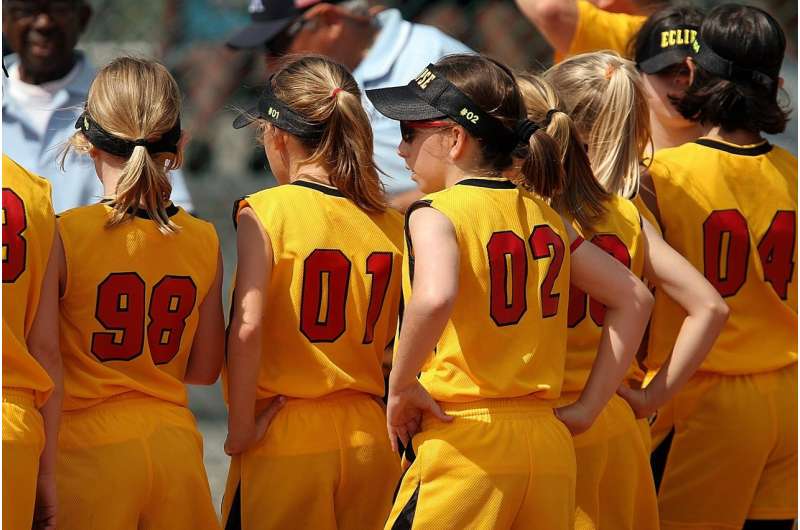
A new study is challenging one of youth sports’ most persistent assumptions: that most parents believe their children are destined for college scholarships or professional athletic stardom.
Researchers from the University of Florida and The Ohio State University found that most parents hold reasonable and responsive expectations for their children’s sports futures, and many even temper those expectations as their children age. But the study also identified a sizable minority of parents whose optimism far outpaces reality, creating conditions that could fuel unhealthy pressure, overspending and conflict in youth sports.
The findings were published in the Journal of Sport and Social Issues by a team led by Chris McLeod, Ph.D., an associate professor in UF’s Department of Sport Management and associate director of research for the Institute for Coaching Excellence, and Ohio State’s Chris Knoester, Ph.D, a professor of sociology.
“There’s this idea floating around that parents are delusional about their kids’ chances for a college scholarship or going pro, and we were interested in whether or not that’s true,” McLeod said. “What we found is actually good news: most parents are realistic.”
Concerns about unrealistic expectations have shaped national conversations around youth sports for years, McLeod said. Parents who believe their children are on an elite athletic trajectory may invest heavily in travel leagues, private coaching or year-round specialization—choices that can strain families’ finances and restrict children’s enjoyment of the game or their success in other areas, like education.
“High expectations are often cited as a source of parental pressure, yelling at referees, fights or the commercialization of youth sport,” McLeod said. “Many parents start out saying they’ll stay away from those things, but that can change when they begin wondering about their child’s potential.”
Yet expectations can be beneficial, too. Research has long shown that parents’ academic expectations strongly predict children’s academic achievement. If that relationship translates to athletics, McLeod said, hopes and encouragement might also support positive outcomes in sport.
“That’s part of why we wanted to do this study. Parent expectations matter in all sorts of ways, from family behavior to bigger sociological questions,” he said.
The study analyzed data from the National Sports and Society Survey, a national opt-in sample of 4,000 adults collected in 2018 and 2019. Respondents answered more than 400 questions about their sports experiences and beliefs.
Parents were asked how likely they believed it was that their child would compete in college, earn a scholarship or reach professional or Olympic levels. While most parents provided estimates consistent with NCAA statistics, a meaningful minority rated elite outcomes as “very likely”—a rate higher than actual probabilities.
The biggest predictor of unusually high expectations was parental perception of a child’s athletic identity, or the extent to which their child sees themselves as an athlete.
“That’s what really switches someone from being realistic to potentially having very high expectations,” McLeod said. “If parents think their child strongly identifies as an athlete, expectations jump.”
The researchers also identified clear racial, ethnic and neighborhood patterns.
“Parents of Black children and Latino or Latina children have higher expectations than parents of white children,” McLeod said. “And living in a neighborhood with more families of color was also associated with higher expectations.”
McLeod cautioned against interpreting these findings through a deficit lens.
“It’s important that we don’t contribute to the ‘myth of low aspirations’ or the tendency to blame the victims of racial oppression,” he said.
“Having high athletic expectations does not mean Black and Latinx parents have low expectations for educational success. Previous research actually shows the opposite—that Black children and their parents tend to have higher expectations across multiple domains.”
McLeod and Knoester are now preparing a follow-up study to examine whether academic and athletic expectations move together or in different directions.
“Are athletic expectations substituting for lower educational expectations,” McLeod said, “or do parents who have high expectations in sport also have them in education? However we answer that question really changes the implications.”
One result surprised McLeod: parents held similar expectations for boys and girls.
“That contradicts the idea of a dream gap—the assumption that boys dream of being pro athletes while girls don’t see those possibilities for themselves,” he said. “We may be seeing the effect of recent growth in elite women’s sports and expanded professional opportunities.”
The study offers immediate insights for coaches, educators and youth sports organizations.
“The most straightforward implication is that we can now identify which parents may be at risk of having unrealistically high expectations,” McLeod said. “That helps practitioners target resources and communication that guide families toward healthier approaches.”
But McLeod hopes the research also encourages families to pause and reflect.
“What I’d love the study to do is give parents a mirror,” he said. “Think about what travel sports are doing for your child and your family. Consider how expectations or fear of missing out may be influencing your decisions.”
He emphasized that dreaming big is not inherently harmful.
“It’s OK to try to achieve extraordinary athletic success,” he said. “But families shouldn’t be making decisions under false pretenses or unfair societal pressures. They should feel empowered to choose what’s best for them.”
As the researchers gather a second wave of data that will track children’s eventual outcomes, McLeod hopes the work contributes to national conversations about how the U.S. youth sports system can better support young athletes—and their parents.
More information:
Christopher M. McLeod et al, Parental Expectations for Children’s Future Athletic Achievement: The Roles of Socio-Economic Status, Race, Ethnicity, Gender, and Athletic Experiences and Identities, Journal of Sport and Social Issues (2025). DOI: 10.1177/01937235251392534
Citation:
Most parents keep youth sports dreams in check, study finds (2025, November 20)
retrieved 20 November 2025
from https://medicalxpress.com/news/2025-11-parents-youth-sports.html
This document is subject to copyright. Apart from any fair dealing for the purpose of private study or research, no
part may be reproduced without the written permission. The content is provided for information purposes only.

Khamrah by Lattafa for Men - 3.4 oz EDP Spray
4% Off
Ghost Sweetheart Eau de Toilette | Pineapple, Jasmine and Sandalwood | Perfume for Women 50 ml
50% Off
Marc Jacobs Dot Eau De Parfum for Women, 100 ml
42% Off
Ted Baker W Eau de Toilette for Her, Fig Leaf, White Peony and Violet Top Notes, Pink Orchid and Raspberry Middle Notes, 75ml
£11.77 (£15.69 / 100 ml) (as of 22/08/2026 04:39 GMT +01:00 - More infoProduct prices and availability are accurate as of the date/time indicated and are subject to change. Any price and availability information displayed on [relevant Amazon Site(s), as applicable] at the time of purchase will apply to the purchase of this product.)
Ted Baker Woman Pink Eau de Toilette Spray Floral Green Feminine Fragrance, Opening Notes are Fresh Peach, Bergamot and Tangerine with Warm Musk, Vanilla and Vetiver Base, 100ml
11% Off
Vera Wang Princess Eau de Toilette - 30 ml

Choco Musk 50ml Eau De Parfum for men and women | Chocolate Musk by Jannat Aromas
17% Off
Christina Aguilera Signature Eau de Parfum (50ml) Floral, Fruity & Exotic Scent, Luxury Fragrance for Women
9% Off
Calvin Klein - Eau De Toilette CKIN2U - Calvin Klein Women, Ladies Perfume, Women's Perfume, Calvin Klein Perfume, Calvin Klein One - 150 ml
5% Off
Jimmy Choo Flash Eau de Parfum, 60 ml (Pack of 1)
3% Off
Fruit of the Loom Men's Heavy T Shirt, White, XL UK
28% Off
ATNKE LED Lighted Beanie Cap,USB Rechargeable Running Hat Ultra Bright 4 LED Waterproof Light Winter Warm Gifts for Men and Women/Pink
17% Off
Men's 1/4 Zip Pullover UK Sale Clearance, Fleece Sweatshirt Casual Jumper Long Sleeve T-shirt Top Stand Collar Sweater Plain Pullover Sports Leisure Workwear Quarter Zip Sweater Lightweight Jumpers
£5.88 (as of 12/11/2025 00:52 GMT +01:00 - More infoProduct prices and availability are accurate as of the date/time indicated and are subject to change. Any price and availability information displayed on [relevant Amazon Site(s), as applicable] at the time of purchase will apply to the purchase of this product.)
Crevice Cleaning Brush, Bathroom Tile Groove Gap Cleaning Brush,Premium Crevice Cleaning Tool Aluminum Support with 15° Angle Magic Brush, Thin Brush for Home Kitchen
19% Off
Wireless Earbuds, Bluetooth 5.3 Headphones in Ear with HiFi Stereo Deep Bass, 4 ENC Noise Cancelling Mic Wireless Earphones 40H Playtime, Bluetooth Earbuds Dual LED Display, IP7 Waterproof, USB-C
42% Off