 [
[
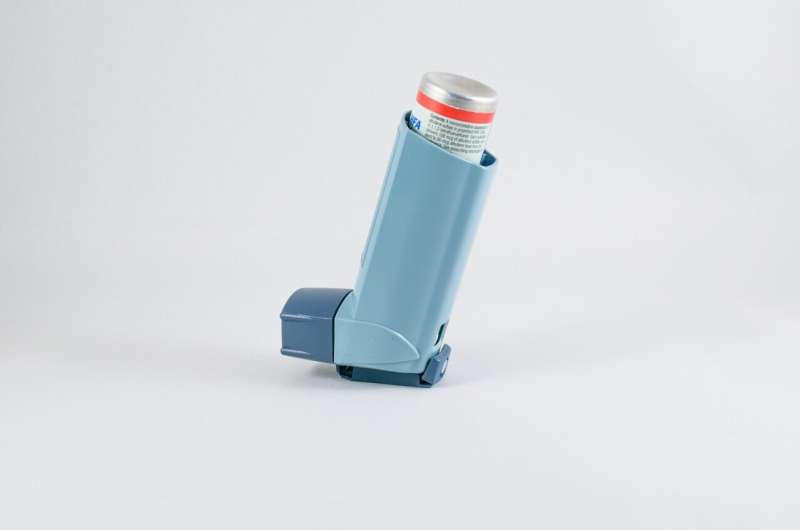
A machine learning tool that analyzes information already captured in a child’s electronic health record helped pediatricians more accurately assess asthma risk in standardized clinical case scenarios, according to a pilot randomized clinical trial led by a Regenstrief Institute researcher. The study was published in Scientific Reports.
The study evaluated a machine learning-enabled clinical decision support tool called the Passive Digital Marker, which uses routinely collected EHR data to classify young children as having a high or low risk of developing persistent asthma.
Asthma is one of the most common chronic childhood diseases, but predicting which young children with wheezing or other respiratory symptoms will go on to develop persistent asthma remains difficult. While some children outgrow these symptoms, others require ongoing treatment, making early risk assessment an important but challenging part of pediatric care.
“This tool doesn’t replace a pediatrician’s clinical judgment,” said Arthur H. Owora, Ph.D., Regenstrief Institute research scientist and lead author of the study. “It helps bring together years of clinical information that’s already in the electronic health record, giving clinicians another source of information when making decisions about a child’s asthma risk.”

Unlike many prediction tools, the Passive Digital Marker requires no additional testing or questionnaires. Instead, it analyzes information already documented in the EHR, including respiratory symptoms, allergies, medication history, respiratory infections and family history, then provides clinicians with a simple high- or low-risk assessment.
Pediatricians using the tool correctly predicted future asthma more often than those using standard assessment alone, achieving an average accuracy of 83% compared with 61%. The improvement was largely driven by better identification of children who later developed persistent asthma.
The researchers emphasize that the tool is designed to support clinical decision-making, not replace it, by helping clinicians quickly synthesize years of patient information into an easy-to-interpret risk assessment.
Because the study was conducted using standardized patient cases rather than real-world clinical encounters, additional research is needed to determine whether the tool improves patient outcomes in everyday pediatric practice.
Publication details
Arthur H. Owora et al, Effect of an electronic health record-integrated machine learning asthma risk marker on pediatrician prognostic accuracy during preschool age: a pilot randomized clinical trial, Scientific Reports (2026). DOI: 10.1038/s41598-026-57759-w
Journal information:
Scientific Reports
Key medical concepts


Citation:
Machine learning improves identification of asthma risk in children (2026, July 18)
retrieved 18 July 2026
from https://medicalxpress.com/news/2026-07-machine-identification-asthma-children.html
This document is subject to copyright. Apart from any fair dealing for the purpose of private study or research, no
part may be reproduced without the written permission. The content is provided for information purposes only.

Khamrah by Lattafa for Men - 3.4 oz EDP Spray
4% Off
Ghost Sweetheart Eau de Toilette | Pineapple, Jasmine and Sandalwood | Perfume for Women 50 ml
50% Off
Marc Jacobs Dot Eau De Parfum for Women, 100 ml
42% Off
Ted Baker W Eau de Toilette for Her, Fig Leaf, White Peony and Violet Top Notes, Pink Orchid and Raspberry Middle Notes, 75ml
£11.77 (£15.69 / 100 ml) (as of 13/08/2026 04:10 GMT +01:00 - More infoProduct prices and availability are accurate as of the date/time indicated and are subject to change. Any price and availability information displayed on [relevant Amazon Site(s), as applicable] at the time of purchase will apply to the purchase of this product.)
Ted Baker Woman Pink Eau de Toilette Spray Floral Green Feminine Fragrance, Opening Notes are Fresh Peach, Bergamot and Tangerine with Warm Musk, Vanilla and Vetiver Base, 100ml
11% Off
Vera Wang Princess Eau de Toilette - 30 ml

Choco Musk 50ml Eau De Parfum for men and women | Chocolate Musk by Jannat Aromas
17% Off
Christina Aguilera Signature Eau de Parfum (50ml) Floral, Fruity & Exotic Scent, Luxury Fragrance for Women
9% Off
Calvin Klein - Eau De Toilette CKIN2U - Calvin Klein Women, Ladies Perfume, Women's Perfume, Calvin Klein Perfume, Calvin Klein One - 150 ml
5% Off
Jimmy Choo Flash Eau de Parfum, 60 ml (Pack of 1)
3% Off
Fruit of the Loom Men's Heavy T Shirt, White, XL UK
28% Off
ATNKE LED Lighted Beanie Cap,USB Rechargeable Running Hat Ultra Bright 4 LED Waterproof Light Winter Warm Gifts for Men and Women/Pink
17% Off
Men's 1/4 Zip Pullover UK Sale Clearance, Fleece Sweatshirt Casual Jumper Long Sleeve T-shirt Top Stand Collar Sweater Plain Pullover Sports Leisure Workwear Quarter Zip Sweater Lightweight Jumpers
£5.88 (as of 12/11/2025 00:52 GMT +01:00 - More infoProduct prices and availability are accurate as of the date/time indicated and are subject to change. Any price and availability information displayed on [relevant Amazon Site(s), as applicable] at the time of purchase will apply to the purchase of this product.)
Crevice Cleaning Brush, Bathroom Tile Groove Gap Cleaning Brush,Premium Crevice Cleaning Tool Aluminum Support with 15° Angle Magic Brush, Thin Brush for Home Kitchen
19% Off
Wireless Earbuds, Bluetooth 5.3 Headphones in Ear with HiFi Stereo Deep Bass, 4 ENC Noise Cancelling Mic Wireless Earphones 40H Playtime, Bluetooth Earbuds Dual LED Display, IP7 Waterproof, USB-C
42% Off