 [
[
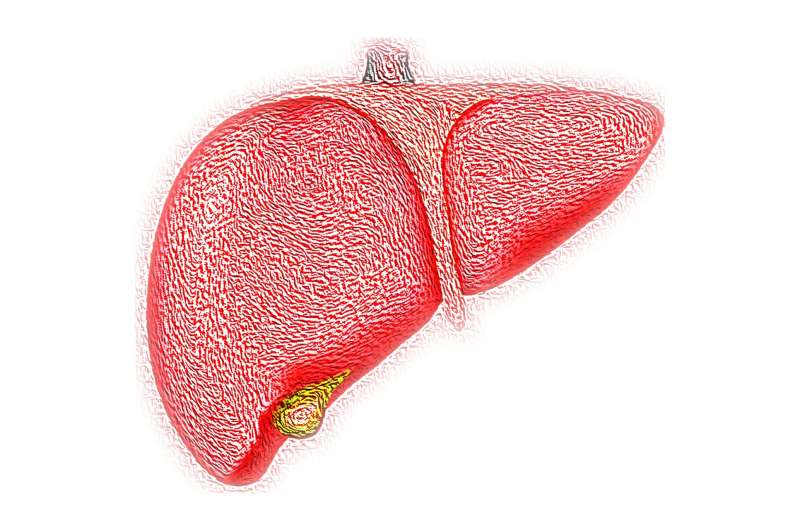
The liver is one of the few organs capable of regenerating after surgery—a remarkable ability that makes lifesaving procedures possible for thousands of patients each year. But not every liver regenerates as expected. Some patients develop post-hepatectomy liver failure, a serious complication that remains a leading cause of death after liver surgery. Now, a discovery by a Michigan State University researcher is challenging a long-held belief about how the liver repairs itself after surgery.
The discovery, published in the journal Blood, helped inspire a clinical investigation showing that patients who received a common anti-bleeding medication were significantly less likely to develop liver failure after surgery.
“We had a hypothesis based on years of published research,” said James Luyendyk, Albert C. and Lois E. Dehn Endowed Chair in Veterinary Medicine and associate dean for research in Michigan State University’s College of Veterinary Medicine. “Not only was the hypothesis wrong, the result was essentially the opposite of what we anticipated.”
What began as a basic research question in a veterinary medicine laboratory ultimately helped shape a clinical study involving human patients—an example of One Health research in action.
Luyendyk studies how blood clotting and liver biology intersect. His laboratory set out to investigate plasminogen, a protein involved in breaking down blood clots that previous research suggested played an important role in liver regeneration.
When the data says you’re wrong
The team expected their experiments to confirm what previous studies had reported, paving the way for the next phase of research. Instead, they found the opposite.
When researchers reduced plasminogen levels in mice, the liver produced more new cells and showed signs of stronger regeneration after surgery.
“Science moves forward when you’re willing to follow the data, even when it tells you you’re wrong,” Luyendyk said. “In this case, the data challenged what we thought we knew about liver regeneration and opened an entirely new path for investigation.”
The unexpected findings did more than challenge scientific thinking. They caught the attention of Patrick Starlinger, a liver surgeon and researcher at Mayo Clinic, who was involved in a multicenter clinical trial evaluating tranexamic acid (TXA), a medication commonly used to reduce bleeding during surgery.
A clue for liver surgeons
Inspired in part by the MSU findings, researchers examined whether the drug’s effects on the plasminogen pathway might also influence liver recovery after surgery. The results were striking. Patients who received TXA had roughly three times lower odds of developing post-hepatectomy liver failure than those who received a placebo.
“When we saw the findings from the MSU team, we realized there might be an important connection between this pathway and liver regeneration,” said Starlinger. “Their experimental work provided the hypothesis that led us to examine patient outcomes in the HeLiX trial. Without those findings, we likely would not have pursued this question. The possibility that a widely available, low-cost medication could substantially reduce this risk is exciting because it has the potential to improve outcomes for patients undergoing surgery for liver cancer and other serious liver diseases.”
The findings suggest that a pathway long thought to support liver regeneration may instead provide a target for improving recovery after surgery. While additional studies are needed, the work points to a promising new direction for reducing one of the most serious complications associated with liver surgery.
One Health in action
The connection between discoveries in mice and findings in human patients illustrates the principles of One Health, an approach that recognizes the links among human, animal and environmental health.
“This is exactly the kind of cross-species learning that One Health is all about,” Luyendyk said. “We learn something in one setting, test it in another and use those insights to improve health across species.”
The work may eventually have implications beyond human medicine. Liver surgery is also performed in veterinary patients, including dogs with liver tumors, raising the possibility that future discoveries could help improve outcomes for animal patients as well.
Researchers caution that additional studies are needed before the findings change standard clinical practice.
“Every answer produces more important questions, and this study was no different,” Luyendyk said.
However, because TXA is already widely used and relatively inexpensive, the discovery could accelerate future efforts to reduce complications after liver surgery.
For Luyendyk, the study represents something larger than a single finding. It demonstrates how basic research can lead to unexpected discoveries—and how those discoveries can ultimately improve lives.
“We followed the data, even when it contradicted what everyone expected,” he said. “Now we’re seeing the possibility that those discoveries could improve outcomes for patients. That’s incredibly exciting.”
Publication details
Zhihao Li et al, Anti-fibrinolytic strategies improve liver regeneration in mice and reduce post-hepatectomy liver failure in patients, Blood Journal (2026). DOI: 10.1182/blood.2025029780
Journal information:
Blood
Clinical categories


Citation:
Lower plasminogen levels spur stronger liver repair after surgery in mice, study finds (2026, June 25)
retrieved 26 June 2026
from https://medicalxpress.com/news/2026-06-plasminogen-spur-stronger-liver-surgery.html
This document is subject to copyright. Apart from any fair dealing for the purpose of private study or research, no
part may be reproduced without the written permission. The content is provided for information purposes only.

Khamrah by Lattafa for Men - 3.4 oz EDP Spray
4% Off
Ghost Sweetheart Eau de Toilette | Pineapple, Jasmine and Sandalwood | Perfume for Women 50 ml
50% Off
Marc Jacobs Dot Eau De Parfum for Women, 100 ml
42% Off
Ted Baker W Eau de Toilette for Her, Fig Leaf, White Peony and Violet Top Notes, Pink Orchid and Raspberry Middle Notes, 75ml
£11.77 (£15.69 / 100 ml) (as of 06/09/2026 04:59 GMT +01:00 - More infoProduct prices and availability are accurate as of the date/time indicated and are subject to change. Any price and availability information displayed on [relevant Amazon Site(s), as applicable] at the time of purchase will apply to the purchase of this product.)
Ted Baker Woman Pink Eau de Toilette Spray Floral Green Feminine Fragrance, Opening Notes are Fresh Peach, Bergamot and Tangerine with Warm Musk, Vanilla and Vetiver Base, 100ml
11% Off
Vera Wang Princess Eau de Toilette - 30 ml

Choco Musk 50ml Eau De Parfum for men and women | Chocolate Musk by Jannat Aromas
17% Off
Christina Aguilera Signature Eau de Parfum (50ml) Floral, Fruity & Exotic Scent, Luxury Fragrance for Women
9% Off
Calvin Klein - Eau De Toilette CKIN2U - Calvin Klein Women, Ladies Perfume, Women's Perfume, Calvin Klein Perfume, Calvin Klein One - 150 ml
5% Off
Jimmy Choo Flash Eau de Parfum, 60 ml (Pack of 1)
3% Off
Fruit of the Loom Men's Heavy T Shirt, White, XL UK
28% Off
ATNKE LED Lighted Beanie Cap,USB Rechargeable Running Hat Ultra Bright 4 LED Waterproof Light Winter Warm Gifts for Men and Women/Pink
17% Off
Men's 1/4 Zip Pullover UK Sale Clearance, Fleece Sweatshirt Casual Jumper Long Sleeve T-shirt Top Stand Collar Sweater Plain Pullover Sports Leisure Workwear Quarter Zip Sweater Lightweight Jumpers
£5.88 (as of 12/11/2025 00:52 GMT +01:00 - More infoProduct prices and availability are accurate as of the date/time indicated and are subject to change. Any price and availability information displayed on [relevant Amazon Site(s), as applicable] at the time of purchase will apply to the purchase of this product.)
Crevice Cleaning Brush, Bathroom Tile Groove Gap Cleaning Brush,Premium Crevice Cleaning Tool Aluminum Support with 15° Angle Magic Brush, Thin Brush for Home Kitchen
19% Off
Wireless Earbuds, Bluetooth 5.3 Headphones in Ear with HiFi Stereo Deep Bass, 4 ENC Noise Cancelling Mic Wireless Earphones 40H Playtime, Bluetooth Earbuds Dual LED Display, IP7 Waterproof, USB-C
42% Off