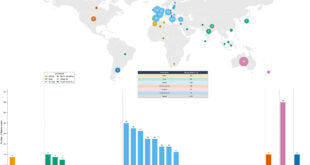


Middle-aged Americans are lonelier than their European counterparts. That’s the key finding of my team’s recent study, published in American Psychologist.
Our study identified a trend that has been evolving for multiple generations, and affects both baby boomers and Gen Xers. Middle-aged adults in England and Mediterranean Europe are not that far behind the U.S. In contrast, middle-aged adults in continental and Nordic Europe reported the lowest levels of loneliness and stability over time.
We used survey data drawn from over 53,000 middle-aged adults from the U.S. and 13 European nations from 2002 to 2020. We tracked their reported changes in loneliness every two years across the midlife years of 45 to 65. This span provided us data from the so-called silent generation of people born between 1937 and 1945; baby boomers, born between 1946 and 1964; and members of Generation X, born between 1965 and 1974.
Our study makes clear that middle-aged Americans today are experiencing more loneliness than their peers in European nations. This coincides with existing evidence that mortality rates are rising for working-age adults in the U.S.
We focused on middle-aged adults for several reasons. Middle-aged adults form the backbone of society by constituting a majority of the workforce. But they also face increasing challenges today, notably greater demands for support from both their aging parents and their children.
Following the Great Recession from late 2007 to 2009, middle-aged adults in the U.S. reported poorer mental and physical health compared to same-aged peers in the 1990s. Compared to several European nations, U.S. middle-aged adults currently report more depressive symptoms and higher rates of chronic illness, pain and disability.
Why it matters
The desire to belong is an innate and fundamental need. When this is lacking, it can have downstream consequences.
Loneliness is bad for your health. Researchers have found that loneliness is as dangerous as smoking. Loneliness increases one’s vulnerability to sickness, depression, chronic illness and premature death.
Loneliness is considered a global public health issue. The U.S. surgeon general released an advisory report in 2023 documenting an epidemic of loneliness and a pressing need to increase social connection. Other nations, such as the U.K. and Japan, have appointed ministers of loneliness to ensure relationships and loneliness are considered in policymaking.
What still isn’t known
Why are middle-aged Americans exceptional when it comes to loneliness and poorer overall mental and physical health?
We did not directly test this in our study, but in the future we hope to zero in on the factors driving these trends. We think that the loneliness Americans are reporting compared to peer nations comes down to limited social safety nets and to cultural norms that prioritize individualism over community.
Individualization carries psychological costs, such as reductions in social connections and support structures, which are correlates of loneliness. Relative to the other nations in our study, Americans have a higher tendency to relocate, which is associated with weak social and community ties.
One of the reasons why we chose countries from across Europe is that they differ dramatically from the U.S. when it comes to social and economic opportunities and social safety nets. Social and economic inequalities likely increase one’s loneliness through undermining one’s ability to meet basic needs. Generous family and work policies likely lessen midlife loneliness through reducing financial pressures and work-family conflict, as well as addressing health and gender inequities.
Our findings on loneliness in conjunction with previous studies on life expectancy, health, well-being and cognition suggest that being middle-aged in America is a risk factor for poor mental and physical health outcomes.
This article is republished from The Conversation under a Creative Commons license. Read the original article.
Citation:
Loneliness can kill, and new research shows middle-aged Americans are particularly vulnerable (2024, April 14)
retrieved 14 April 2024
from https://medicalxpress.com/news/2024-04-loneliness-middle-aged-americans-vulnerable.html
This document is subject to copyright. Apart from any fair dealing for the purpose of private study or research, no
part may be reproduced without the written permission. The content is provided for information purposes only.

Khamrah by Lattafa for Men - 3.4 oz EDP Spray
4% Off
Ghost Sweetheart Eau de Toilette | Pineapple, Jasmine and Sandalwood | Perfume for Women 50 ml
50% Off
Marc Jacobs Dot Eau De Parfum for Women, 100 ml
42% Off
Ted Baker W Eau de Toilette for Her, Fig Leaf, White Peony and Violet Top Notes, Pink Orchid and Raspberry Middle Notes, 75ml
£11.77 (£15.69 / 100 ml) (as of 30/09/2026 05:08 GMT +01:00 - More infoProduct prices and availability are accurate as of the date/time indicated and are subject to change. Any price and availability information displayed on [relevant Amazon Site(s), as applicable] at the time of purchase will apply to the purchase of this product.)
Ted Baker Woman Pink Eau de Toilette Spray Floral Green Feminine Fragrance, Opening Notes are Fresh Peach, Bergamot and Tangerine with Warm Musk, Vanilla and Vetiver Base, 100ml
11% Off
Vera Wang Princess Eau de Toilette - 30 ml

Choco Musk 50ml Eau De Parfum for men and women | Chocolate Musk by Jannat Aromas
17% Off
Christina Aguilera Signature Eau de Parfum (50ml) Floral, Fruity & Exotic Scent, Luxury Fragrance for Women
9% Off
Calvin Klein - Eau De Toilette CKIN2U - Calvin Klein Women, Ladies Perfume, Women's Perfume, Calvin Klein Perfume, Calvin Klein One - 150 ml
5% Off
Jimmy Choo Flash Eau de Parfum, 60 ml (Pack of 1)
3% Off
Fruit of the Loom Men's Heavy T Shirt, White, XL UK
28% Off
ATNKE LED Lighted Beanie Cap,USB Rechargeable Running Hat Ultra Bright 4 LED Waterproof Light Winter Warm Gifts for Men and Women/Pink
17% Off
Men's 1/4 Zip Pullover UK Sale Clearance, Fleece Sweatshirt Casual Jumper Long Sleeve T-shirt Top Stand Collar Sweater Plain Pullover Sports Leisure Workwear Quarter Zip Sweater Lightweight Jumpers
£5.88 (as of 12/11/2025 00:52 GMT +01:00 - More infoProduct prices and availability are accurate as of the date/time indicated and are subject to change. Any price and availability information displayed on [relevant Amazon Site(s), as applicable] at the time of purchase will apply to the purchase of this product.)
Crevice Cleaning Brush, Bathroom Tile Groove Gap Cleaning Brush,Premium Crevice Cleaning Tool Aluminum Support with 15° Angle Magic Brush, Thin Brush for Home Kitchen
19% Off
Wireless Earbuds, Bluetooth 5.3 Headphones in Ear with HiFi Stereo Deep Bass, 4 ENC Noise Cancelling Mic Wireless Earphones 40H Playtime, Bluetooth Earbuds Dual LED Display, IP7 Waterproof, USB-C
42% Off