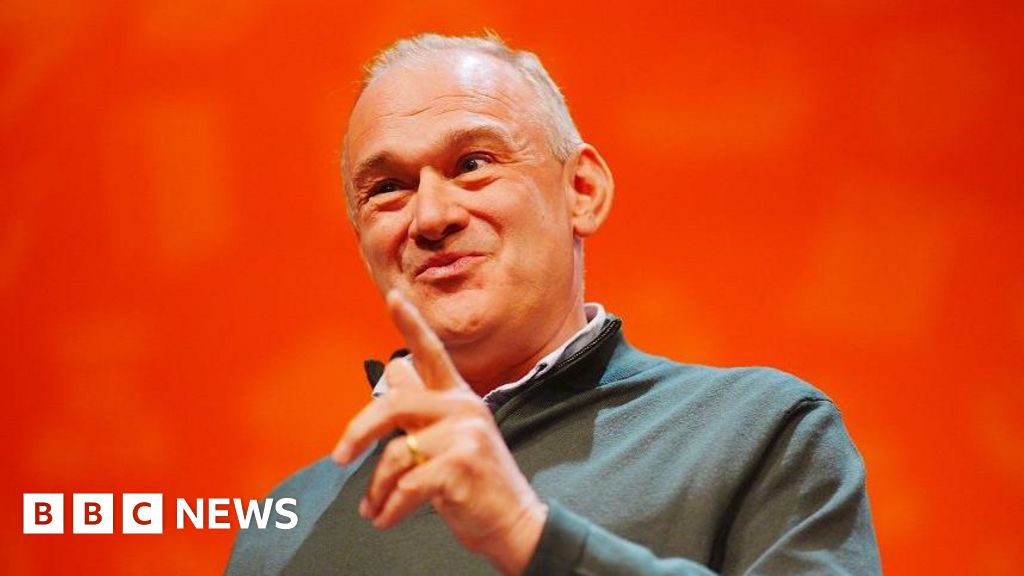
The Liberal Democrats are considering ditching their longstanding opposition to ID cards amid reports Sir Keir Starmer is set push ahead with a digital scheme.
The Lib Dems blocked Labour’s last attempt to bring in ID cards when they went into a coalition government with the Conservatives in 2010.
But leader Sir Ed Davey said “times have changed” and the party should look at the issue again and not be “knee-jerk” in its opposition.
He said he had been impressed by a visit to Estonia, where a liberal government had brought in digital ID that he said was “very different” to the scheme proposed by Tony Blair when he was prime minister.
This was because it was not about “state control of information”, which he said was due to Estonians having been occupied by Russia for decades.
If a UK system was about “giving individuals power to access public services” Sir Ed said could be in favour because “that could increase people’s freedom and rights”, but he warned against a model that could be abused by an “authoritarian” government.
Asked for a show of hands, about two-thirds of members in the hall at their conference in Bournemouth backed a debate on changing their position on ID cards.
Lib Dem home affairs spokeswoman Lisa Smart earlier warned members they would be unlikely to get a chance to vote on a change of policy before the government brought in legislation, as it was not scheduled for debate this week.
Earlier this month, Sir Keir told the BBC it could help tackle illegal immigration press reports suggest he is preparing to make a policy announcement at next week’s Labour conference.
On Sunday morning, Smart chaired a packed fringe meeting to test the party’s mood on the issue.
The majority of those present argued against digital ID cards, on civil liberties and data security concerns, among other things.
Veteran MP Alistair Carmichael told the meeting: “It seems to me if we are going to go along with the Labour Party on this then we are saying ‘we are quite happy to trust the government on this’.
“And I think the day we start saying we trust the government is the day that we stop being a liberal party.”
He added: “I think it is ocean-going nonsense to change our mind at that this stage.”
Bridget Fox, from Islington in North London, who like many of those present is a veteran of the No2ID campaign 20 years ago, said: “I shouldn’t have to prove who I am, going about my own business in the place where I live.”
She warned about the impact on “digitally excluded” people, such as the elderly and disabled – and voiced concern about digital ID being abused to intimidate vulnerable and marginalised people.
“I can only too easily see some vigilante patriots stopping people and demanding to see their ID and saying ‘I am not carrying it or I don’t have it’ would no longer be an excuse.”
Like others at the meeting, she expressed concern about the “massive” government database that would be needed and the potential impact on the environment.
“This stuff is coming but we should be the constructive critics, we should be the guardians of freedom in this,” she told the meeting.
“Just because we can do something doesn’t mean we should.”
Some at the meeting cited Estonia as an example of a country where digital identity has been used to allow citizens to access government and some private services such as medical records, voting and banking.
Labour ministers have also visited the Baltic state to study its identity systems.
Security expert and writer Edward Lucas proudly showed off his Estonian identity card, telling the meeting he was the first person to be issued with one.
Speaking after the meeting, he said: “My experience is that people’s scepticism about digital ID tends to evaporate when they go and see it in operation first hand.”
He said he understood worries about a “Big Brother system” but argued that digital data “drives democracy and that you can do things with your digital ID that make you safer and freer”.
“So on balance I think the case is really strong,” he said.
“I think the fact that the party is discussing this after 20 years of visceral opposition to any ID is actually a step forward.”
BBC News

Khamrah by Lattafa for Men - 3.4 oz EDP Spray
4% Off
Ghost Sweetheart Eau de Toilette | Pineapple, Jasmine and Sandalwood | Perfume for Women 50 ml
50% Off
Marc Jacobs Dot Eau De Parfum for Women, 100 ml
42% Off
Ted Baker W Eau de Toilette for Her, Fig Leaf, White Peony and Violet Top Notes, Pink Orchid and Raspberry Middle Notes, 75ml
£11.77 (£15.69 / 100 ml) (as of 16/07/2026 03:58 GMT +01:00 - More infoProduct prices and availability are accurate as of the date/time indicated and are subject to change. Any price and availability information displayed on [relevant Amazon Site(s), as applicable] at the time of purchase will apply to the purchase of this product.)
Ted Baker Woman Pink Eau de Toilette Spray Floral Green Feminine Fragrance, Opening Notes are Fresh Peach, Bergamot and Tangerine with Warm Musk, Vanilla and Vetiver Base, 100ml
11% Off
Vera Wang Princess Eau de Toilette - 30 ml

Choco Musk 50ml Eau De Parfum for men and women | Chocolate Musk by Jannat Aromas
17% Off
Christina Aguilera Signature Eau de Parfum (50ml) Floral, Fruity & Exotic Scent, Luxury Fragrance for Women
9% Off
Calvin Klein - Eau De Toilette CKIN2U - Calvin Klein Women, Ladies Perfume, Women's Perfume, Calvin Klein Perfume, Calvin Klein One - 150 ml
5% Off
Jimmy Choo Flash Eau de Parfum, 60 ml (Pack of 1)
3% Off
Fruit of the Loom Men's Heavy T Shirt, White, XL UK
28% Off
ATNKE LED Lighted Beanie Cap,USB Rechargeable Running Hat Ultra Bright 4 LED Waterproof Light Winter Warm Gifts for Men and Women/Pink
17% Off
Men's 1/4 Zip Pullover UK Sale Clearance, Fleece Sweatshirt Casual Jumper Long Sleeve T-shirt Top Stand Collar Sweater Plain Pullover Sports Leisure Workwear Quarter Zip Sweater Lightweight Jumpers
£5.88 (as of 12/11/2025 00:52 GMT +01:00 - More infoProduct prices and availability are accurate as of the date/time indicated and are subject to change. Any price and availability information displayed on [relevant Amazon Site(s), as applicable] at the time of purchase will apply to the purchase of this product.)
Crevice Cleaning Brush, Bathroom Tile Groove Gap Cleaning Brush,Premium Crevice Cleaning Tool Aluminum Support with 15° Angle Magic Brush, Thin Brush for Home Kitchen
19% Off
Wireless Earbuds, Bluetooth 5.3 Headphones in Ear with HiFi Stereo Deep Bass, 4 ENC Noise Cancelling Mic Wireless Earphones 40H Playtime, Bluetooth Earbuds Dual LED Display, IP7 Waterproof, USB-C
42% Off