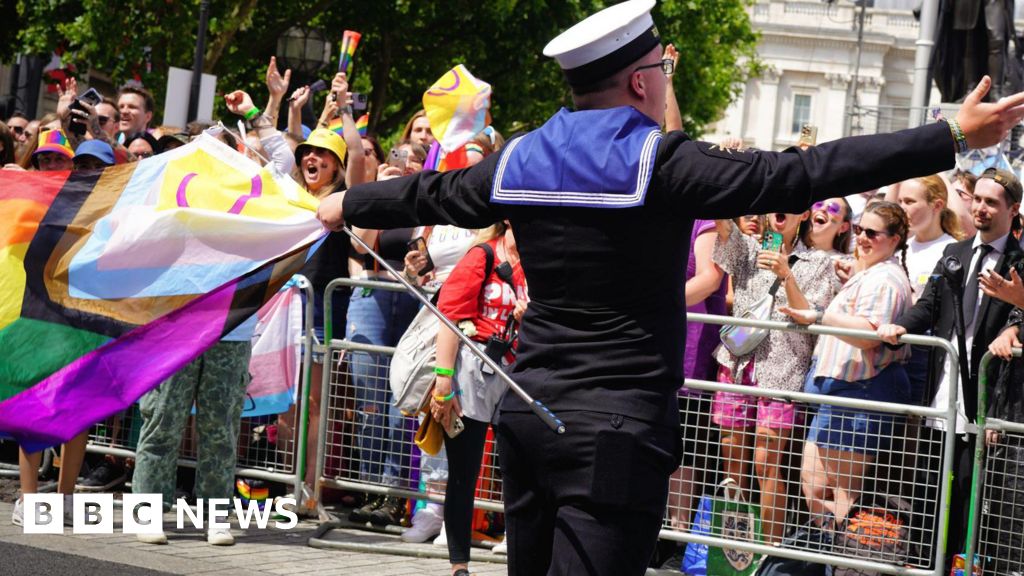
Homosexuality was decriminalised in the UK in 1967, but a ban continued in the armed forces until 2000.
The Ministry of Defence said at the time that justification for the policy included “maintenance of operational effectiveness and efficiency”.
But Lord Etherton’s report said there had been an “incomprehensible policy of homophobic bigotry” in the armed forces.
Lord Etherton, Britain’s first openly gay senior judge, found there was a culture of overt homophobia in the forces – enforced through bullying, blackmail and sexual assault.
Many gay service personnel were dismissed, lost out on job opportunities, and were shunned by families and friends.
On the release of Lord Etherton’s report in July 2023, then prime minister Rishi Sunak apologised in Parliament, calling the ban “an appalling failure” of the British state.
The report made 49 recommendations to the government including:
-
Affected veterans to be given an “appropriate financial reward” capped at £50m overall
-
The restoration of medals that had to be handed back on dismissal or discharge
-
The clarification of pension rights
Speaking in the Commons, Carns said the government had “met 32” of the recommendations and “will meet the financial redress scheme by the end of this year with the launch in January next year”.
Carns added that the Ministry of Defence was “working with experts across government to establish an appropriate financial redress scheme”.
Labour backbencher Chris Ward said there was “concern among veterans” about the impact of the cap on payments.
Veterans’ charities have warned it will mean the actual amount of compensation will not be enough.
A National Audit Office report found up to 4,000 veterans were likely to be eligible for compensation, meaning the average payout could be about £12,500.
Some LGBT veterans awarded a special badge to mark the injustice they faced told the BBC they would refuse to wear it until the government payed them compensation.
Source link

Khamrah by Lattafa for Men - 3.4 oz EDP Spray
4% Off
Ghost Sweetheart Eau de Toilette | Pineapple, Jasmine and Sandalwood | Perfume for Women 50 ml
50% Off
Marc Jacobs Dot Eau De Parfum for Women, 100 ml
42% Off
Ted Baker W Eau de Toilette for Her, Fig Leaf, White Peony and Violet Top Notes, Pink Orchid and Raspberry Middle Notes, 75ml
£11.77 (£15.69 / 100 ml) (as of 15/07/2026 03:57 GMT +01:00 - More infoProduct prices and availability are accurate as of the date/time indicated and are subject to change. Any price and availability information displayed on [relevant Amazon Site(s), as applicable] at the time of purchase will apply to the purchase of this product.)
Ted Baker Woman Pink Eau de Toilette Spray Floral Green Feminine Fragrance, Opening Notes are Fresh Peach, Bergamot and Tangerine with Warm Musk, Vanilla and Vetiver Base, 100ml
11% Off
Vera Wang Princess Eau de Toilette - 30 ml

Choco Musk 50ml Eau De Parfum for men and women | Chocolate Musk by Jannat Aromas
17% Off
Christina Aguilera Signature Eau de Parfum (50ml) Floral, Fruity & Exotic Scent, Luxury Fragrance for Women
9% Off
Calvin Klein - Eau De Toilette CKIN2U - Calvin Klein Women, Ladies Perfume, Women's Perfume, Calvin Klein Perfume, Calvin Klein One - 150 ml
5% Off
Jimmy Choo Flash Eau de Parfum, 60 ml (Pack of 1)
3% Off
Fruit of the Loom Men's Heavy T Shirt, White, XL UK
28% Off
ATNKE LED Lighted Beanie Cap,USB Rechargeable Running Hat Ultra Bright 4 LED Waterproof Light Winter Warm Gifts for Men and Women/Pink
17% Off
Men's 1/4 Zip Pullover UK Sale Clearance, Fleece Sweatshirt Casual Jumper Long Sleeve T-shirt Top Stand Collar Sweater Plain Pullover Sports Leisure Workwear Quarter Zip Sweater Lightweight Jumpers

Crevice Cleaning Brush, Bathroom Tile Groove Gap Cleaning Brush,Premium Crevice Cleaning Tool Aluminum Support with 15° Angle Magic Brush, Thin Brush for Home Kitchen
19% Off
Wireless Earbuds, Bluetooth 5.3 Headphones in Ear with HiFi Stereo Deep Bass, 4 ENC Noise Cancelling Mic Wireless Earphones 40H Playtime, Bluetooth Earbuds Dual LED Display, IP7 Waterproof, USB-C
42% Off