Tokyo correspondent

 Reuters
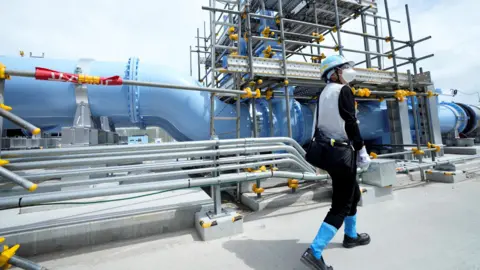
Japan says it will increase its reliance on nuclear energy in a major policy shift as it seeks to meet growing demand from power-hungry sectors like AI and semiconductors.
An energy plan approved by the cabinet on Tuesday called for “maximising the use of nuclear energy” and dropped reference to “reducing reliance on nuclear energy”.
The energy plan, written by the Ministry of Economy, Trade and Industry says that by 2040, nuclear energy should account for 20% of Japan’s grid supply in 2040, more than double the 8.5% share in 2023.
It comes as the Fukushima nuclear plant disaster from 14 years ago continues to hang over the country, conjuring painful memories.
In March 2011, a 9.0-magnitude earthquake near Japan’s north-east coast spawned a tsunami that killed more than 18,000 people, wiping out entire towns and flooding the reactors of the Fukushima Daiichi plant.
Japan now operates 14 commercial nuclear reactors, compared to 54 before the Fukushima disaster when 30% of the country’s energy was from nuclear sources.
The plan still needs approval by parliament, where it will be discussed in the coming months.
The country, which imports 90% of its fuel, needs to look to nuclear sources as part of its plan to cut back on carbon and be self-reliant on energy, said Daishiro Yamagiwa, an MP who was part of a government advisory committee on the energy plan.
 EPA
EPA“Because of the conflict in Ukraine and the war in the Middle East, even fossil fuels have become difficult to buy,” he told the BBC. “Japan is a country without energy resources, so we must use whatever is available in a balanced way.”
Yamagiwa added that energy burdens are growing because of demand from AI data processing centres and semiconductor factories around the country.
But experts say increasing reliance on nuclear energy will be both risky and costly.
Japan will need to import uranium, which is expensive and will make the country reliant on other countries, said Professor Kenichi Oshima, a lecturer at the faculty of policy science at Ryukoku University.
Prof Kenichi told the BBC the main concern is that increasing the number of nuclear power plants also raises the risk of potentially disastrous accidents.
He cited the 2024 New Year’s Day earthquake in the Noto peninsula, where two decades ago, a plan to build a nuclear plant was scrapped because locals opposed it.
“If there had been a nuclear power plant there, it is quite clear that it would have caused a major accident,” he said.
Fukushima looms large
In Japan, any mention of nuclear energy inevitably brings back difficult memories of the nuclear meltdown at the Daiichi power plant.
“We all had such a terrible experience at the time of the Fukushima quake,” Tokyo resident Yuko Maruyama told the BBC.
“How could I support it (the nuclear energy plan)? I want the government to rely on other sources of energy,” she added.
“As a mother I think of the children, of their safety. I cannot help but think about what would happen in the future.”
The meltdown at Fukushima is considered the world’s worst since that of Chernobyl in 1986.
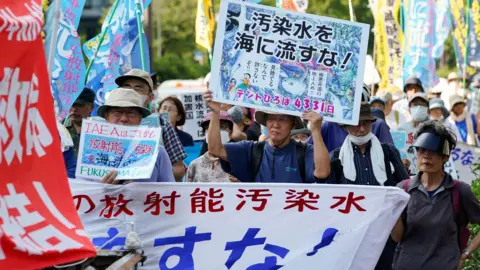
It stirred fresh controversy in 2023, when Japan started releasing treated water from the site of the Fukushima plant. This drew protests from Japan’s neighbours, including China, over safety concerns.
The United Nations atomic energy regulator IAEA said the waste water was safe and would have a “negligible” impact on people and the environment.
In response to the new energy plan announced this week, Greenpeace said promoting nuclear energy is “outrageous” when the fallout from Fukushima is still ongoing.
“There is no justification for continuing to rely on nuclear energy, which remains toxic for tens of thousands of years, produces radioactive waste that requires long-term management, and carries risks like earthquakes and terrorism,” the group said.
To meet the government’s goal, experts say 33 reactors must be put back online, but the current pace of safety checks as well as residents’ objections in some areas will make this difficult.
Many of these nuclear plants are old and will need to be refitted with new technology for them to function safely.
“That most difficult problem is that each nuclear power plant is in a different location and will need its own safety protocol and infrastructure,” Yamagiwa said.
“We must check each of them carefully. It still takes time.”
In recent months, regulators have given several old reactors approval to keep operating.
In October 2024 Japan’s oldest reactor, Takahama nuclear power plant, was given the go-ahead to continue operations, making it the first reactor in the country to get approval to operate beyond 50 years.
BBC News

Khamrah by Lattafa for Men - 3.4 oz EDP Spray
4% Off
Ghost Sweetheart Eau de Toilette | Pineapple, Jasmine and Sandalwood | Perfume for Women 50 ml
50% Off
Marc Jacobs Dot Eau De Parfum for Women, 100 ml
42% Off
Ted Baker W Eau de Toilette for Her, Fig Leaf, White Peony and Violet Top Notes, Pink Orchid and Raspberry Middle Notes, 75ml
£11.77 (£15.69 / 100 ml) (as of 30/06/2026 03:52 GMT +01:00 - More infoProduct prices and availability are accurate as of the date/time indicated and are subject to change. Any price and availability information displayed on [relevant Amazon Site(s), as applicable] at the time of purchase will apply to the purchase of this product.)
Ted Baker Woman Pink Eau de Toilette Spray Floral Green Feminine Fragrance, Opening Notes are Fresh Peach, Bergamot and Tangerine with Warm Musk, Vanilla and Vetiver Base, 100ml
11% Off
Vera Wang Princess Eau de Toilette - 30 ml

Choco Musk 50ml Eau De Parfum for men and women | Chocolate Musk by Jannat Aromas
17% Off
Christina Aguilera Signature Eau de Parfum (50ml) Floral, Fruity & Exotic Scent, Luxury Fragrance for Women
9% Off
Calvin Klein - Eau De Toilette CKIN2U - Calvin Klein Women, Ladies Perfume, Women's Perfume, Calvin Klein Perfume, Calvin Klein One - 150 ml
5% Off
Jimmy Choo Flash Eau de Parfum, 60 ml (Pack of 1)
3% Off
Fruit of the Loom Men's Heavy T Shirt, White, XL UK
28% Off
ATNKE LED Lighted Beanie Cap,USB Rechargeable Running Hat Ultra Bright 4 LED Waterproof Light Winter Warm Gifts for Men and Women/Pink
17% Off
Men's 1/4 Zip Pullover UK Sale Clearance, Fleece Sweatshirt Casual Jumper Long Sleeve T-shirt Top Stand Collar Sweater Plain Pullover Sports Leisure Workwear Quarter Zip Sweater Lightweight Jumpers
£5.88 (as of 12/11/2025 00:52 GMT +01:00 - More infoProduct prices and availability are accurate as of the date/time indicated and are subject to change. Any price and availability information displayed on [relevant Amazon Site(s), as applicable] at the time of purchase will apply to the purchase of this product.)
Crevice Cleaning Brush, Bathroom Tile Groove Gap Cleaning Brush,Premium Crevice Cleaning Tool Aluminum Support with 15° Angle Magic Brush, Thin Brush for Home Kitchen
19% Off
Wireless Earbuds, Bluetooth 5.3 Headphones in Ear with HiFi Stereo Deep Bass, 4 ENC Noise Cancelling Mic Wireless Earphones 40H Playtime, Bluetooth Earbuds Dual LED Display, IP7 Waterproof, USB-C
42% Off