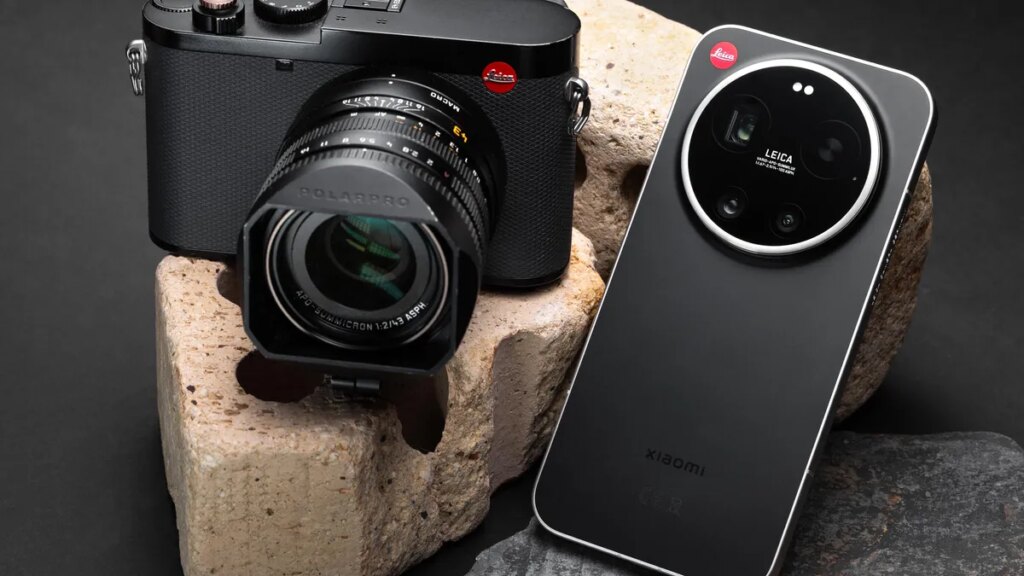
Today’s best phone cameras are astonishingly capable when it comes to taking pictures. With large sensors, wide apertures and a wealth of extra software features, they can take images that rival what you’d expect from pro-level mirrorless cameras.
I’ve thoroughly tested all of today’s best camera phones, including the iPhone 17 Pro, Galaxy S26 Ultra and Leica Leitzphone in my time as both phone reviewer and professional photographer.
But I still wouldn’t ever want to fully replace my camera with just a phone. I have a few key reasons why.
Ergonomics
While cameras have come in all shapes and sizes over the last few decades, they’re designed to be held the same way, with your fingers naturally resting in the same places when pressing the shutter button. They feel like a natural fit and even smaller compact cameras such as the Fujifilm X100VI or my own Leica Q3 43 still allow you to hold them up to take your shot in a typically comfortable way.
Phones aren’t built to be cameras first, so they naturally force a different way of holding them. The big touchscreens mean you have to delicately hold the phone by its edges to avoid accidentally touching something on screen, and with no viewfinder, there’s no option to hold them up to your eye, as you would with most regular cameras.
When holding a phone like a camera, it can feel like you have to be exceptionally delicate with it, especially if you’re quickly shooting one-handed. I often worry I’m going to drop it.
Phones are small and thin (at least compared to most cameras), making it difficult to get a firm grip, and tapping an on-screen button to take a photo always feels awkward. I worry about dropping the phone as I shuffle my fingers around into the right position. Even those phones that offer physical shutter buttons on the edge (or let you use the volume key as a shutter) still feel like you’re holding them in a way they were never truly designed for.
Sure, you can get camera grips or cases that help bulk out the phone to give you something to hold onto and some of those even offer shutter buttons and settings wheels to let you use them like a compact camera. I’ve tried many of them, but none feel as good as holding an actual camera.
Image quality
Today’s best phone cameras can take truly stunning images. I’ve been blown away by the photos I’ve been able to capture with Xiaomi and Leica’s Leitzphone, especially when using its filmic color profiles. But even this phone — arguably the best camera phone money can buy — doesn’t fully compete with a real camera.
Leica and Xiaomi’s Leitzphone can take some beautiful images, but even so, its quality isn’t on par with an actual Leica camera.
And how can it? While it has a larger image sensor than most phones, it’s still tiny compared to the vast majority of cameras out there. As is its lens. It’s why all smartphone cameras have to rely heavily on software image processing to squeeze every bit of quality they can from their sensors. Some take this way too far with images that can look seriously overprocessed, with heavy-handed sharpening being a common factor in most phones’ quality.
In reality, if you just look at these images on your Instagram feed, you’d probably never realize they were taken on a phone. The often “crunchy”-looking over-sharpened aesthetic a lot of phones produce typically only becomes apparent when you zoom into the fine details. But those signs will still be there, often alongside increased saturation and an over-reliance on HDR techniques to control highlights and shadows.
Pro cameras with larger image sensors and higher-quality lenses can produce far more natural-looking details without an algorithm stepping in.
The Google Pixel 10 Pro uses generative AI to add detail back into its images when taken at over 30x zoom. It’s a neat idea in theory, but I’d rather know that everything in my images is what I actually captured and not what an algorithm thinks should be there.
Generative AI
Speaking of algorithms, I can say with certainty that I don’t want generative AI anywhere near my photos. That’s becoming increasingly difficult to avoid with phone cameras. Google proudly boasted that it uses generative AI to upscale its zoom photos on the Pixel 10 Pro while some of Samsung’s new camera features involve using AI to replace items of clothing on your subject. Apple’s upcoming iOS 27 will even allow you to change the perspective of an image after you’ve taken it, using AI to create an angle that you never actually took in the first place.
Almost all phones offer some kind of AI in their image-taking workflow. Even phones that aren’t actively changing the background or other elements in your images are still using generative tools to upscale your photos to make them look “better.”
The result is that it’s difficult to say that you’ve really taken an image when you don’t know how much of it has been reconstructed by software. Oppo explained that its recent Find X9 Ultra doesn’t use any generative AI when in its Master mode — and honestly, you can tell; shots in its regular mode can certainly look over-processed, especially when it comes to the artificially-lifted shadows. Switching to Master mode (and thereby bypassing all the AI) is the way to get the best-looking shots from this phone. I found the same when using the camera on the Honor Magic 8 Pro.
I didn’t realize the Oppo Find X9 Pro was using generative AI in its telephoto zoom shots, but that’s clearly what’s happening here as it’s tried to artificially recreate the face of the person in the foreground — and it’s not done it well.
Call me a purist, a luddite or a technophobe, but AI has no place in my photography — either at the point of capture or when I’m editing my images later. I want to know that what I captured in my finished shot is what I, the photographer, actually wanted in that frame, not just what an algorithm spat out.
Life cycle
I own and frequently use cameras that are decades old. My Pentax K1000 film camera was released in 1976, while one of my favorite digital cameras — the Sony RX1R — is now 13 years old and still going strong. A phone’s life cycle is much shorter, with even top models receiving security updates for only up to seven years.
This Yashica A was released in the 1950s making it around 70 years old yet I was still able to take some great photos with it.
Once that support period is over, your phone is simply not safe to use and it’s time to upgrade. Sure, the idea is that by then, new technology would be available, so the phone you’d be upgrading to would be even better than your old one. But it still means that the phone camera you’re used to shooting with, which delivers the look and tones you like, simply isn’t going to hang around as long as a regular camera.
That lifespan can really sting, especially as advanced camera phones tend to demand more money — like the £1,700 ($2,245) Leitzphone. Are you better off buying one expensive device that does everything for a shorter period of time, or spending less on a regular phone and also buying a camera that’ll last you much longer? That’s a decision only you can make.
The Pixel 10 Pro has a long software support period of around seven years.
The look
I might be vain here, but as a professional photographer, I simply wouldn’t want to be seen only taking photos on a phone. It doesn’t matter if that phone is the best in the world at taking images; there’s a certain stigma around it that suggests a level of amateurism. I’m not really talking about what it looks like to strangers on the street — if anything, using a phone allows you to blend in and become effectively invisible, which is amazing for things like street photography.
I’m talking about more professional scenarios. If I turned up to a shoot for a commercial client paying me five figures for my images and all I used was a phone, I don’t think I’d ever get work from that client again. I could argue all I want that the quality is good enough, that they’re paying for my expertise and that the end images will still be great but it wouldn’t matter. That client would see the phone and wonder why the hell they’re paying so much for someone to take some snaps on a phone — they could have done that themselves and saved a ton of money in the process.
Some of my shoots involve a lot of gear and setup. If I turned up just with a phone, I’d never get hired again.
Don’t get me wrong, I don’t believe that only the best gear can take the best photos — I’ve done commercial shoots using Canon’s cheapest 50mm “nifty fifty” lens and had images taken with that lens licensed for luxury photo books. Most clients care about the images, not the equipment you’re using to get them. But there’s a balance to be struck here and using professional gear suggests that you are a professional. Turning up to a shoot — commercial, wedding, whatever — and pulling out my iPhone for the job isn’t going to do my photography career any favors.
So many notifications
I’ve saved my most important one for last because it’s the biggest stumbling block for me when using a phone as a camera for extended periods. If I’m taking images — whether wandering around a Tuscan village on holiday, taking photos for my YouTube channel or on set for a commercial job — I don’t want distractions that pull me away from the creative mindset I’m trying to maintain.
Using my phone for any purpose already means battling with near-constant incoming notifications from my email, from Slack, WhatsApp, Instagram and many others. It’s a perpetual onslaught of things going on that makes it increasingly difficult to concentrate on the task at hand. Sure, you can turn Do Not Disturb on — and I do — but I also don’t want to miss important phone calls or other messages I might need to act on. So I don’t like switching things off altogether either.
One of the reasons I’ve enjoyed using film cameras recently is that there are absolutely zero distractions so you can focus completely on staying in the moment.
Using a dedicated camera feels like choosing the right tool for the right job. Unlike our phones, it’s not trying to be something else by doing 1,000 other things in the background. My camera doesn’t come with bubble-pop games pre-installed and it’s not vibrating every ten seconds while my friends share memes on our WhatsApp group. Using the camera means shutting off from everything else going on in my life and focusing on the joy of image creation.
I don’t want one device that can do all the things. Sometimes it’s better to have a product that does only one thing but it does that one thing exceptionally well. And just as I don’t want a wrench that’s also a DAB radio and a meat thermometer, I don’t want a camera that’s a games console, an exercise tracker and my portal to social media.
It’s why I — and many other photographers around the world — have also really enjoyed getting into analog film photography recently as it strips out even more of the technology and allows for a more simplistic, arguably more authentic way to take images.
I use my camera increasingly as a way of finding some zen in the chaos of life and not feeling like I’m constantly switched on. It’s why my camera makes me feel more inspired. Picking it up means making an intentional decision to want to go and take photos, not just whipping out my phone to get a quick snap if I happen to see a cute dog. That intentionality invokes a deeper sense of creativity. And more often than not, it results in better, more meaningful photos.
I took this on an iPhone 14 Pro, so I know that phones can take exceptionally good images. I’d just rather use a regular camera for my real photography.
As the adage goes, the best camera is the one you always have with you, but that doesn’t mean it’ll always be the one you can take your best photos with. I love using phone cameras and I’m thrilled that I can have something so capable in my pockets for those occasions where I don’t have my camera with me.
But phones will always be supplementary cameras for me — great for those spur-of-the-moment opportunities or for shooting behind-the-scenes content. And yes, I will sometimes opt to use it on those outings where I don’t want a camera round my neck. But I’ll still always have a regular camera for my work and whether it’s a modern digital or a vintage film camera, it’ll always be the thing I reach for when I want to switch off from the world and truly focus on the joy of taking photos.

Khamrah by Lattafa for Men - 3.4 oz EDP Spray
4% Off
Ghost Sweetheart Eau de Toilette | Pineapple, Jasmine and Sandalwood | Perfume for Women 50 ml
50% Off
Marc Jacobs Dot Eau De Parfum for Women, 100 ml
42% Off
Ted Baker W Eau de Toilette for Her, Fig Leaf, White Peony and Violet Top Notes, Pink Orchid and Raspberry Middle Notes, 75ml
£11.77 (£15.69 / 100 ml) (as of 28/06/2026 03:51 GMT +01:00 - More infoProduct prices and availability are accurate as of the date/time indicated and are subject to change. Any price and availability information displayed on [relevant Amazon Site(s), as applicable] at the time of purchase will apply to the purchase of this product.)
Ted Baker Woman Pink Eau de Toilette Spray Floral Green Feminine Fragrance, Opening Notes are Fresh Peach, Bergamot and Tangerine with Warm Musk, Vanilla and Vetiver Base, 100ml
11% Off
Vera Wang Princess Eau de Toilette - 30 ml

Choco Musk 50ml Eau De Parfum for men and women | Chocolate Musk by Jannat Aromas
17% Off
Christina Aguilera Signature Eau de Parfum (50ml) Floral, Fruity & Exotic Scent, Luxury Fragrance for Women
9% Off
Calvin Klein - Eau De Toilette CKIN2U - Calvin Klein Women, Ladies Perfume, Women's Perfume, Calvin Klein Perfume, Calvin Klein One - 150 ml
5% Off
Jimmy Choo Flash Eau de Parfum, 60 ml (Pack of 1)
3% Off
Fruit of the Loom Men's Heavy T Shirt, White, XL UK
28% Off
ATNKE LED Lighted Beanie Cap,USB Rechargeable Running Hat Ultra Bright 4 LED Waterproof Light Winter Warm Gifts for Men and Women/Pink
17% Off
Men's 1/4 Zip Pullover UK Sale Clearance, Fleece Sweatshirt Casual Jumper Long Sleeve T-shirt Top Stand Collar Sweater Plain Pullover Sports Leisure Workwear Quarter Zip Sweater Lightweight Jumpers
£5.88 (as of 12/11/2025 00:52 GMT +01:00 - More infoProduct prices and availability are accurate as of the date/time indicated and are subject to change. Any price and availability information displayed on [relevant Amazon Site(s), as applicable] at the time of purchase will apply to the purchase of this product.)
Crevice Cleaning Brush, Bathroom Tile Groove Gap Cleaning Brush,Premium Crevice Cleaning Tool Aluminum Support with 15° Angle Magic Brush, Thin Brush for Home Kitchen
19% Off
Wireless Earbuds, Bluetooth 5.3 Headphones in Ear with HiFi Stereo Deep Bass, 4 ENC Noise Cancelling Mic Wireless Earphones 40H Playtime, Bluetooth Earbuds Dual LED Display, IP7 Waterproof, USB-C
42% Off