Anaphylaxis is a variant of an extremely severe allergic reaction. Contact with the allergen can lead to a sharp drop in blood pressure and a lack of oxygen, which causes the body’s systems to shut down and death can occur. Anaphylaxis occurs spontaneously, and its severity is often impossible to predict. Therefore, it is important to follow the statistics of real cases of anaphylaxis. RUDN University doctors analyzed almost 30 thousand cases of drug allergies over four years and presented them in the form of statistical data.
“National health system databases are an important source of information on the epidemiology of adverse drug reactions, including drug allergies and anaphylaxis. Analysis of such databases can expand the knowledge of medical workers about the problem of drug-induced anaphylaxis,” Olga Butranova, Ph.D., Associate Professor of the Department of General and Clinical Pharmacology of the RUDN University said.
Clinicians used a retrospective descriptive analysis. To do this, the authors took reports of drug-induced anaphylaxis registered in the Russian National Pharmacovigilance database. A total of 27,727 records were analyzed. RUDN University doctors used data from April 2, 2019, to June 21, 2023. The authors calculated the proportion of anaphylaxis among all allergic reactions caused by drugs. Separately, they studied indicators among children, the elderly, and fatalities, and paid attention to demographic indicators.
Anaphylaxis accounted for 8.3% of all drug-induced allergic reactions in adults. The average age of the patients was 48.2 years. For children, the proportion of anaphylaxis was 3.9%, among the elderly—2%. In 53.2% of cases, anaphylactic reactions were observed in women.
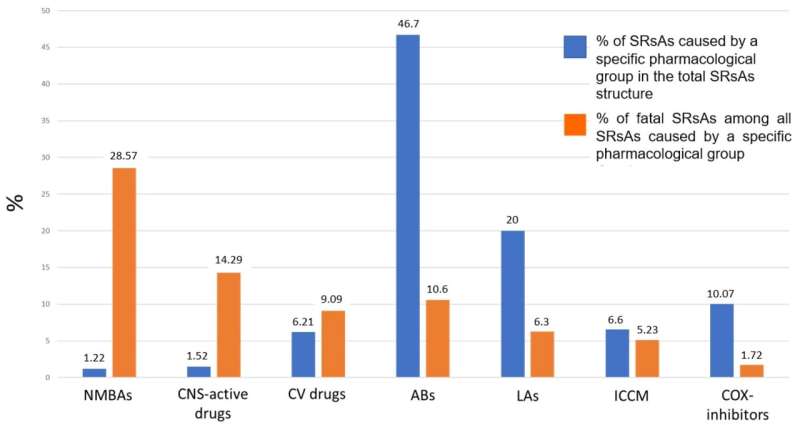
The main groups of drugs that caused anaphylaxis were antibacterial drugs (44.6%), local anesthetics (20%), and cyclooxygenase inhibitors (10%). The latter are represented, for example, by drugs such as aspirin and ibuprofen. Fatal anaphylaxis occurred in 9.5% of all reported anaphylaxis cases. In 40% of them, the reaction was caused by antibacterial agents.
“Anaphylaxis accounts for a fairly large proportion of all allergic reactions caused by drugs. The main drugs involved were antibacterial agents, local anesthetics, cyclooxygenase inhibitors, cardiovascular drugs, and drugs acting on the central nervous system,” Olga Butranova, Ph.D., Associate Professor of the Department of General and Clinical Pharmacology of the RUDN University said.
The study is published in the journal Pharmaceuticals.
More information:
Olga Butranova et al, Drug-Induced Anaphylaxis: National Database Analysis, Pharmaceuticals (2024). DOI: 10.3390/ph17010090
Provided by
Scientific Project Lomonosov
Citation:
Investigating the most allergen-inducing drugs (2024, February 21)
retrieved 22 February 2024
from https://medicalxpress.com/news/2024-02-allergen-drugs.html
This document is subject to copyright. Apart from any fair dealing for the purpose of private study or research, no
part may be reproduced without the written permission. The content is provided for information purposes only.

Khamrah by Lattafa for Men - 3.4 oz EDP Spray
4% Off
Ghost Sweetheart Eau de Toilette | Pineapple, Jasmine and Sandalwood | Perfume for Women 50 ml
50% Off
Marc Jacobs Dot Eau De Parfum for Women, 100 ml
42% Off
Ted Baker W Eau de Toilette for Her, Fig Leaf, White Peony and Violet Top Notes, Pink Orchid and Raspberry Middle Notes, 75ml
£11.77 (£15.69 / 100 ml) (as of 16/07/2026 03:58 GMT +01:00 - More infoProduct prices and availability are accurate as of the date/time indicated and are subject to change. Any price and availability information displayed on [relevant Amazon Site(s), as applicable] at the time of purchase will apply to the purchase of this product.)
Ted Baker Woman Pink Eau de Toilette Spray Floral Green Feminine Fragrance, Opening Notes are Fresh Peach, Bergamot and Tangerine with Warm Musk, Vanilla and Vetiver Base, 100ml
11% Off
Vera Wang Princess Eau de Toilette - 30 ml

Choco Musk 50ml Eau De Parfum for men and women | Chocolate Musk by Jannat Aromas
17% Off
Christina Aguilera Signature Eau de Parfum (50ml) Floral, Fruity & Exotic Scent, Luxury Fragrance for Women
9% Off
Calvin Klein - Eau De Toilette CKIN2U - Calvin Klein Women, Ladies Perfume, Women's Perfume, Calvin Klein Perfume, Calvin Klein One - 150 ml
5% Off
Jimmy Choo Flash Eau de Parfum, 60 ml (Pack of 1)
3% Off
Fruit of the Loom Men's Heavy T Shirt, White, XL UK
28% Off
ATNKE LED Lighted Beanie Cap,USB Rechargeable Running Hat Ultra Bright 4 LED Waterproof Light Winter Warm Gifts for Men and Women/Pink
17% Off
Men's 1/4 Zip Pullover UK Sale Clearance, Fleece Sweatshirt Casual Jumper Long Sleeve T-shirt Top Stand Collar Sweater Plain Pullover Sports Leisure Workwear Quarter Zip Sweater Lightweight Jumpers
£5.88 (as of 12/11/2025 00:52 GMT +01:00 - More infoProduct prices and availability are accurate as of the date/time indicated and are subject to change. Any price and availability information displayed on [relevant Amazon Site(s), as applicable] at the time of purchase will apply to the purchase of this product.)
Crevice Cleaning Brush, Bathroom Tile Groove Gap Cleaning Brush,Premium Crevice Cleaning Tool Aluminum Support with 15° Angle Magic Brush, Thin Brush for Home Kitchen
19% Off
Wireless Earbuds, Bluetooth 5.3 Headphones in Ear with HiFi Stereo Deep Bass, 4 ENC Noise Cancelling Mic Wireless Earphones 40H Playtime, Bluetooth Earbuds Dual LED Display, IP7 Waterproof, USB-C
42% Off