[
[

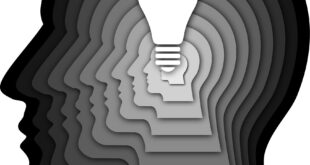
The Journal of Neuroscience features for the first time a cover concept that is not about what neuroscientists have done, but rather what neuroscience can do for humanity’s future.
In their article titled “Neuroscience Needs Behavioral ‘Wind Tunnels’ for Real-Life Translation,” lead authors Mohammad Shehata, Charles Yokoyama and Michael Platt propose that the future of neuroscience depends on creating behavioral “wind tunnels”: controlled research spaces embedded in real-world environments that can generate the ecological, scalable data the field currently lacks.
This new paradigm aims to accelerate both scientific progress and societal impact, enabling neuroscience to advance beyond its current bottlenecks.
Challenges facing traditional neuroscience approaches
For over a century, neuroscience has been driven by reductionist methods—isolating molecules, cells, and circuits in pursuit of ever-greater detail. This work has produced invaluable insights. Yet as Shehata and colleagues argue, the field now faces an epistemological bottleneck: fragmented reductionist data cannot be straightforwardly assembled into a coherent model of human cognition or real-world brain function.
Currently, neuroscience translation is dominated by a clinical mission focused on treating disorders defined by the DSM (Diagnostic and Statistical Manual of Mental Disorders). While important, this narrow focus creates blind spots.
As the authors explain, “Current translational pathways are dominated by a clinical mission—using dysfunction to model normal function—which limits ecological validity and reinforces blind spots.”
This framework makes it difficult for the field to address the full spectrum of human cognitive challenges—from optimizing learning in educational settings to enhancing productivity in workplaces that are increasingly disrupted by artificial intelligence.
The promise of behavioral wind tunnels
To enable a broader and more ecologically-grounded impact, the researchers introduce the concept of behavioral “wind tunnels.” Like the aerodynamic wind tunnels that transformed aviation, these infrastructures would provide a middle ground between highly controlled laboratory studies and the uncontrolled complexity of daily life.
Crucially, these environments would be embedded directly within real-world educational, workplace, and social contexts, while still preserving the experimental control and repeatability required for scientific rigor.
These wind tunnels would enable:
- Scalable measurement across large populations
- Longitudinal tracking across months and years
- Multidimensional cognitive modeling (traits, states, learning dynamics)
- Closed-loop feedback systems for adaptive interventions
By creating these infrastructures, neuroscience stands to gain not only new societal applications but also a fundamentally new experimental architecture, solving limitations that have stalled theoretical unification for decades.
Behavioral wind tunnels are positioned as essential for the scientific progress of the field itself, allowing researchers to build models that are ecologically valid, predictive, and grounded in real-world human behavior.
More information:
Mohammad Shehata et al, Neuroscience Needs Behavioral “Wind Tunnels” for Real-Life Translation, The Journal of Neuroscience (2025). DOI: 10.1523/jneurosci.1705-25.2025
Citation:
Neuroscience takes flight: Introducing behavioral ‘wind tunnels’ for real-world brain translation (2025, November 26)
retrieved 28 November 2025
from https://medicalxpress.com/news/2025-11-neuroscience-flight-behavioral-tunnels-real.html
This document is subject to copyright. Apart from any fair dealing for the purpose of private study or research, no
part may be reproduced without the written permission. The content is provided for information purposes only.

Khamrah by Lattafa for Men - 3.4 oz EDP Spray
4% Off
Ghost Sweetheart Eau de Toilette | Pineapple, Jasmine and Sandalwood | Perfume for Women 50 ml
50% Off
Marc Jacobs Dot Eau De Parfum for Women, 100 ml
42% Off
Ted Baker W Eau de Toilette for Her, Fig Leaf, White Peony and Violet Top Notes, Pink Orchid and Raspberry Middle Notes, 75ml
£11.77 (£15.69 / 100 ml) (as of 13/08/2026 04:10 GMT +01:00 - More infoProduct prices and availability are accurate as of the date/time indicated and are subject to change. Any price and availability information displayed on [relevant Amazon Site(s), as applicable] at the time of purchase will apply to the purchase of this product.)
Ted Baker Woman Pink Eau de Toilette Spray Floral Green Feminine Fragrance, Opening Notes are Fresh Peach, Bergamot and Tangerine with Warm Musk, Vanilla and Vetiver Base, 100ml
11% Off
Vera Wang Princess Eau de Toilette - 30 ml

Choco Musk 50ml Eau De Parfum for men and women | Chocolate Musk by Jannat Aromas
17% Off
Christina Aguilera Signature Eau de Parfum (50ml) Floral, Fruity & Exotic Scent, Luxury Fragrance for Women
9% Off
Calvin Klein - Eau De Toilette CKIN2U - Calvin Klein Women, Ladies Perfume, Women's Perfume, Calvin Klein Perfume, Calvin Klein One - 150 ml
5% Off
Jimmy Choo Flash Eau de Parfum, 60 ml (Pack of 1)
3% Off
Fruit of the Loom Men's Heavy T Shirt, White, XL UK
28% Off
ATNKE LED Lighted Beanie Cap,USB Rechargeable Running Hat Ultra Bright 4 LED Waterproof Light Winter Warm Gifts for Men and Women/Pink
17% Off
Men's 1/4 Zip Pullover UK Sale Clearance, Fleece Sweatshirt Casual Jumper Long Sleeve T-shirt Top Stand Collar Sweater Plain Pullover Sports Leisure Workwear Quarter Zip Sweater Lightweight Jumpers
£5.88 (as of 12/11/2025 00:52 GMT +01:00 - More infoProduct prices and availability are accurate as of the date/time indicated and are subject to change. Any price and availability information displayed on [relevant Amazon Site(s), as applicable] at the time of purchase will apply to the purchase of this product.)
Crevice Cleaning Brush, Bathroom Tile Groove Gap Cleaning Brush,Premium Crevice Cleaning Tool Aluminum Support with 15° Angle Magic Brush, Thin Brush for Home Kitchen
19% Off
Wireless Earbuds, Bluetooth 5.3 Headphones in Ear with HiFi Stereo Deep Bass, 4 ENC Noise Cancelling Mic Wireless Earphones 40H Playtime, Bluetooth Earbuds Dual LED Display, IP7 Waterproof, USB-C
42% Off