As a longtime allergy sufferer, I have vivid childhood memories of having to allergy-proof my bedroom by adding hypoallergenic covers over my pillows and reducing my stuffed animal collection to keep my dust mite allergy at bay. As an adult and wellness writer, I wish I knew then what I know now.
Allergy hindsight is 20/20, especially when your eyes aren’t red and itchy.
Going into this spring, I felt especially prepared to prevent allergy symptoms — and it’s paid off. Despite seeing pollen, my familiar foe, on every sidewalk in my neighborhood, I haven’t had a single allergic reaction. That’s huge.
Although May is usually the worst month for allergies, I normally have at least one allergic reaction by now. I think the following products are what’s making a significant difference.
1. My air purifiers
I’m such an air purifier fan that I currently have two, one in each of the high-traffic areas of my apartment: my bedroom and living room. When spring allergy season starts, I typically keep them running on low to continuously catch allergens and prevent them from entering my airways. I bump them up to high whenever my allergy symptoms are particularly bad, or there are wildfires in the area, as I live in Southern California.
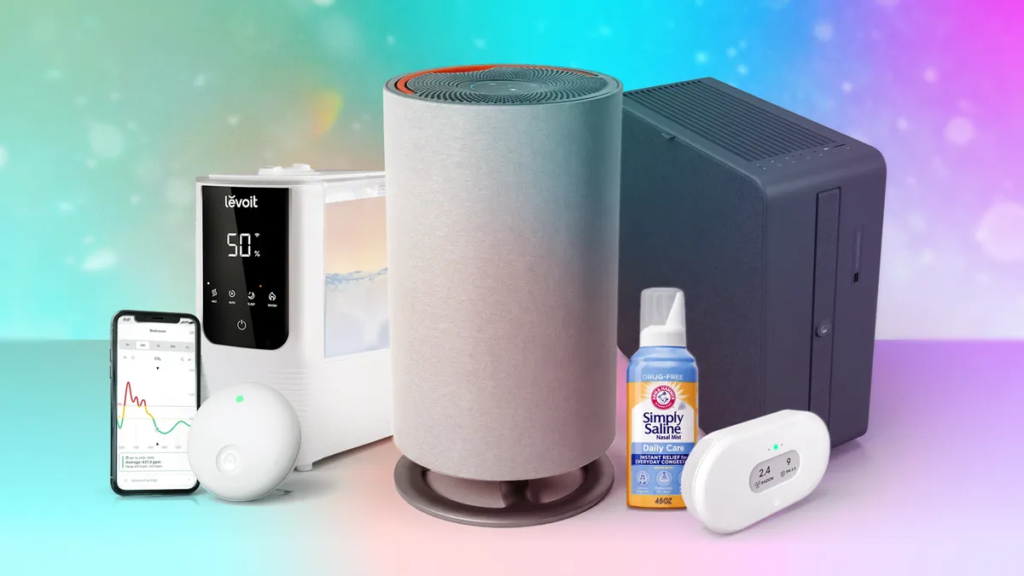
The two I currently use and recommend are the Oransi Mod Air Purifier and Airthings Renew.
While I’ve always known that air purifiers can capture pollutants, mold spores, allergens and smoke, I had no idea that they could prevent illness by filtering out viruses, too. During CNET’s lab testing, we found the best air purifiers for exactly that purpose: the Shark HP232 on a low fan setting and the Coway Airmega 400S on a high fan setting.
Pro tip: Make sure you change your air purifier filter regularly, or else it could spit allergens and other contaminants back into the air you breathe.
The Oransi Mod air purifier, which I currently have running on low in my living room.
2. My robot vacuum
As someone who is allergic to both pollen and dust, keeping a clean home is essential. To get my floors spotless, I rely on help from my robot vacuum.
While it doesn’t have a HEPA filter to minimize particles that end up in the air during vacuuming, and is an older model no longer sold, my Ecovacs Deebot X1 Omni robot vacuum still gets dust and other particles off my floors, stopping them from getting stirred up into the air. Plus, its disposable dustbin prevents me from having to manually empty allergens into the trash, where I might also inhale them.
To mitigate particles kicked up into the air while my robot vacuum is doing its thing, I always have my windows open or my air purifiers running.
Both the Mova V50 Ultra and the Ecovacs Deebot T80 Omni robot vacuums have HEPA filters.
3. Air quality monitors
While my Airthings Renew air purifier has a built-in air quality light that glows green, yellow or red depending on PM2.5 particle (inhalable particles with diameters 2.5 micrometers and smaller) levels, my Oransi model doesn’t, so I rely on the Airthings View Plus air quality monitor in between my living room and kitchen to keep me up to date on the status of my air in that area.
In addition to temperature, air pressure and humidity, View Plus tracks volatile organic compounds (VOCs, airborne chemicals), carbon dioxide (CO2), radon (a radioactive gas) and fine particulate matter (PM2.5).
I also have Airthings’s compact Wave Enhance air quality monitor in my bedroom. Since the brand’s Renew air purifier sensor only measures PM2.5 particles, I use the Wave Enhance to measure temperature, humidity, air pressure, CO2, VOCs, ambient noise and light to see how different levels may be impacting my sleep.
All of my Airthings monitors connect to an app on my phone, where I set up notifications to alert me when my air quality drops and to provide tips on improving it. The app also has a pollen forecast that lets me know when it’s time to turn on my air purifiers, but you can easily check the pollen count online or by using other apps.
The Airthings air quality monitor on the wall in between my living room and kitchen.
4. A customizable humidifier
Allergies can cause inflamed, irritated nasal passages, which can be soothed with the moisture released by a humidifier. Since my bedroom tends to be dry, this is an extra reason for me to use my Levoit OasisMist Humidifier.
However — and it’s a big however — it’s essential to note that by increasing moisture, a humidifier can make your space hospitable to mold and dust mites, which are allergens. To mitigate this, the American Academy of Allergy, Asthma and Immunology recommends keeping your home’s humidity between 40% and 50%. An air quality monitor or humidifier that allows you to set the humidity level, such as the Levoit model I have, can help you maintain this balance.
I’d recommend consulting your doctor or allergist to see if a humidifier is right for your specific needs. If it is, you’ll also want to ensure you regularly clean your humidifier and change its filter according to the manufacturer’s instructions.
5. A saline nasal rinse
After a particularly awful sinus infection last spring, my doctor recommended that I use a saline nasal rinse when I notice allergy or illness symptoms, or when the pollen count is high. Specifically, she advised me to use the Arm and Hammer Simply Saline Nasal Care Daily Mist.
Allergy experts also agree that a saline nasal rinse can help prevent allergy symptoms. If nothing relieves your symptoms, speak with your doctor about allergy treatment, such as antihistamine tablets or a steroid nasal spray.
My trusty Simply Saline nasal rinse, which I use on high-pollen days and whenever symptoms arise.
The bottom line
Allergies are the worst. Plain and simple. But that doesn’t mean there’s nothing we can do to combat them. As a seasonal allergy sufferer, I can say that once I started using the aforementioned devices and products, my allergies became a lot more manageable.
Now, I can actually enjoy the spring flowers instead of seeing them as the roots of my stuffy-nosed, itchy-eyed misery.

Khamrah by Lattafa for Men - 3.4 oz EDP Spray
4% Off
Ghost Sweetheart Eau de Toilette | Pineapple, Jasmine and Sandalwood | Perfume for Women 50 ml
50% Off
Marc Jacobs Dot Eau De Parfum for Women, 100 ml
42% Off
Ted Baker W Eau de Toilette for Her, Fig Leaf, White Peony and Violet Top Notes, Pink Orchid and Raspberry Middle Notes, 75ml
£11.77 (£15.69 / 100 ml) (as of 23/08/2026 04:39 GMT +01:00 - More infoProduct prices and availability are accurate as of the date/time indicated and are subject to change. Any price and availability information displayed on [relevant Amazon Site(s), as applicable] at the time of purchase will apply to the purchase of this product.)
Ted Baker Woman Pink Eau de Toilette Spray Floral Green Feminine Fragrance, Opening Notes are Fresh Peach, Bergamot and Tangerine with Warm Musk, Vanilla and Vetiver Base, 100ml
11% Off
Vera Wang Princess Eau de Toilette - 30 ml

Choco Musk 50ml Eau De Parfum for men and women | Chocolate Musk by Jannat Aromas
17% Off
Christina Aguilera Signature Eau de Parfum (50ml) Floral, Fruity & Exotic Scent, Luxury Fragrance for Women
9% Off
Calvin Klein - Eau De Toilette CKIN2U - Calvin Klein Women, Ladies Perfume, Women's Perfume, Calvin Klein Perfume, Calvin Klein One - 150 ml
5% Off
Jimmy Choo Flash Eau de Parfum, 60 ml (Pack of 1)
3% Off
Fruit of the Loom Men's Heavy T Shirt, White, XL UK
28% Off
ATNKE LED Lighted Beanie Cap,USB Rechargeable Running Hat Ultra Bright 4 LED Waterproof Light Winter Warm Gifts for Men and Women/Pink
17% Off
Men's 1/4 Zip Pullover UK Sale Clearance, Fleece Sweatshirt Casual Jumper Long Sleeve T-shirt Top Stand Collar Sweater Plain Pullover Sports Leisure Workwear Quarter Zip Sweater Lightweight Jumpers
£5.88 (as of 12/11/2025 00:52 GMT +01:00 - More infoProduct prices and availability are accurate as of the date/time indicated and are subject to change. Any price and availability information displayed on [relevant Amazon Site(s), as applicable] at the time of purchase will apply to the purchase of this product.)
Crevice Cleaning Brush, Bathroom Tile Groove Gap Cleaning Brush,Premium Crevice Cleaning Tool Aluminum Support with 15° Angle Magic Brush, Thin Brush for Home Kitchen
19% Off
Wireless Earbuds, Bluetooth 5.3 Headphones in Ear with HiFi Stereo Deep Bass, 4 ENC Noise Cancelling Mic Wireless Earphones 40H Playtime, Bluetooth Earbuds Dual LED Display, IP7 Waterproof, USB-C
42% Off