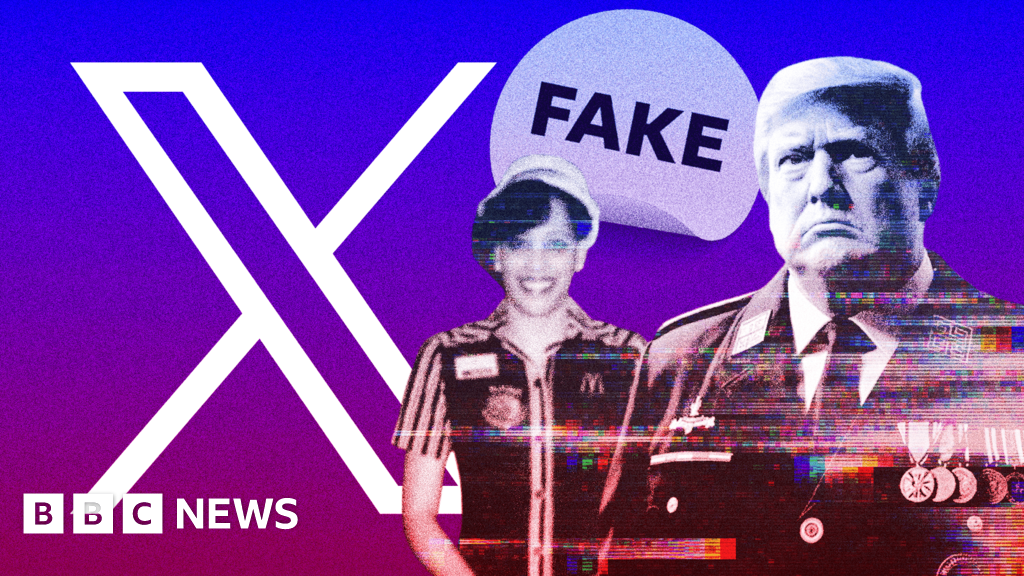
Some users on X who spend their days sharing content that includes election misinformation, AI-generated images and unfounded conspiracy theories say they are being paid “thousands of dollars” by the social media site.
The BBC identified networks of dozens of accounts that re-share each other’s content multiple times a day – including a mix of true, unfounded, false and faked material – to boost their reach, and therefore, revenue on the site.
Several say earnings from their own and other accounts range from a couple of hundred to thousands of dollars.
They also say they coordinate sharing each other’s posts on forums and group chats. “It’s a way of trying to help each other out,” one user said.
Some of these networks support Donald Trump, others Kamala Harris, and some are independent. Several of these profiles – which say they are not connected to official campaigns – have been contacted by US politicians, including congressional candidates, looking for supportive posts.
On 9 October, X changed its rules so the payments made to eligible accounts with a significant reach are calculated according to the amount of engagement from premium users – likes, shares and comments – rather than the number of ads under their posts.
Many social media sites allow users to make money from their posts or to share sponsored content. But they often have rules which allow them to de-monetise or suspend profiles that post misinformation. X does not have guidelines on misinformation in the same way.
While X has a smaller user base than some sites, it has a significant impact on political discourse. It raises questions about whether X is incentivising users to post provocative claims, whether they’re true or not, at a highly sensitive moment for US politics.
The BBC compared the approximate earnings reported by some of these X users with the amount they would be expected to earn, based on their number of views, followers and interactions with other profiles, and found them to be credible.
Among the misleading posts shared by some of these networks of profiles were claims about election fraud which had been rebutted by authorities, and extreme, unfounded allegations of paedophilia and sexual abuse against the presidential and vice-presidential candidates.
Some misleading and false posts that originated on X have also spilled on to other social media sites with a bigger audience, such as Facebook and TikTok.
In one example, an X user with a small following says he created a doctored image purporting to show Kamala Harris working at McDonald’s as a young woman. Other users then pushed evidence-free claims that the Democratic Party was manipulating images of its candidate.
Unfounded conspiracy theories from X about the July assassination attempt on Donald Trump were also picked up on other social media sites.
X did not respond to questions about whether the site is incentivising users to post like this, nor to requests to interview owner Elon Musk.
Source link

Khamrah by Lattafa for Men - 3.4 oz EDP Spray
4% Off
Ghost Sweetheart Eau de Toilette | Pineapple, Jasmine and Sandalwood | Perfume for Women 50 ml
50% Off
Marc Jacobs Dot Eau De Parfum for Women, 100 ml
42% Off
Ted Baker W Eau de Toilette for Her, Fig Leaf, White Peony and Violet Top Notes, Pink Orchid and Raspberry Middle Notes, 75ml
£11.77 (£15.69 / 100 ml) (as of 16/05/2026 03:14 GMT +01:00 - More infoProduct prices and availability are accurate as of the date/time indicated and are subject to change. Any price and availability information displayed on [relevant Amazon Site(s), as applicable] at the time of purchase will apply to the purchase of this product.)
Ted Baker Woman Pink Eau de Toilette Spray Floral Green Feminine Fragrance, Opening Notes are Fresh Peach, Bergamot and Tangerine with Warm Musk, Vanilla and Vetiver Base, 100ml
11% Off
Vera Wang Princess Eau de Toilette - 30 ml

Choco Musk 50ml Eau De Parfum for men and women | Chocolate Musk by Jannat Aromas
17% Off
Christina Aguilera Signature Eau de Parfum (50ml) Floral, Fruity & Exotic Scent, Luxury Fragrance for Women
9% Off
Calvin Klein - Eau De Toilette CKIN2U - Calvin Klein Women, Ladies Perfume, Women's Perfume, Calvin Klein Perfume, Calvin Klein One - 150 ml
5% Off
Jimmy Choo Flash Eau de Parfum, 60 ml (Pack of 1)
3% Off
Fruit of the Loom Men's Heavy T Shirt, White, XL UK
28% Off
ATNKE LED Lighted Beanie Cap,USB Rechargeable Running Hat Ultra Bright 4 LED Waterproof Light Winter Warm Gifts for Men and Women/Pink
17% Off
Men's 1/4 Zip Pullover UK Sale Clearance, Fleece Sweatshirt Casual Jumper Long Sleeve T-shirt Top Stand Collar Sweater Plain Pullover Sports Leisure Workwear Quarter Zip Sweater Lightweight Jumpers

Crevice Cleaning Brush, Bathroom Tile Groove Gap Cleaning Brush,Premium Crevice Cleaning Tool Aluminum Support with 15° Angle Magic Brush, Thin Brush for Home Kitchen
19% Off
Wireless Earbuds, Bluetooth 5.3 Headphones in Ear with HiFi Stereo Deep Bass, 4 ENC Noise Cancelling Mic Wireless Earphones 40H Playtime, Bluetooth Earbuds Dual LED Display, IP7 Waterproof, USB-C
42% Off