 [
[


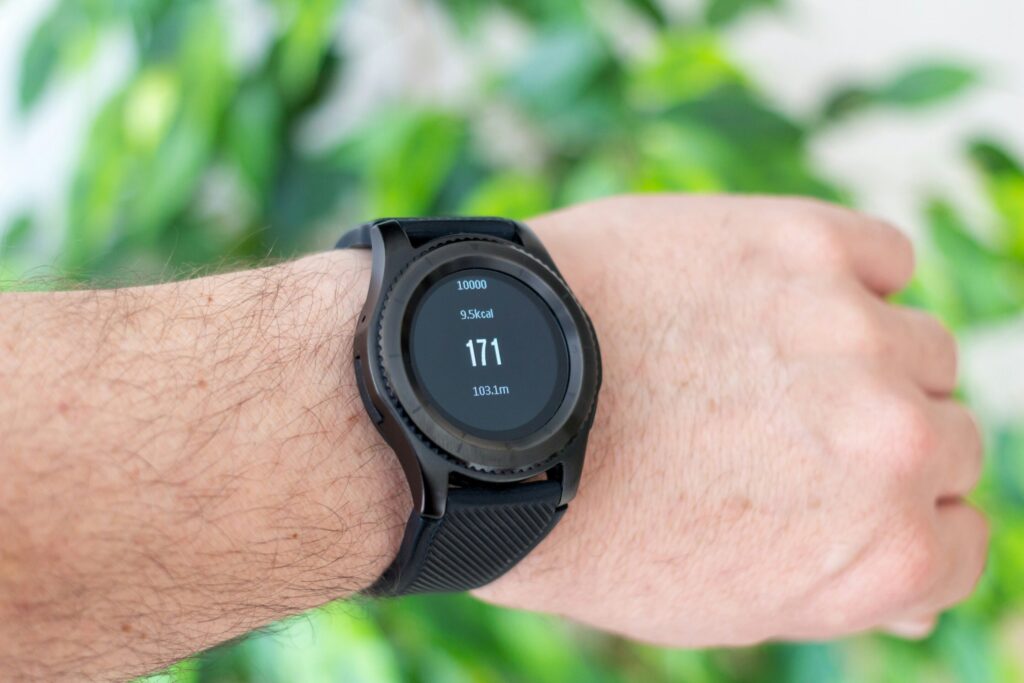
Staying active is key to staying healthy, and fitness trackers and smartwatches have become popular tools for tracking activity. But just how many steps does someone need to take each day to lose weight? Experts say there’s no one-size-fits-all answer. The number 10,000 is repeated often, but research shows anywhere from 4,000 to 10,000 steps per day can still provide health benefits.
Focus on minutes rather than steps
While evidence is limited on exactly how many steps a day it takes to lose weight, experts say to get about 150 to 300 minutes of moderate- to vigorous-intensity exercise weekly, said Amanda Paluch, an assistant professor in the department of kinesiology and Institute for Applied Life Sciences at the University of Massachusetts, Amherst.
That’s about 22 minutes per day at the low end, and 45 minutes at the high end, Paluch said.
“And we do know that for weight loss and weight maintenance, you really need to get to that higher end,” Paluch said.
“We do need to exercise more often at this moderate to vigorous intensity to really see weight loss,” Paluch added, but “we really haven’t figured out how much that equates to in terms of steps per day.”
Why tracking your steps still helps
Even without an exact step count that works for everyone, a fitness tracker or smartwatch can still help people lose weight.
“These types of devices can really help us with tracking and goal-setting,” Paluch said.
Long-term tracking may also offer clues about heart health. In a study of nearly 16,000 working-age adults in Japan published in the Journal of the American Heart Association, researchers looked at smartphone step counts recorded over about two years.
People who logged more steps tended to have better changes in weight, waist size, HDL (good) cholesterol and triglycerides, a type of fat in the blood.
Each additional 1,000 daily steps was tied to about 0.7 pounds (0.32 kilograms) less weight for men and about 0.4 pounds (0.18 kilograms) less for women over two years. On average, weight and waist size began to drop, rather than creep up, at around 7,500 steps a day.
Do you really need 10,000 steps per day?
The idea of getting 10,000 steps per day isn’t new, but that may not be the right goal for everyone.
This specific number traces back to a marketing campaign, rather than science. In 1965, a Japanese company sold a pedometer called the “Manpo-kei.” Manpo means 10,000 steps in Japanese. The name caught on, and people widely repeated the number.
Scientific research has suggested various step goals over the years to improve health.
One study published in JAMA Internal Medicine found that for every 2,000 steps a participant logged, their risk of early death dropped by 8% to 11%, up to 10,000 steps.
Another study published in Nature Medicine found that walking 10,000 steps a day reduced the risk of dementia, heart disease and cancer.
But a large 2025 review published in The Lancet Public Health suggests the payoff may start well before 10,000.
Researchers at the University of Sydney in Australia pooled results from 57 studies. Compared with walking 2,000 steps a day, walking about 7,000 steps daily was linked to a 47% lower risk of early death, 38% lower risk of dementia, 25% lower risk of cardiovascular disease, 22% lower risk of depression symptoms and 14% lower risk of type 2 diabetes.
Even 4,000 steps a day was tied to a 36% lower risk of early death compared with 2,000.
Benefits kept growing above 7,000 steps for some health problems, but the extra gains were small.
The researchers concluded that 10,000 steps a day can still be a good goal for people who are already active, while 7,000 may be more realistic for many others.
Build a walking plan that sticks
When it comes to weight loss, slow and steady tends to last. People who lose about 1 to 2 pounds (0.5 to 0.9 kilograms) a week are more likely to keep the weight off than those who lose it faster, according to the U.S. Centers for Disease Control and Prevention.
Even modest weight loss counts. For a 200-pound (91-kilogram) person, losing 5% of body weight (10 pounds, or 4.5 kilograms) can help improve blood pressure, cholesterol and blood sugar, the CDC notes.
The agency suggests setting specific, realistic goals. “Exercise more” is too vague, but walking 15 minutes three days a week during the first week is a measurable goal someone can meet.
Gradual increases, finding a walking partner and checking progress regularly can also help people stay on track, according to the CDC.
Why pace and diet matter as much as steps
Along with step count, step pace and diet also matter.
“We do know that intensity does tend to matter for weight loss. So, getting in more brisk walking, that’s really where we feel confident that if you do enough of it that could support weight loss,” Paluch said.
This could be done in short intermittent bouts or in longer organized workouts.
For some people, the goal may not be steps but minutes of physical activity. Or it could be counting the miles per day and being aware of how many they achieve at a brisk pace.
Even with robust exercise, Paluch noted that diet is crucial for weight loss in most cases.
“Physical activity can provide lots of additional improvements in other health factors, but without any nutritional program, it’s very difficult to lose weight,” Paluch said. “They really go hand in hand when we think about weight loss. It is the combination of being active and following a structured diet.”
Publication details
Rikuta Hamaya et al., Association of Smartphone‐Recorded Steps Over Years and Change in Cardiovascular Risk Factors Among Working‐Age Adults, Journal of the American Heart Association (2022). DOI: 10.1161/jaha.121.025689
Journal information:
JAMA Internal Medicine
,
Nature Medicine
,
Journal of the American Heart Association
,
The Lancet Public Health
Key medical concepts


Copyright © 2026 HealthDay. All rights reserved.
Citation:
How many daily steps do you need to lose weight? (2026, October 14)
retrieved 14 October 2026
from https://medicalxpress.com/news/2026-10-daily-weight.html
This document is subject to copyright. Apart from any fair dealing for the purpose of private study or research, no
part may be reproduced without the written permission. The content is provided for information purposes only.

Khamrah by Lattafa for Men - 3.4 oz EDP Spray
4% Off
Ghost Sweetheart Eau de Toilette | Pineapple, Jasmine and Sandalwood | Perfume for Women 50 ml
50% Off
Marc Jacobs Dot Eau De Parfum for Women, 100 ml
42% Off
Ted Baker W Eau de Toilette for Her, Fig Leaf, White Peony and Violet Top Notes, Pink Orchid and Raspberry Middle Notes, 75ml
£11.77 (£15.69 / 100 ml) (as of 14/10/2026 06:35 GMT +01:00 - More infoProduct prices and availability are accurate as of the date/time indicated and are subject to change. Any price and availability information displayed on [relevant Amazon Site(s), as applicable] at the time of purchase will apply to the purchase of this product.)
Ted Baker Woman Pink Eau de Toilette Spray Floral Green Feminine Fragrance, Opening Notes are Fresh Peach, Bergamot and Tangerine with Warm Musk, Vanilla and Vetiver Base, 100ml
11% Off
Vera Wang Princess Eau de Toilette - 30 ml

Choco Musk 50ml Eau De Parfum for men and women | Chocolate Musk by Jannat Aromas
17% Off
Christina Aguilera Signature Eau de Parfum (50ml) Floral, Fruity & Exotic Scent, Luxury Fragrance for Women
9% Off
Calvin Klein - Eau De Toilette CKIN2U - Calvin Klein Women, Ladies Perfume, Women's Perfume, Calvin Klein Perfume, Calvin Klein One - 150 ml
5% Off
Jimmy Choo Flash Eau de Parfum, 60 ml (Pack of 1)
3% Off
Fruit of the Loom Men's Heavy T Shirt, White, XL UK
28% Off
ATNKE LED Lighted Beanie Cap,USB Rechargeable Running Hat Ultra Bright 4 LED Waterproof Light Winter Warm Gifts for Men and Women/Pink

Men's 1/4 Zip Pullover UK Sale Clearance, Fleece Sweatshirt Casual Jumper Long Sleeve T-shirt Top Stand Collar Sweater Plain Pullover Sports Leisure Workwear Quarter Zip Sweater Lightweight Jumpers
£5.88 (as of 12/11/2025 00:52 GMT +01:00 - More infoProduct prices and availability are accurate as of the date/time indicated and are subject to change. Any price and availability information displayed on [relevant Amazon Site(s), as applicable] at the time of purchase will apply to the purchase of this product.)
Crevice Cleaning Brush, Bathroom Tile Groove Gap Cleaning Brush,Premium Crevice Cleaning Tool Aluminum Support with 15° Angle Magic Brush, Thin Brush for Home Kitchen
19% Off
Wireless Earbuds, Bluetooth 5.3 Headphones in Ear with HiFi Stereo Deep Bass, 4 ENC Noise Cancelling Mic Wireless Earphones 40H Playtime, Bluetooth Earbuds Dual LED Display, IP7 Waterproof, USB-C
42% Off