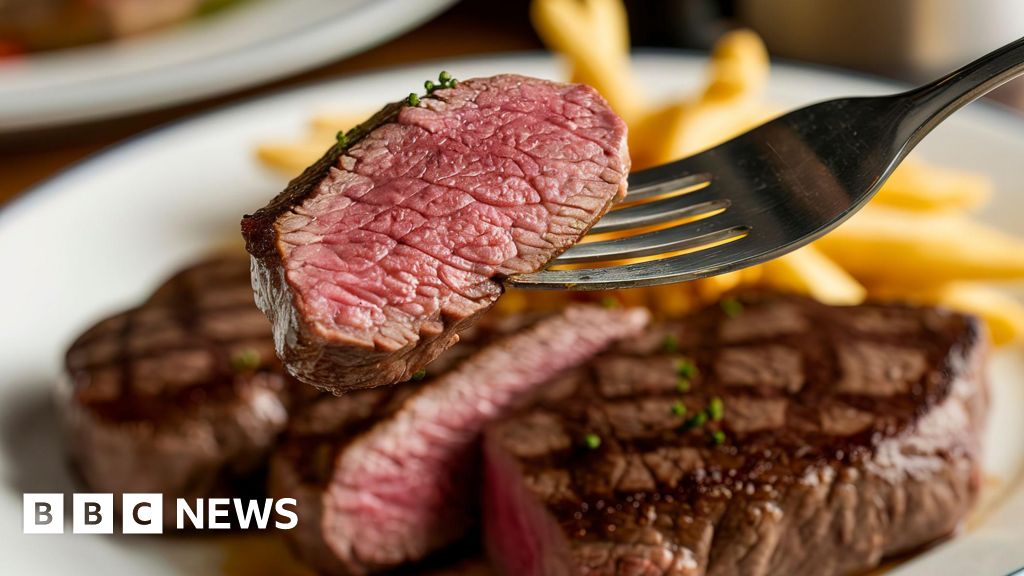
The government has insisted that American hormone-reared meat will not start to seep onto the UK market, following the trade deal agreed this week, which boosts the trade in beef in both directions.
Some farmers and consumers, including Ian McCubbine a beef farmer in Surrey, have expressed fears that the deal could open the door to hormone-treated beef.
“How do we know what they are putting in?” he said, speaking to the BBC Radio 4’s Today programme.
However, the government said maintaining UK food standards had been a strict red line during the negotiations, and that certification procedures and border checks would ensure hormone-reared beef would not enter the UK.
Darren Jones chief secretary to the Treasury said: “The rules on food standards have not changed and they will not change” as a result of the deal.
The agencies responsible for sanitary and phytosanitary checks would be able to test meat for traces of hormone with “consequences” for anyone breaking the law, he added.
The UK stopped allowing hormone-produced beef in 1989, when the practice was banned across the EU which declared it unsafe.
But many American farmers use growth hormones as a standard part of their beef production. Adding growth hormones makes cows put on muscle mass, and so makes their beef cheaper.
The US and other countries that use the method, including Australia, say there is no added health-risk from hormone-fed beef.
But a lot of consumers are wary of it, with some commenting online that they would look out for UK-produced beef in future.
As part of the trade deal the UK has agreed to allow up to 13,000 metric tonnes of beef imports from the US tariff-free. Currently the US exports around 1,000 tonnes to the UK with a 20% tariff, the UK’s Department for Environment and Rural Affairs (Defra) said.
In exchange, the UK will also be able to sell more beef to the US than it currently does, also up to 13,000 tonnes at a lower tariff than at present.
The deal also includes lower tariffs on UK-made cars destined for US market and US ethanol exports to the UK.
Liz Webster, founder of the group Save British Farmer, echoed Mr McCubbine’s fears in a post on X.
“In exchange for tariff relief on luxury cars, we’ve opened our doors to US beef and ethanol.
“But as our border checks are barely functioning, how we’ll enforce standards is anyone’s guess,” she wrote.
US producers must have monitoring and certification procedures in place to prove that they are compliant with UK food standards to be allowed to export, Defra said.
Hormones are usually used to fatten cattle in the later stages of production, a Defra spokesperson said, and therefore traces would be identifiable through checks.
The National Farmers Union said it was checking the details of the trade deal with Defra, asking them provide more information about how the checks on imported meat would continue to ensure that safety standards were maintained.
BBC News

Khamrah by Lattafa for Men - 3.4 oz EDP Spray
4% Off
Ghost Sweetheart Eau de Toilette | Pineapple, Jasmine and Sandalwood | Perfume for Women 50 ml
50% Off
Marc Jacobs Dot Eau De Parfum for Women, 100 ml
42% Off
Ted Baker W Eau de Toilette for Her, Fig Leaf, White Peony and Violet Top Notes, Pink Orchid and Raspberry Middle Notes, 75ml
£11.77 (£15.69 / 100 ml) (as of 19/07/2026 04:00 GMT +01:00 - More infoProduct prices and availability are accurate as of the date/time indicated and are subject to change. Any price and availability information displayed on [relevant Amazon Site(s), as applicable] at the time of purchase will apply to the purchase of this product.)
Ted Baker Woman Pink Eau de Toilette Spray Floral Green Feminine Fragrance, Opening Notes are Fresh Peach, Bergamot and Tangerine with Warm Musk, Vanilla and Vetiver Base, 100ml
11% Off
Vera Wang Princess Eau de Toilette - 30 ml

Choco Musk 50ml Eau De Parfum for men and women | Chocolate Musk by Jannat Aromas
17% Off
Christina Aguilera Signature Eau de Parfum (50ml) Floral, Fruity & Exotic Scent, Luxury Fragrance for Women
9% Off
Calvin Klein - Eau De Toilette CKIN2U - Calvin Klein Women, Ladies Perfume, Women's Perfume, Calvin Klein Perfume, Calvin Klein One - 150 ml
5% Off
Jimmy Choo Flash Eau de Parfum, 60 ml (Pack of 1)
3% Off
Fruit of the Loom Men's Heavy T Shirt, White, XL UK
28% Off
ATNKE LED Lighted Beanie Cap,USB Rechargeable Running Hat Ultra Bright 4 LED Waterproof Light Winter Warm Gifts for Men and Women/Pink
17% Off
Men's 1/4 Zip Pullover UK Sale Clearance, Fleece Sweatshirt Casual Jumper Long Sleeve T-shirt Top Stand Collar Sweater Plain Pullover Sports Leisure Workwear Quarter Zip Sweater Lightweight Jumpers

Crevice Cleaning Brush, Bathroom Tile Groove Gap Cleaning Brush,Premium Crevice Cleaning Tool Aluminum Support with 15° Angle Magic Brush, Thin Brush for Home Kitchen
19% Off
Wireless Earbuds, Bluetooth 5.3 Headphones in Ear with HiFi Stereo Deep Bass, 4 ENC Noise Cancelling Mic Wireless Earphones 40H Playtime, Bluetooth Earbuds Dual LED Display, IP7 Waterproof, USB-C
42% Off