
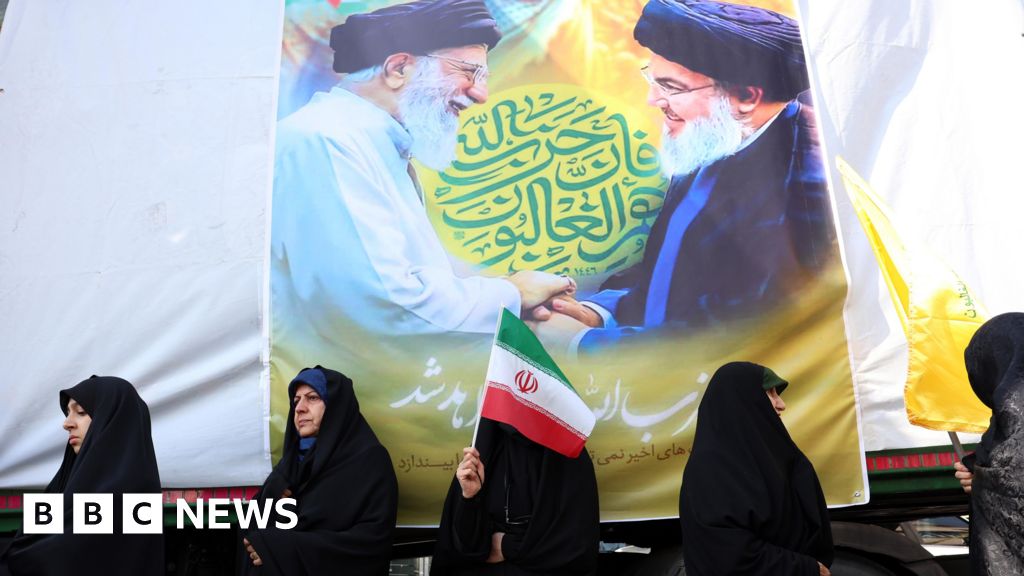

Friday’s Israeli strike levelled several buildings in Beirut’s southern suburb of Dahieh, underneath which the Israeli military said Hezbollah’s central headquarters was located.
Hezbollah confirmed Nasrallah’s death on Saturday. But it did not comment on the Israeli military’s claim that Ali Karaki, the head of the group’s Southern Front, and other commanders were killed alongside Nasrallah.
Gen Abbas Nilforoushan, deputy commander of operations for Iran’s Islamic Revolution Guard Corps (IRGC), was also “martyred” in Dahiyeh on Friday, according to the IRGC-linked Saberin News outlet.
It provided nor further details, although the moderate Didban news website said he was “assassinated along with” Nasrallah.
However, there has been no official confirmation from Iranian authorities.
Iran uses the IRGC to provide Hezbollah with most of its funding, training and weapons, which have allowed the Shia Islamist group to build a military wing stronger than the Lebanese army.
The US says the IRGC also oversees the co-ordination of Iran’s network of allied armed groups across the Middle East, which are all opposed to the US and Israel and sometimes refer to themselves as the “Axis of Resistance”. Besides Hezbollah, they include Hamas, the Houthis in Yemen and Shia militias in Iraq and Syria.
On Saturday, there were air raid sirens in the Israeli city of Tel Aviv after the Houthis launched a missile in support of Hezbollah. The Israeli military said the missile was intercepted.
The Islamic Resistance in Iraq, an umbrella group of Iraqi militias, also claimed new drone attacks on northern Israel and the occupied Golan Heights.
Sanam Vakil, director of the Middle East programme at the UK-based think tank Chatham House, said Iran’s reputation among its allies was “certainly damaged” and that it would be “looking for some way to turn the tables and save some face”.
“This could result in a co-ordinated axis response, including from Iraq and the Houthis, or another direct Iranian strike on Israel itself,” she said.
“By maintaining pressure or even escalating, Tehran is aware that this will invite further attacks, but it will choose to do so keep pressure on Israel.”
Source link

Khamrah by Lattafa for Men - 3.4 oz EDP Spray
4% Off
Ghost Sweetheart Eau de Toilette | Pineapple, Jasmine and Sandalwood | Perfume for Women 50 ml
50% Off
Marc Jacobs Dot Eau De Parfum for Women, 100 ml
42% Off
Ted Baker W Eau de Toilette for Her, Fig Leaf, White Peony and Violet Top Notes, Pink Orchid and Raspberry Middle Notes, 75ml
£11.77 (£15.69 / 100 ml) (as of 04/10/2026 05:09 GMT +01:00 - More infoProduct prices and availability are accurate as of the date/time indicated and are subject to change. Any price and availability information displayed on [relevant Amazon Site(s), as applicable] at the time of purchase will apply to the purchase of this product.)
Ted Baker Woman Pink Eau de Toilette Spray Floral Green Feminine Fragrance, Opening Notes are Fresh Peach, Bergamot and Tangerine with Warm Musk, Vanilla and Vetiver Base, 100ml
11% Off
Vera Wang Princess Eau de Toilette - 30 ml

Choco Musk 50ml Eau De Parfum for men and women | Chocolate Musk by Jannat Aromas
17% Off
Christina Aguilera Signature Eau de Parfum (50ml) Floral, Fruity & Exotic Scent, Luxury Fragrance for Women
9% Off
Calvin Klein - Eau De Toilette CKIN2U - Calvin Klein Women, Ladies Perfume, Women's Perfume, Calvin Klein Perfume, Calvin Klein One - 150 ml
5% Off
Jimmy Choo Flash Eau de Parfum, 60 ml (Pack of 1)
3% Off
Fruit of the Loom Men's Heavy T Shirt, White, XL UK
28% Off
ATNKE LED Lighted Beanie Cap,USB Rechargeable Running Hat Ultra Bright 4 LED Waterproof Light Winter Warm Gifts for Men and Women/Pink
17% Off
Men's 1/4 Zip Pullover UK Sale Clearance, Fleece Sweatshirt Casual Jumper Long Sleeve T-shirt Top Stand Collar Sweater Plain Pullover Sports Leisure Workwear Quarter Zip Sweater Lightweight Jumpers
£5.88 (as of 12/11/2025 00:52 GMT +01:00 - More infoProduct prices and availability are accurate as of the date/time indicated and are subject to change. Any price and availability information displayed on [relevant Amazon Site(s), as applicable] at the time of purchase will apply to the purchase of this product.)
Crevice Cleaning Brush, Bathroom Tile Groove Gap Cleaning Brush,Premium Crevice Cleaning Tool Aluminum Support with 15° Angle Magic Brush, Thin Brush for Home Kitchen
19% Off
Wireless Earbuds, Bluetooth 5.3 Headphones in Ear with HiFi Stereo Deep Bass, 4 ENC Noise Cancelling Mic Wireless Earphones 40H Playtime, Bluetooth Earbuds Dual LED Display, IP7 Waterproof, USB-C
42% Off