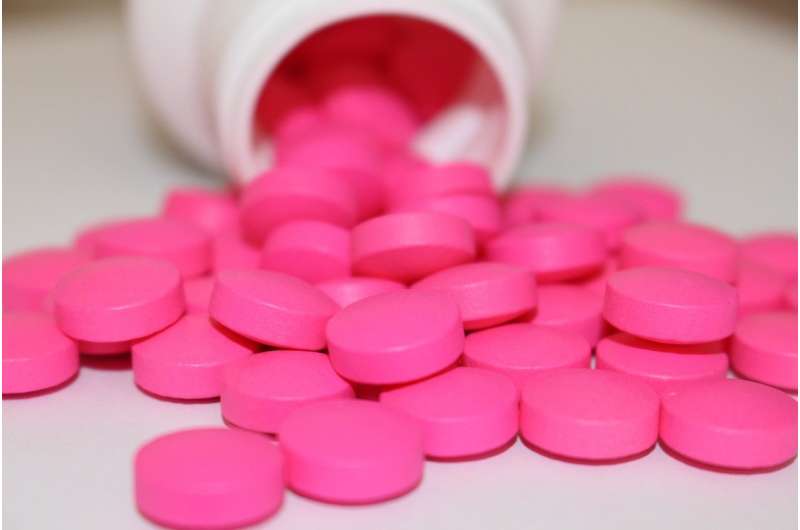
Prescribing non-steroidal anti-inflammatory drugs (NSAIDs) to people at high risk of harm from them is estimated to cost the NHS in England around £31 million and cause more than 6,000 lost years of good health over 10 years, finds a study published by The BMJ.
NSAIDs continue to be a source of avoidable harm and health care costs, and more must be done to address this, especially in high risk groups, say the researchers.
NSAIDs are used for pain and inflammation and are one of the most widely prescribed groups of medicines in the world, but they are known to increase the risk of gastrointestinal bleeding, heart attacks, stroke, and kidney damage.
Yet despite a range of initiatives to reduce their use, NSAID prescribing is still common in people at high risk of harm due to older age, previous peptic ulcer, heart failure, chronic kidney disease, or who are taking other medications that can increase bleeding risk.
To help inform policy in this area, the researchers set out to estimate levels of patient harm and the costs of NSAID prescribing to high risk groups in the NHS in England over a 10 year period.
The researchers drew on previously published research on prescribing safety in England, which provided a baseline number of people affected by “hazardous prescribing events” in April 2020, based on data from the national roll-out of PINCER (pharmacist-led information technology intervention for medication errors) and prevalence data from 1,060 general practices (10,906,453 patients in total).
They identified rates of hazardous prescribing events for oral NSAIDs in five high risk groups: adults aged 65 and over with no gastroprotection; people with a previous peptic ulcer with no gastroprotection; people who concurrently took blood thinning drugs (anticoagulants); people with heart failure; and those with chronic kidney disease.
They then used economic models to estimate the harm associated with each hazardous prescribing event at the patient level, expressed as quality adjusted life years (QALYs) lost—a measure of years lived in good health—and the cost to the NHS in England of managing that harm.
The results show that average QALYs per person (where 1.0 is equivalent to perfect health and 0 is equivalent to being dead) were between 0.01 lower with previous peptic ulcer and 0.11 lower with chronic kidney disease.
Average costs increased from a non-statistically significant £14 in heart failure to a statistically significant £1,097 in people also taking anticoagulants.
Rates of hazardous prescribing events per 1,000 patients ranged from 0.11 in people with a previous peptic ulcer to 1.70 in older adults.
Nationally, the most common hazardous prescribing event (older adults without gastroprotection) results in 1,929 QALYs lost, costing £2.46 million, while the greatest impact is in people also taking anticoagulants, with 2,143 QALYs lost, costing £25.41 million.
Over 10 years, the five NSAID related hazardous prescribing events led to a total loss of 6,335 QALYs at an estimated cost of £31.43 million to the NHS in England.
Shorter durations of exposure were associated with lower risk of harm, but at least half of the observed harms occurred in the first 1.5 years of treatment.
These are observational findings, and the researchers point to several limitations around assumed dose, length of exposure, and accounting for all harms, which may have affected their estimates. The results may not apply to other non-UK settings, they note.
However, they say the types, severity, and probability of NSAID-related harm are likely to be transferrable, and further analyses to test the strength of the main findings yielded similar results, suggesting that they withstand scrutiny.
As such, the researchers conclude, “NSAIDs continue to be a source of avoidable harm and health care costs, despite a range of initiatives to reduce their use, especially in populations at high risk… therefore, a concerted effort should be made to continue to include NSAIDs in patient safety and deprescribing initiatives.”
More information:
Estimating the economic effect of harm associated with high risk prescribing of oral non-steroidal anti-inflammatory drugs in England: population based cohort and economic modelling study, The BMJ (2024). DOI: 10.1136/bmj-2023-077880
Citation:
Harm of prescribing NSAIDs to high-risk groups estimated to cost NHS £31 million over 10 years (2024, July 24)
retrieved 24 July 2024
from https://medicalxpress.com/news/2024-07-nsaids-high-groups-nhs-million.html
This document is subject to copyright. Apart from any fair dealing for the purpose of private study or research, no
part may be reproduced without the written permission. The content is provided for information purposes only.

Khamrah by Lattafa for Men - 3.4 oz EDP Spray
4% Off
Ghost Sweetheart Eau de Toilette | Pineapple, Jasmine and Sandalwood | Perfume for Women 50 ml
50% Off
Marc Jacobs Dot Eau De Parfum for Women, 100 ml
42% Off
Ted Baker W Eau de Toilette for Her, Fig Leaf, White Peony and Violet Top Notes, Pink Orchid and Raspberry Middle Notes, 75ml
£11.77 (£15.69 / 100 ml) (as of 30/07/2026 04:04 GMT +01:00 - More infoProduct prices and availability are accurate as of the date/time indicated and are subject to change. Any price and availability information displayed on [relevant Amazon Site(s), as applicable] at the time of purchase will apply to the purchase of this product.)
Ted Baker Woman Pink Eau de Toilette Spray Floral Green Feminine Fragrance, Opening Notes are Fresh Peach, Bergamot and Tangerine with Warm Musk, Vanilla and Vetiver Base, 100ml
11% Off
Vera Wang Princess Eau de Toilette - 30 ml

Choco Musk 50ml Eau De Parfum for men and women | Chocolate Musk by Jannat Aromas
17% Off
Christina Aguilera Signature Eau de Parfum (50ml) Floral, Fruity & Exotic Scent, Luxury Fragrance for Women
9% Off
Calvin Klein - Eau De Toilette CKIN2U - Calvin Klein Women, Ladies Perfume, Women's Perfume, Calvin Klein Perfume, Calvin Klein One - 150 ml
5% Off
Jimmy Choo Flash Eau de Parfum, 60 ml (Pack of 1)
3% Off
Fruit of the Loom Men's Heavy T Shirt, White, XL UK
28% Off
ATNKE LED Lighted Beanie Cap,USB Rechargeable Running Hat Ultra Bright 4 LED Waterproof Light Winter Warm Gifts for Men and Women/Pink
17% Off
Men's 1/4 Zip Pullover UK Sale Clearance, Fleece Sweatshirt Casual Jumper Long Sleeve T-shirt Top Stand Collar Sweater Plain Pullover Sports Leisure Workwear Quarter Zip Sweater Lightweight Jumpers
£5.88 (as of 12/11/2025 00:52 GMT +01:00 - More infoProduct prices and availability are accurate as of the date/time indicated and are subject to change. Any price and availability information displayed on [relevant Amazon Site(s), as applicable] at the time of purchase will apply to the purchase of this product.)
Crevice Cleaning Brush, Bathroom Tile Groove Gap Cleaning Brush,Premium Crevice Cleaning Tool Aluminum Support with 15° Angle Magic Brush, Thin Brush for Home Kitchen
19% Off
Wireless Earbuds, Bluetooth 5.3 Headphones in Ear with HiFi Stereo Deep Bass, 4 ENC Noise Cancelling Mic Wireless Earphones 40H Playtime, Bluetooth Earbuds Dual LED Display, IP7 Waterproof, USB-C
42% Off