
 [

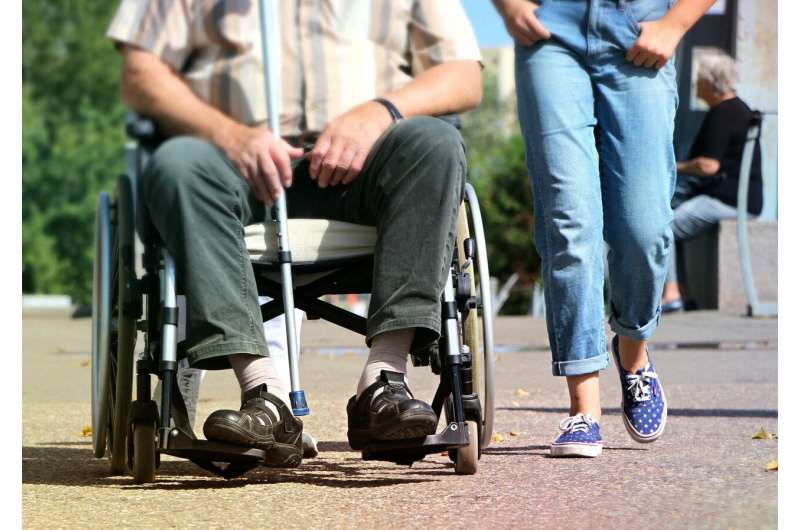
A study of almost 9,000 injury patients across Africa and South Asia has found that nearly half were dead or disabled after three months—highlighting the need for smarter, locally tailored trauma-care systems.
Publishing its findings in The Lancet Global Health, the international research group led by University of Birmingham experts reveals that the biggest influences on survival and recovery are not just the injuries themselves, but how people move through the health care system.
Injuries cause an estimated 4.4 million deaths annually worldwide, with 90% occurring in LMICs. This is the first large multicountry study to examine mortality and disability outcomes among hospitalized injury patients across low- or middle-income countries (LMIC).
The study reveals that access to appropriate care, the route patients take to the hospital and the type of services available all play an important role in these outcomes.
Analyzing data from 8,858 patients treated in 19 urban and rural hospitals across Ghana, Pakistan, Rwanda and South Africa, the Global Health Group on Equitable Access to Quality Health Care for Injured People in Four Low- or Middle-Income Countries (Equi-injury) reveals an enormous and often overlooked global health burden:
- 47.6% of patients either died or were left with moderate-to-severe disability within three months of hospital discharge.
- 6.1% died in the hospital, 9.7% had died within three months, and 40.6% were living with moderate-to-severe disability three months after discharge.
- Patients arriving at the hospital by ambulance had significantly worse outcomes, with 86% higher odds of death or disability and more than double the odds of mortality within three months compared with those using other forms of transportation.
Lead author Professor Justine Davies, from the University of Birmingham, said, “One of our most surprising findings was that measures often assumed to improve outcomes—such as ambulance transport and rapid transfer to major hospitals, which are similar to highly centralized trauma services—were not consistently linked with better recovery or survival.
“This does not mean that ambulances cause worse outcomes but suggests that investment in ambulance systems alone is unlikely to improve outcomes unless services are coordinated and appropriately resourced.”
The findings challenge assumptions that health care models developed in wealthier countries can simply be copied elsewhere. Instead, the study argues that countries should develop trauma and injury-care systems based on local evidence, resources and patient needs.
Corresponding author Dr. Leila Ghalichi, from the University of Birmingham, said, “This does not mean ambulances or specialist trauma centers are ineffective. Rather, it suggests that simply investing in expensive emergency systems is not enough.
“LMICs should be cautious about investing heavily in ambulance services and specialist, centralized trauma centers without ensuring they are well coordinated, properly staffed and supported by strong health systems. Better data and further research are needed to understand which trauma-care investments improve patient outcomes.”
The study notes that stopping first at a nearby hospital for emergency stabilization may sometimes be beneficial, especially if a specialist hospital is far away. If a major trauma hospital is close by, going directly there may improve outcomes.
Researchers found no evidence that reaching a hospital more quickly reduced the risk of death. Patients who experienced some delays were less likely to be disabled later—challenging the common belief that faster treatment always leads to better outcomes after injury.
Age was linked to worse outcomes, but gender, wealth and education had little effect on survival while patients were in the hospital. However, once out of the hospital, wealthier and better-educated patients tended to recover better, suggesting that access to rehabilitation and follow-up care may play an important role.
Some 90% of global injury deaths occur in LMICs and are estimated to account for around 10% of the global burden of disease. Yet trauma care receives far less attention than infectious diseases or chronic conditions in global health policy.
Country-level differences were striking. Patients in South Africa had the lowest odds of disability but the highest odds of mortality, while patients in Rwanda experienced the lowest odds of mortality. Meanwhile, patients in Pakistan experienced substantially higher odds of the combined outcome of death or disability than those in Ghana.
The study population reflects the demographics of injury worldwide. The median age was 31 years, 76.8% were male, and road traffic collisions accounted for 50% of all injuries recorded. Orthopedic injuries were the most common injury type, affecting 39.2% of patients.
Publication details
Justine Davies et al, Mortality and disability after hospitalisation for injuries in low-income and middle-income countries: a cohort study, The Lancet Global Health (2026). DOI: 10.1016/j.langlo.2026.104053
Journal information:
The Lancet Global Health


Citation:
Global injury crisis highlights urgent need for smarter trauma care (2026, October 8)
retrieved 8 October 2026
from https://medicalxpress.com/news/2026-10-global-injury-crisis-highlights-urgent.html
This document is subject to copyright. Apart from any fair dealing for the purpose of private study or research, no
part may be reproduced without the written permission. The content is provided for information purposes only.

Khamrah by Lattafa for Men - 3.4 oz EDP Spray
4% Off
Ghost Sweetheart Eau de Toilette | Pineapple, Jasmine and Sandalwood | Perfume for Women 50 ml
50% Off
Marc Jacobs Dot Eau De Parfum for Women, 100 ml
42% Off
Ted Baker W Eau de Toilette for Her, Fig Leaf, White Peony and Violet Top Notes, Pink Orchid and Raspberry Middle Notes, 75ml
£11.77 (£15.69 / 100 ml) (as of 21/10/2026 06:36 GMT +01:00 - More infoProduct prices and availability are accurate as of the date/time indicated and are subject to change. Any price and availability information displayed on [relevant Amazon Site(s), as applicable] at the time of purchase will apply to the purchase of this product.)
Ted Baker Woman Pink Eau de Toilette Spray Floral Green Feminine Fragrance, Opening Notes are Fresh Peach, Bergamot and Tangerine with Warm Musk, Vanilla and Vetiver Base, 100ml
11% Off
Vera Wang Princess Eau de Toilette - 30 ml

Choco Musk 50ml Eau De Parfum for men and women | Chocolate Musk by Jannat Aromas
17% Off
Christina Aguilera Signature Eau de Parfum (50ml) Floral, Fruity & Exotic Scent, Luxury Fragrance for Women
9% Off
Calvin Klein - Eau De Toilette CKIN2U - Calvin Klein Women, Ladies Perfume, Women's Perfume, Calvin Klein Perfume, Calvin Klein One - 150 ml
5% Off
Jimmy Choo Flash Eau de Parfum, 60 ml (Pack of 1)
3% Off
Fruit of the Loom Men's Heavy T Shirt, White, XL UK
28% Off
ATNKE LED Lighted Beanie Cap,USB Rechargeable Running Hat Ultra Bright 4 LED Waterproof Light Winter Warm Gifts for Men and Women/Pink
17% Off
Men's 1/4 Zip Pullover UK Sale Clearance, Fleece Sweatshirt Casual Jumper Long Sleeve T-shirt Top Stand Collar Sweater Plain Pullover Sports Leisure Workwear Quarter Zip Sweater Lightweight Jumpers
£5.88 (as of 12/11/2025 00:52 GMT +01:00 - More infoProduct prices and availability are accurate as of the date/time indicated and are subject to change. Any price and availability information displayed on [relevant Amazon Site(s), as applicable] at the time of purchase will apply to the purchase of this product.)
Crevice Cleaning Brush, Bathroom Tile Groove Gap Cleaning Brush,Premium Crevice Cleaning Tool Aluminum Support with 15° Angle Magic Brush, Thin Brush for Home Kitchen
19% Off
Wireless Earbuds, Bluetooth 5.3 Headphones in Ear with HiFi Stereo Deep Bass, 4 ENC Noise Cancelling Mic Wireless Earphones 40H Playtime, Bluetooth Earbuds Dual LED Display, IP7 Waterproof, USB-C
42% Off