 [
[
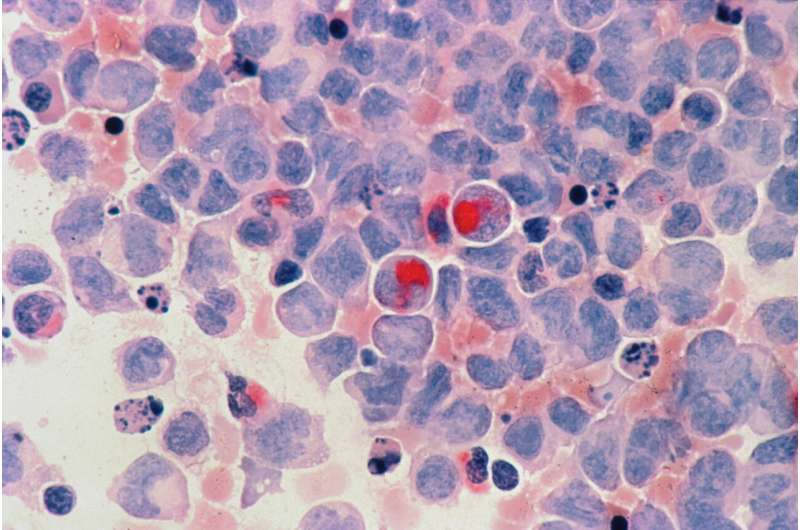
A study published in Nature Cell Biology reports a new vulnerability in acute myeloid leukemia (AML) that might lead to novel therapies to treat the cancer while minimizing harm to normal cells. Researchers at Baylor College of Medicine and collaborating institutions studied a new mechanism by which drugs that neutralize FLT3 mutations work.
“FLT3 mutations are one of the most common genetic drivers of AML. Other researchers have shown that inhibiting FLT3 stops AML cells from dividing and kills them by activating a self-destruct mechanism called apoptosis,” said corresponding author Dr. Daisuke Nakada, Henry and Emma Meyer Professor of Molecular and Human Genetics at Baylor.
“But like many other cancer therapies, resistance to FLT3 inhibitors and relapse are common. We explored the possibility that FLT3 inhibitors also lead to cancer death in a different way that we might be able to leverage to overcome therapy resistance.”
Ferroptosis emerges as a second route
The team worked with a combination of mouse models and cell-line experiments, as well as patient-derived AML samples grown in animal models. They discovered that FLT3 inhibitors also kill AML cells by triggering ferroptosis.
“This mechanism involves lipid peroxidation—oxygen damages lipids in cells in ways that cause cell death,” said Nakada, a member of Baylor’s Dan L Duncan Comprehensive Cancer Center and a CPRIT Scholar. “This is the first time FLT3 has been connected to ferroptosis.”
How mutant FLT3 blocks cell death
Digging deeper into the mechanism, Nakada and his colleagues found that mutant FLT3 proteins in AML cells activate a protein called GPX4, which in turn prevents ferroptosis.
“GPX4 belongs to the selenoprotein family known to be involved in reducing lipid peroxidation,” Nakada said. “FLT3 inhibitors prevent the production of selenoproteins, including GPX4. Then, cancer cells do not have enough GPX4 to prevent lipid peroxidation and die.”
Resistance and diet may shape response
Data from AML patients revealed that leukemia samples resistant to the FLT3 inhibitor gilteritinib often overexpress genes involved in selenoprotein production. This suggests that one way leukemia cells could escape treatment is by boosting the selenoprotein pathway.
Nakada and his colleagues also found that dietary vitamin E, which attenuates ferroptosis, can markedly reduce the efficacy of gilteritinib. This study highlights ferroptosis as a vulnerability in FLT3-mutant AML and suggests that a high intake of vitamin E may compromise the efficacy of FLT3 inhibitors by suppressing ferroptosis.
Publication details
Nature Cell Biology (2026). DOI: 10.1038/s41556-026-02016-5
Journal information:
Nature Cell Biology
Clinical categories


Citation:
FLT3 inhibitors trigger ferroptosis, exposing new weakness in acute myeloid leukemia (2026, August 7)
retrieved 7 August 2026
from https://medicalxpress.com/news/2026-08-flt3-inhibitors-trigger-ferroptosis-exposing.html
This document is subject to copyright. Apart from any fair dealing for the purpose of private study or research, no
part may be reproduced without the written permission. The content is provided for information purposes only.

Khamrah by Lattafa for Men - 3.4 oz EDP Spray
4% Off
Ghost Sweetheart Eau de Toilette | Pineapple, Jasmine and Sandalwood | Perfume for Women 50 ml
50% Off
Marc Jacobs Dot Eau De Parfum for Women, 100 ml
42% Off
Ted Baker W Eau de Toilette for Her, Fig Leaf, White Peony and Violet Top Notes, Pink Orchid and Raspberry Middle Notes, 75ml
£11.77 (£15.69 / 100 ml) (as of 07/08/2026 04:07 GMT +01:00 - More infoProduct prices and availability are accurate as of the date/time indicated and are subject to change. Any price and availability information displayed on [relevant Amazon Site(s), as applicable] at the time of purchase will apply to the purchase of this product.)
Ted Baker Woman Pink Eau de Toilette Spray Floral Green Feminine Fragrance, Opening Notes are Fresh Peach, Bergamot and Tangerine with Warm Musk, Vanilla and Vetiver Base, 100ml
11% Off
Vera Wang Princess Eau de Toilette - 30 ml

Choco Musk 50ml Eau De Parfum for men and women | Chocolate Musk by Jannat Aromas
17% Off
Christina Aguilera Signature Eau de Parfum (50ml) Floral, Fruity & Exotic Scent, Luxury Fragrance for Women
9% Off
Calvin Klein - Eau De Toilette CKIN2U - Calvin Klein Women, Ladies Perfume, Women's Perfume, Calvin Klein Perfume, Calvin Klein One - 150 ml
5% Off
Jimmy Choo Flash Eau de Parfum, 60 ml (Pack of 1)
3% Off
Fruit of the Loom Men's Heavy T Shirt, White, XL UK
28% Off
ATNKE LED Lighted Beanie Cap,USB Rechargeable Running Hat Ultra Bright 4 LED Waterproof Light Winter Warm Gifts for Men and Women/Pink
17% Off
Men's 1/4 Zip Pullover UK Sale Clearance, Fleece Sweatshirt Casual Jumper Long Sleeve T-shirt Top Stand Collar Sweater Plain Pullover Sports Leisure Workwear Quarter Zip Sweater Lightweight Jumpers
£5.88 (as of 12/11/2025 00:52 GMT +01:00 - More infoProduct prices and availability are accurate as of the date/time indicated and are subject to change. Any price and availability information displayed on [relevant Amazon Site(s), as applicable] at the time of purchase will apply to the purchase of this product.)
Crevice Cleaning Brush, Bathroom Tile Groove Gap Cleaning Brush,Premium Crevice Cleaning Tool Aluminum Support with 15° Angle Magic Brush, Thin Brush for Home Kitchen
19% Off
Wireless Earbuds, Bluetooth 5.3 Headphones in Ear with HiFi Stereo Deep Bass, 4 ENC Noise Cancelling Mic Wireless Earphones 40H Playtime, Bluetooth Earbuds Dual LED Display, IP7 Waterproof, USB-C
42% Off