Environment, energy and rural affairs correspondent, BBC Scotland

 PA Media
Flood protection for Scottish homes identified as “at risk” may not be built because of problems with leadership and funding, watchdogs have warned
A joint report by the Auditor General and the Accounts Commission has concluded that the system for allocating money to projects is not “fit for purpose”.
The failings are likely to affect some of the 400,000 households threatened with flooding by 2080 because of climate change, a significant increase on the 284,000 currently at risk.
The Scottish government said it would consider the report’s findings but insisted it was working to improve food resilience in communities.
The report said that existing major flood schemes are taking longer to complete with costs expected to more than double to over £1bn.
That means – it concludes – that fewer homes and communities will be protected than originally expected.
 Getty Images
The report criticises leadership in public bodies such as the Scottish government, local authorities, Scottish Water and the Scottish Environment Protection Agency (Sepa).
It says there is a lack of clarity around responsibilities and funding, meaning there is a risk that action will not happen at the scale and speed required.
The threat of flooding is one of the most significant impacts that Scotland is already experiencing because of the warming climate.
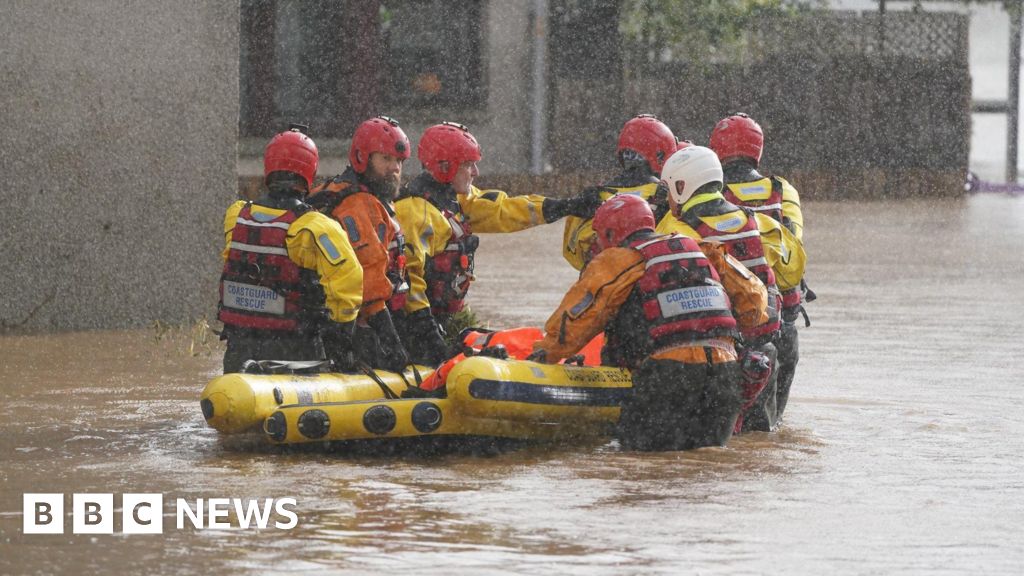
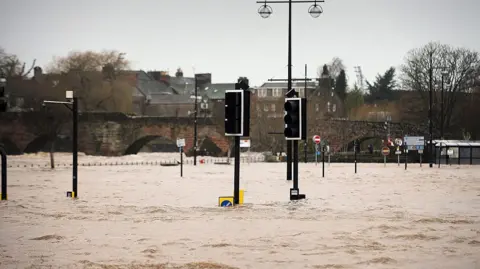
More intense rainfall is causing localised flooding such as that experienced by Storm Babet in Brechin, Angus, in October 2023.
More than 130 homes were affected when the River South Esk breached defences during “exceptional” rainfall.
The flood wall was built to withstand a one in 200-year weather event but has now been downgraded to being fit for a one in 50-year storm.
Angus Council has said it may have to downgrade the defences even further.
 Getty Images
Modelling of rising sea levels over the next 50 years has placed many more properties at risk from coastal flooding.
Improving defences is seen as a vital step in avoiding and minimising disruption.
The Auditor General for Scotland, Stephen Boyle, said public bodies need to urgently address the critical gaps in roles and responsibilities.
He added: “Whilst there are good examples of the Scottish government collaborating with councils, communities and other public bodies, this isn’t sufficient given the scale of future risks.”
The total cost of damage to property in Scotland because of flooding is around £260m a year split between the public and private sector.
When intense floods are experienced, like those in Brechin, that figure can be much higher.
The report also points out that vulnerable populations, such as older people and those with long term physical and mental health issues, are being disproportionately affected.
It says many take longer to recover from the impacts of being flooded with those facing financial hardship often being unable to afford home insurance.
That can widen inequality in some communities, it adds.
A Scottish government spokesman said many of the report’s recommendations align with work already under way to improve governance and processes for funding major flood protection schemes in future.
He added: “We have also recently provided funding to Sepa to improve coastal flooding monitoring and develop a national register of flood and coastal assets.
“In addition, we have established the Flood Resilience Strategy Implementation Governance Group with key partners to oversee implementation of the National Flood Resilience Strategy.”
BBC News

Khamrah by Lattafa for Men - 3.4 oz EDP Spray
4% Off
Ghost Sweetheart Eau de Toilette | Pineapple, Jasmine and Sandalwood | Perfume for Women 50 ml
50% Off
Marc Jacobs Dot Eau De Parfum for Women, 100 ml
42% Off
Ted Baker W Eau de Toilette for Her, Fig Leaf, White Peony and Violet Top Notes, Pink Orchid and Raspberry Middle Notes, 75ml
£11.77 (£15.69 / 100 ml) (as of 24/08/2026 04:40 GMT +01:00 - More infoProduct prices and availability are accurate as of the date/time indicated and are subject to change. Any price and availability information displayed on [relevant Amazon Site(s), as applicable] at the time of purchase will apply to the purchase of this product.)
Ted Baker Woman Pink Eau de Toilette Spray Floral Green Feminine Fragrance, Opening Notes are Fresh Peach, Bergamot and Tangerine with Warm Musk, Vanilla and Vetiver Base, 100ml
11% Off
Vera Wang Princess Eau de Toilette - 30 ml

Choco Musk 50ml Eau De Parfum for men and women | Chocolate Musk by Jannat Aromas
17% Off
Christina Aguilera Signature Eau de Parfum (50ml) Floral, Fruity & Exotic Scent, Luxury Fragrance for Women
9% Off
Calvin Klein - Eau De Toilette CKIN2U - Calvin Klein Women, Ladies Perfume, Women's Perfume, Calvin Klein Perfume, Calvin Klein One - 150 ml
5% Off
Jimmy Choo Flash Eau de Parfum, 60 ml (Pack of 1)
3% Off
Fruit of the Loom Men's Heavy T Shirt, White, XL UK
28% Off
ATNKE LED Lighted Beanie Cap,USB Rechargeable Running Hat Ultra Bright 4 LED Waterproof Light Winter Warm Gifts for Men and Women/Pink
17% Off
Men's 1/4 Zip Pullover UK Sale Clearance, Fleece Sweatshirt Casual Jumper Long Sleeve T-shirt Top Stand Collar Sweater Plain Pullover Sports Leisure Workwear Quarter Zip Sweater Lightweight Jumpers
£5.88 (as of 12/11/2025 00:52 GMT +01:00 - More infoProduct prices and availability are accurate as of the date/time indicated and are subject to change. Any price and availability information displayed on [relevant Amazon Site(s), as applicable] at the time of purchase will apply to the purchase of this product.)
Crevice Cleaning Brush, Bathroom Tile Groove Gap Cleaning Brush,Premium Crevice Cleaning Tool Aluminum Support with 15° Angle Magic Brush, Thin Brush for Home Kitchen
19% Off
Wireless Earbuds, Bluetooth 5.3 Headphones in Ear with HiFi Stereo Deep Bass, 4 ENC Noise Cancelling Mic Wireless Earphones 40H Playtime, Bluetooth Earbuds Dual LED Display, IP7 Waterproof, USB-C
42% Off