
 [
[


Researchers in Japan have transplanted pituitary tissue grown from human stem cells into a primate whose pituitary gland had been surgically removed, successfully restoring critical hormone signals. Led by researchers from Nagoya University in Japan, the team showed that the same method worked in mice over a longer period.
This is the first time lab-grown human pituitary cells have been shown to work and survive after transplantation into a primate. The study, published in the journal Stem Cell Research & Therapy, may offer a new pathway for treating lifelong hormone disorders.
The pituitary gland controls hormones for stress, growth and metabolism. When it is damaged or removed, patients rely on daily hormone pills that do not accurately mimic the body’s natural fluctuations. This study tested whether lab-grown pituitary tissue can be transplanted to produce hormones naturally instead.
The pituitary gland sits at the base of the brain and releases hormones into the bloodstream. One of them is ACTH, adrenocorticotropic hormone, which signals the adrenal glands to release cortisol. Cortisol helps the body manage stress, blood pressure and blood sugar. When the pituitary fails, patients lose this signal, leading to a condition called hypopituitarism.
Without enough ACTH, the body struggles to respond to stress, which can become dangerous. Daily hormone pills for life are the standard treatment, but these pills cannot fully match the changing needs of the body because demand for cortisol shifts with stress and time of day. As a result, patients face a higher risk of sudden death.

Testing lab-grown pituitary tissue in mice
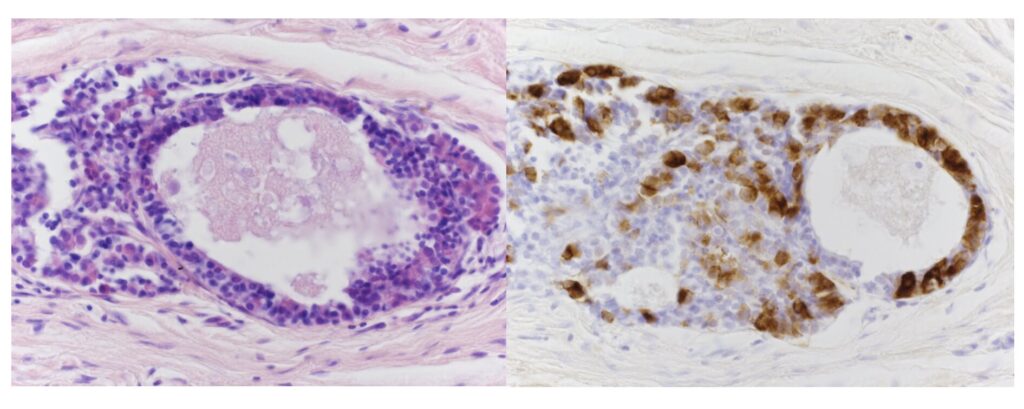
To find a better option, the researchers turned to stem cells. They grew small lab-made masses of tissue that can act as miniature organs, called organoids, from human stem cells. The organoids contained cells that produce ACTH. The team first tested the tissue in mice whose pituitary glands were removed.
“The organoids were transplanted just under the skin, in fat or muscle tissue. They produced ACTH for more than six months and clearly extended the lifespans of these mice compared to those that did not receive the transplant. No unwanted tumors or unusual cell growth were observed,” said first author Tatsuma Kondo, a guest researcher at Nagoya University’s Graduate School of Medicine.
Moving to a primate model
The research team then moved a step closer to humans and transplanted the organoids into a macaque monkey whose pituitary gland had been removed. To prevent rejection of the tissue because it came from a different species, they used immune-suppressing drugs already used in transplants of human insulin-producing cells for diabetes.
The transplanted tissue worked for six weeks and successfully elevated ACTH and cortisol levels in the blood. Additionally, significant weight loss caused by the hormone deficiency slowed during this period. Three months later, tissue samples still showed surviving transplanted cells, despite strong immune rejection common in cross-species transplants, which limited how well the transplant worked.
Stem cell treatments have a known risk of cells moving from the transplant site and growing uncontrollably elsewhere in the body. The researchers checked the lungs and liver for signs of stray organoid tissue and found none.
“We tested this approach in a single primate and are planning further studies to improve how long the tissue lasts and test safer immune-suppressing methods,” Kondo said.
More information
Functional analysis of adrenocorticotropic-hormone-producing pituitary cells derived from human pluripotent stem cells in murine and primate models of hypopituitarism, Stem Cell Research & Therapy (2026). DOI: 10.1186/s13287-026-05098-y
Clinical categories
Who’s behind this story?


Citation:
First successful primate transplant of human pituitary tissue boosts cortisol levels (2026, October 1)
retrieved 1 October 2026
from https://medicalxpress.com/news/2026-10-successful-primate-transplant-human-pituitary.html
This document is subject to copyright. Apart from any fair dealing for the purpose of private study or research, no
part may be reproduced without the written permission. The content is provided for information purposes only.

Khamrah by Lattafa for Men - 3.4 oz EDP Spray
4% Off
Ghost Sweetheart Eau de Toilette | Pineapple, Jasmine and Sandalwood | Perfume for Women 50 ml
50% Off
Marc Jacobs Dot Eau De Parfum for Women, 100 ml
42% Off
Ted Baker W Eau de Toilette for Her, Fig Leaf, White Peony and Violet Top Notes, Pink Orchid and Raspberry Middle Notes, 75ml
£11.77 (£15.69 / 100 ml) (as of 02/10/2026 05:09 GMT +01:00 - More infoProduct prices and availability are accurate as of the date/time indicated and are subject to change. Any price and availability information displayed on [relevant Amazon Site(s), as applicable] at the time of purchase will apply to the purchase of this product.)
Ted Baker Woman Pink Eau de Toilette Spray Floral Green Feminine Fragrance, Opening Notes are Fresh Peach, Bergamot and Tangerine with Warm Musk, Vanilla and Vetiver Base, 100ml
11% Off
Vera Wang Princess Eau de Toilette - 30 ml

Choco Musk 50ml Eau De Parfum for men and women | Chocolate Musk by Jannat Aromas
17% Off
Christina Aguilera Signature Eau de Parfum (50ml) Floral, Fruity & Exotic Scent, Luxury Fragrance for Women
9% Off
Calvin Klein - Eau De Toilette CKIN2U - Calvin Klein Women, Ladies Perfume, Women's Perfume, Calvin Klein Perfume, Calvin Klein One - 150 ml
5% Off
Jimmy Choo Flash Eau de Parfum, 60 ml (Pack of 1)
3% Off
Fruit of the Loom Men's Heavy T Shirt, White, XL UK
28% Off
ATNKE LED Lighted Beanie Cap,USB Rechargeable Running Hat Ultra Bright 4 LED Waterproof Light Winter Warm Gifts for Men and Women/Pink
17% Off
Men's 1/4 Zip Pullover UK Sale Clearance, Fleece Sweatshirt Casual Jumper Long Sleeve T-shirt Top Stand Collar Sweater Plain Pullover Sports Leisure Workwear Quarter Zip Sweater Lightweight Jumpers
£5.88 (as of 12/11/2025 00:52 GMT +01:00 - More infoProduct prices and availability are accurate as of the date/time indicated and are subject to change. Any price and availability information displayed on [relevant Amazon Site(s), as applicable] at the time of purchase will apply to the purchase of this product.)
Crevice Cleaning Brush, Bathroom Tile Groove Gap Cleaning Brush,Premium Crevice Cleaning Tool Aluminum Support with 15° Angle Magic Brush, Thin Brush for Home Kitchen
19% Off
Wireless Earbuds, Bluetooth 5.3 Headphones in Ear with HiFi Stereo Deep Bass, 4 ENC Noise Cancelling Mic Wireless Earphones 40H Playtime, Bluetooth Earbuds Dual LED Display, IP7 Waterproof, USB-C
42% Off


