 [
[

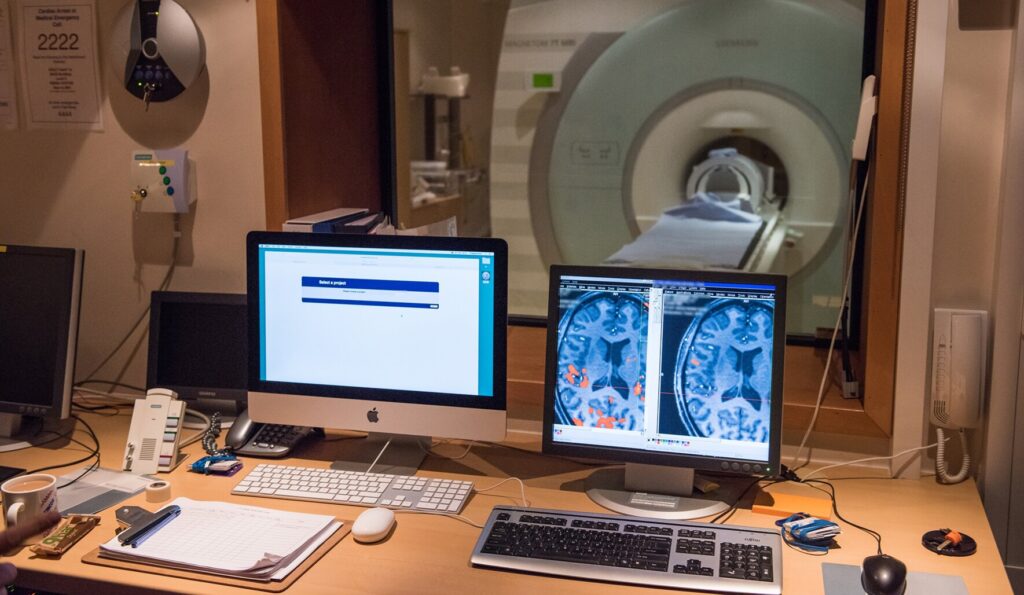
Researchers at The Podium Institute for Sports Medicine and Technology, situated within Oxford University’s Institute of Biomedical Engineering, have recruited their first participants for a new study exploring the impact of head injuries on the brains of 11- to 18-year-olds using cutting-edge neuroimaging techniques.
Traumatic brain injury (TBI) is a leading cause of death and long-term disability in young people. However, research in this area remains limited due to a lack of data concerning head injuries sustained by the young population. An innovative longitudinal study designed and conducted by The Podium Institute is harnessing advanced magnetic resonance imaging (MRI) techniques to uncover why some children recover more poorly than others after they have sustained a head injury, for instance through playing sport.
In emergency departments, clinical assessments such as computerized tomography (CT) scans focus on detecting life-threatening injuries. However, many children with a normal-looking CT scan still experience lasting symptoms, highlighting that important aspects of brain injury may be missed on standard imaging.
Using advanced MRI techniques, this new study will explore various aspects of brain damage, including injury to nerve fibers, disruptions in brain metabolism, and changes in functional connectivity between brain regions. These sophisticated neuroimaging measures will be combined with cognitive testing along with self- and parent-reported information on head injuries. The aim is to identify key MRI biomarkers that can reliably predict both clinical recovery and sports-related outcomes, such as time to return to sport.
Dr. Tim Lawrence (Nuffield Department of Clinical Neurosciences, Oxford University), consultant pediatric neurosurgeon and one of the study’s lead researchers, explained, “With growing concern regarding a potential link between mild or repetitive traumatic brain injury and long-term cognitive difficulties or even early dementia, there is a pressing need to identify the types of traumatic injuries that may pose a risk. Our study is a step towards better understanding of the mechanisms that underpin damage to the brains of children and adolescents suffering injury.”
Approximately 30%–50% of reported head injuries occur in young people, and these injuries are linked to an increased risk for conditions including neurodegenerative disease. However, conventional assessment methods have proven inadequate for accurately diagnosing and analyzing brain injuries.
To date, a limited number of studies using advanced MRI have begun to reveal why some individuals experience more severe symptoms or slower recovery, even when standard brain scans show minimal injury. However, many questions remain unanswered, highlighting the urgent need for further research to deepen our understanding of the evolution of TBI over time and its long-term impact on young brains.
Professor Constantin Coussios, director of the Podium Institute and Director of the Institute of Biomedical Engineering remarked, “Given the focus of the Podium Institute on the youth, community and female sports, we are proud that our first clinical study addresses a key unmet need in the diagnosis and evaluation of head injuries in children and young persons.
“We hope to uncover clinically relevant imaging markers that will turn a difficult-to-see condition into one that can be diagnosed more confidently, and to help clinicians, parents and coaches predict how well a child will recover after a head injury.”
Over the next 2.5 years, the study hopes to scan a total of 60 patients and 60 controls who are 11- to 18-years-old and regularly take part in sports. This will include young people with both recent and past injuries.
Citation:
First patients scanned in new study investigating traumatic brain injury in young athletes (2025, January 14)
retrieved 14 January 2025
from https://medicalxpress.com/news/2025-01-patients-scanned-traumatic-brain-injury.html
This document is subject to copyright. Apart from any fair dealing for the purpose of private study or research, no
part may be reproduced without the written permission. The content is provided for information purposes only.

Khamrah by Lattafa for Men - 3.4 oz EDP Spray
4% Off
Ghost Sweetheart Eau de Toilette | Pineapple, Jasmine and Sandalwood | Perfume for Women 50 ml
50% Off
Marc Jacobs Dot Eau De Parfum for Women, 100 ml
42% Off
Ted Baker W Eau de Toilette for Her, Fig Leaf, White Peony and Violet Top Notes, Pink Orchid and Raspberry Middle Notes, 75ml
£11.77 (£15.69 / 100 ml) (as of 29/07/2026 04:03 GMT +01:00 - More infoProduct prices and availability are accurate as of the date/time indicated and are subject to change. Any price and availability information displayed on [relevant Amazon Site(s), as applicable] at the time of purchase will apply to the purchase of this product.)
Ted Baker Woman Pink Eau de Toilette Spray Floral Green Feminine Fragrance, Opening Notes are Fresh Peach, Bergamot and Tangerine with Warm Musk, Vanilla and Vetiver Base, 100ml
11% Off
Vera Wang Princess Eau de Toilette - 30 ml

Choco Musk 50ml Eau De Parfum for men and women | Chocolate Musk by Jannat Aromas
17% Off
Christina Aguilera Signature Eau de Parfum (50ml) Floral, Fruity & Exotic Scent, Luxury Fragrance for Women
9% Off
Calvin Klein - Eau De Toilette CKIN2U - Calvin Klein Women, Ladies Perfume, Women's Perfume, Calvin Klein Perfume, Calvin Klein One - 150 ml
5% Off
Jimmy Choo Flash Eau de Parfum, 60 ml (Pack of 1)
3% Off
Fruit of the Loom Men's Heavy T Shirt, White, XL UK
28% Off
ATNKE LED Lighted Beanie Cap,USB Rechargeable Running Hat Ultra Bright 4 LED Waterproof Light Winter Warm Gifts for Men and Women/Pink
17% Off
Men's 1/4 Zip Pullover UK Sale Clearance, Fleece Sweatshirt Casual Jumper Long Sleeve T-shirt Top Stand Collar Sweater Plain Pullover Sports Leisure Workwear Quarter Zip Sweater Lightweight Jumpers
£5.88 (as of 12/11/2025 00:52 GMT +01:00 - More infoProduct prices and availability are accurate as of the date/time indicated and are subject to change. Any price and availability information displayed on [relevant Amazon Site(s), as applicable] at the time of purchase will apply to the purchase of this product.)
Crevice Cleaning Brush, Bathroom Tile Groove Gap Cleaning Brush,Premium Crevice Cleaning Tool Aluminum Support with 15° Angle Magic Brush, Thin Brush for Home Kitchen
19% Off
Wireless Earbuds, Bluetooth 5.3 Headphones in Ear with HiFi Stereo Deep Bass, 4 ENC Noise Cancelling Mic Wireless Earphones 40H Playtime, Bluetooth Earbuds Dual LED Display, IP7 Waterproof, USB-C
42% Off