Emmet McElhattonBBC News NI

 Getty Images
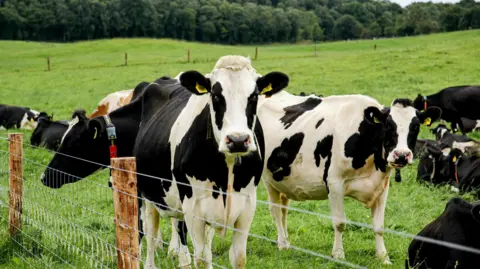
Farmers, some of who have spent thousands getting their cattle ready to exhibit at this year’s Royal Ulster Winter Fair, are “gutted” that all bovine classes at the event have been cancelled.
On Monday, the Royal Ulster Agricultural Society (RUAS) said they were “disappointed” about the decision, which had been taken due to ongoing “risk and uncertainty” over bluetongue virus in Northern Ireland.
Other elements of the show will proceeds as planned in Lisburn’s Eikon Exhibition Centre on Thursday.
The Department of Agriculture, Environment Rural Affairs (Daera) said the fact the RUAS had cancelled the fair shows “how seriously the agri-food sector” is treating the need to stop the spread.
‘Family thing’
Leanne Paul, who along with her husband Alan owns a dairy farm outside Maghera, has been exhibiting animals at the winter show for the last six years.
She said it is a chance not only to increase the value of your herd’s offspring, but a pursuit of passion as well.
“You go to the fair and show your cattle for a few reasons,” said Ms Paul.
“One, because it’s the shop window and it’s good for business, but we also go because we love it.”
She said it is a family experience that her children look forward to.
“Every day for the last few weeks when my children have been getting out of school, they’ve been asking, ‘Are we still going to the fair?’.
“I know when they ask today and I have to tell them the truth, there’s going to be tears,” she said.
 Getty Images
‘Thousands of pounds’
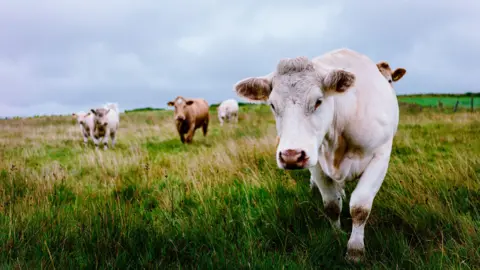
The Paul family had planned to take 19 cattle to the winter fair later this week,15 of which had already been washed, groomed and prepared for the exhibition.
Ms Paul explained it came at a considerable cost.
“We had to pay for fitters to be on the farm for three days, which included the cost of their flights. Then we lost all our accommodation money, which was for 19 animals and, I think, 12 people. Then there was the price of feed and all of the rest of it.
“I’m absolutely gutted. Everyone is, 99 per-cent of people will probably still go, but anyone who had their cattle ready for showing will be disappointed.”
At previous fairs, the Paul family have picked up a number of accolades including, senior heifer in milk, intermediate champion and interbreed champion in 2019.
They also have won Ayrshire champion junior heifer in 2021, red an white champion of show 2024, senior heifer in milk in 2023 and premier breeder and exhibitor 2022, 2023 & 2024.
 Getty Images
The number of cattle entered in this year’s fair was the “highest we’ve had in a very long time”, said President of Holstein UK and Winter Fair committee member Mark Logan.
“Normally the cattle numbers would sort of get into about 150… but this year we got about 180, which would have really had the buildings just that capacity.”
Mr Logan said the event is “the premier dairy event in Northern Ireland, if not the island of Ireland”, and “attracts visitors right across Ireland and the UK and even further afield, so it really is the big dairy farming event of the year.”
He added: “There will be certainly an amount of work that has gone on that unfortunately now is for nothing.”
 Getty Images
What is bluetongue virus?
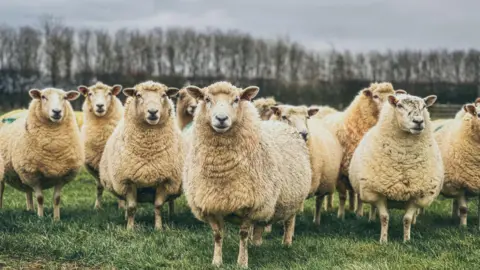
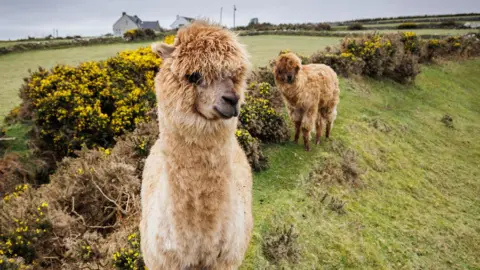
Bluetongue virus affects cattle, goats, sheep, deer and camelids such as llamas and alpacas.
It can cause ulcers or sores around the animal’s mouth and face, difficulties swallowing and breathing, fever and lameness, foetal deformities and stillbirths.
It is a notifiable disease so anyone suspecting their animals may have it must report it to a vet, local divisional veterinary office or to Daera directly.
The latest outbreak began in the Netherlands in 2023, where tens of thousands of sheep died, and midges blown over from the continent began infecting livestock in the south-east of England too.
But the impact of BTV-3 seems to vary considerably across different regions, with some animals showing little sign of infection and managing to recover.
BBC News

Khamrah by Lattafa for Men - 3.4 oz EDP Spray
4% Off
Ghost Sweetheart Eau de Toilette | Pineapple, Jasmine and Sandalwood | Perfume for Women 50 ml
50% Off
Marc Jacobs Dot Eau De Parfum for Women, 100 ml
42% Off
Ted Baker W Eau de Toilette for Her, Fig Leaf, White Peony and Violet Top Notes, Pink Orchid and Raspberry Middle Notes, 75ml
£11.77 (£15.69 / 100 ml) (as of 16/06/2026 03:32 GMT +01:00 - More infoProduct prices and availability are accurate as of the date/time indicated and are subject to change. Any price and availability information displayed on [relevant Amazon Site(s), as applicable] at the time of purchase will apply to the purchase of this product.)
Ted Baker Woman Pink Eau de Toilette Spray Floral Green Feminine Fragrance, Opening Notes are Fresh Peach, Bergamot and Tangerine with Warm Musk, Vanilla and Vetiver Base, 100ml
11% Off
Vera Wang Princess Eau de Toilette - 30 ml

Choco Musk 50ml Eau De Parfum for men and women | Chocolate Musk by Jannat Aromas
17% Off
Christina Aguilera Signature Eau de Parfum (50ml) Floral, Fruity & Exotic Scent, Luxury Fragrance for Women
9% Off
Calvin Klein - Eau De Toilette CKIN2U - Calvin Klein Women, Ladies Perfume, Women's Perfume, Calvin Klein Perfume, Calvin Klein One - 150 ml
5% Off
Jimmy Choo Flash Eau de Parfum, 60 ml (Pack of 1)
3% Off
Fruit of the Loom Men's Heavy T Shirt, White, XL UK
28% Off
ATNKE LED Lighted Beanie Cap,USB Rechargeable Running Hat Ultra Bright 4 LED Waterproof Light Winter Warm Gifts for Men and Women/Pink
17% Off
Men's 1/4 Zip Pullover UK Sale Clearance, Fleece Sweatshirt Casual Jumper Long Sleeve T-shirt Top Stand Collar Sweater Plain Pullover Sports Leisure Workwear Quarter Zip Sweater Lightweight Jumpers
£5.88 (as of 12/11/2025 00:52 GMT +01:00 - More infoProduct prices and availability are accurate as of the date/time indicated and are subject to change. Any price and availability information displayed on [relevant Amazon Site(s), as applicable] at the time of purchase will apply to the purchase of this product.)
Crevice Cleaning Brush, Bathroom Tile Groove Gap Cleaning Brush,Premium Crevice Cleaning Tool Aluminum Support with 15° Angle Magic Brush, Thin Brush for Home Kitchen
19% Off
Wireless Earbuds, Bluetooth 5.3 Headphones in Ear with HiFi Stereo Deep Bass, 4 ENC Noise Cancelling Mic Wireless Earphones 40H Playtime, Bluetooth Earbuds Dual LED Display, IP7 Waterproof, USB-C
42% Off