

BBC News NI agriculture and environment correspondent

 BBC
BBC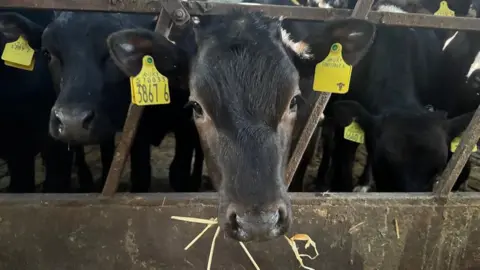
Despite prices for commodities like beef and milk remaining high, it all makes for a less-than-positive backdrop to a highlight in the farming calendar.
For Cormac McKervey, head of agriculture at Ulster Bank, the show has a role to play in connecting farmers with the public they serve.
“It lets them understand and know that what we’re doing is good, it’s wholesome, it’s natural food.”
But agriculture is still Northern Ireland’s largest contributor to greenhouse gas emissions.
And reducing that is a challenge that Mr McKervey says is on the minds of farmers.
“Farming does produce a lot of carbon emissions, but equally, farming has some fantastic solutions in terms of absorbing that carbon into the soil,” he said.
“And I think the conversation has widened, that it’s not just purely carbon anymore, it’s that wider piece about sustainability on the farm, both economically and environmentally.
“Farmers are getting into that and the supply chain is driving it.”
Bovine TB
William Irvine, president of the Ulster Farmers’ Union, knows his members will have a lot to discuss when the Union’s tent opens for tea and scones on Wednesday.
“I could almost guarantee that the majority of questions that we will get will be the inheritance tax piece, the TB piece, closely followed I would say by the Nutrients Action Programme consultation that’s just been announced in recent days,” Mr Irvine said.
“It feels like there is a tsunami coming at us around all of these issues.”
Sean McAuley has felt the impact of part of that tsunami.
After 40 years in farming, he had his first experience of bovine TB in 2023-24.
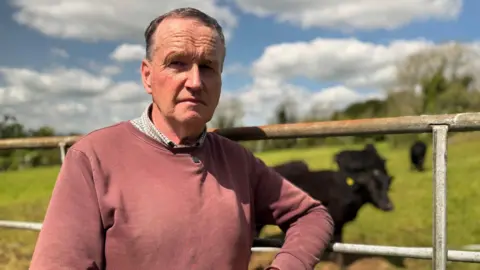
“It was a shock to the system. I wasn’t that well at the time; I was waiting to go into hospital,” Mr McAuley said.
“I can fully relate now to the pressures it puts farmers and their families under because you see your business disappearing.”
The Farmers for Action spokesperson is adamant that no strategy will tackle the problem until there is a wildlife intervention – a badger cull, by another name.
But the courts have quashed the previous minister’s order for a cull.
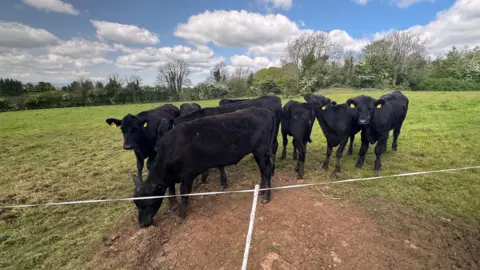
With the bill for the TB programme expected to reach £60m this year, the TB Partnership Steering Group has published a blueprint for eradication.
It said it will “bring forward proposals for effective, evidence-based wildlife interventions and TBPSG views for consideration by [the] minister”.
Celebration and a shop window
Frustrations with the planning system felt in other sectors are also affecting farming.
“I have one son who would be interested in farming,” said Mr McAuley.
“We have been looking recently at perhaps other ventures on the farm, but the big stumbling block is going to be planning, and that is a big issue for anyone who wants to invest into the industry at the minute.”
Amid all the troubles, the Balmoral Show remains “a real celebration” to look forward to for Mr Irvine.
“Balmoral is a day out, a day to meet folk that we maybe didn’t meet since this time last year, it’s a day to enjoy, a day to catch up with our friends and colleague,” he said.
“It’s a shop window for our pedigree breeders, our livestock breeders, and all the various sectors within agriculture will be represented at the show.
“I’m quite sure people will be there to enjoy their day, even with all the challenges that are coming at them.”
Parking, tickets and transport at the Balmoral Show
The Balmoral Show takes place the Eikon Centre, not far from Lisburn.
The show runs on four days from Wednesday to Saturday and opens at 09:30 BST each day.
It closes at 18:00 on Wednesday and Saturday, 20:00 on Thursday and 19:00 on Friday.
A free shuttle bus service will run between the centre and Lisburn Train Station, a journey of about 20-30 minutes.
Car parking is available for £10 per car each day, which must be paid by cash on arrival.
Tickets must be bought online in advance and cannot be purchased on the day.
BBC News

Khamrah by Lattafa for Men - 3.4 oz EDP Spray
4% Off
Ghost Sweetheart Eau de Toilette | Pineapple, Jasmine and Sandalwood | Perfume for Women 50 ml
50% Off
Marc Jacobs Dot Eau De Parfum for Women, 100 ml
42% Off
Ted Baker W Eau de Toilette for Her, Fig Leaf, White Peony and Violet Top Notes, Pink Orchid and Raspberry Middle Notes, 75ml
£11.77 (£15.69 / 100 ml) (as of 03/10/2026 05:09 GMT +01:00 - More infoProduct prices and availability are accurate as of the date/time indicated and are subject to change. Any price and availability information displayed on [relevant Amazon Site(s), as applicable] at the time of purchase will apply to the purchase of this product.)
Ted Baker Woman Pink Eau de Toilette Spray Floral Green Feminine Fragrance, Opening Notes are Fresh Peach, Bergamot and Tangerine with Warm Musk, Vanilla and Vetiver Base, 100ml
11% Off
Vera Wang Princess Eau de Toilette - 30 ml

Choco Musk 50ml Eau De Parfum for men and women | Chocolate Musk by Jannat Aromas
17% Off
Christina Aguilera Signature Eau de Parfum (50ml) Floral, Fruity & Exotic Scent, Luxury Fragrance for Women
9% Off
Calvin Klein - Eau De Toilette CKIN2U - Calvin Klein Women, Ladies Perfume, Women's Perfume, Calvin Klein Perfume, Calvin Klein One - 150 ml
5% Off
Jimmy Choo Flash Eau de Parfum, 60 ml (Pack of 1)
3% Off
Fruit of the Loom Men's Heavy T Shirt, White, XL UK
28% Off
ATNKE LED Lighted Beanie Cap,USB Rechargeable Running Hat Ultra Bright 4 LED Waterproof Light Winter Warm Gifts for Men and Women/Pink
17% Off
Men's 1/4 Zip Pullover UK Sale Clearance, Fleece Sweatshirt Casual Jumper Long Sleeve T-shirt Top Stand Collar Sweater Plain Pullover Sports Leisure Workwear Quarter Zip Sweater Lightweight Jumpers
£5.88 (as of 12/11/2025 00:52 GMT +01:00 - More infoProduct prices and availability are accurate as of the date/time indicated and are subject to change. Any price and availability information displayed on [relevant Amazon Site(s), as applicable] at the time of purchase will apply to the purchase of this product.)
Crevice Cleaning Brush, Bathroom Tile Groove Gap Cleaning Brush,Premium Crevice Cleaning Tool Aluminum Support with 15° Angle Magic Brush, Thin Brush for Home Kitchen
19% Off
Wireless Earbuds, Bluetooth 5.3 Headphones in Ear with HiFi Stereo Deep Bass, 4 ENC Noise Cancelling Mic Wireless Earphones 40H Playtime, Bluetooth Earbuds Dual LED Display, IP7 Waterproof, USB-C
42% Off