Eurovision Song Contest organisers have announced changes to the rules, saying winning broadcasters are to be prevented from hosting if involved in armed conflict or a “sensitive geopolitical situation” that could affect the safety of the event.
Traditionally, the competition is hosted by the previous year’s winning broadcaster, with the next show due to take place in Bulgaria in 2027 after singer Dara’s victory for the country in May.
Following an annual review by the organisers, the European Broadcasting Union (EBU), the rules have now been updated.
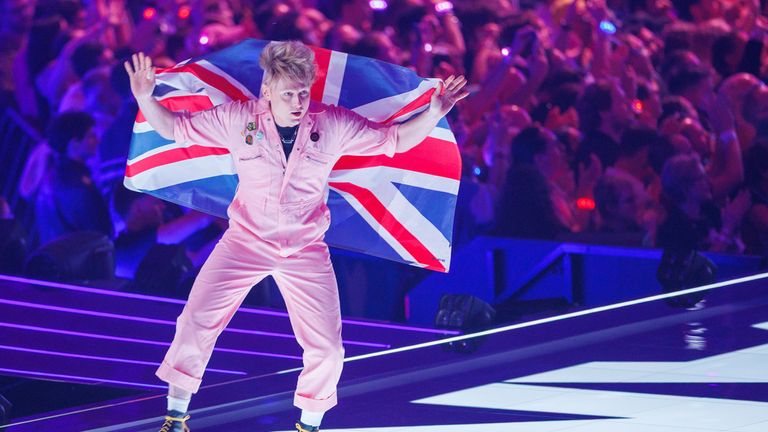
Look Mum No Computer represented the UK this year, picking up just one point. Pic: Jens Bettner/picture-alliance/dpa/AP Images
The winning Eurovision broadcaster will now “automatically be ineligible to host the contest if an armed conflict, a sensitive geopolitical situation, or any other situation materially affects the security, safety or stability of their state or immediate region”, the rules now state.
Changes to hosting tradition have been made in the past, with the 2023 contest held in Liverpool, in the UK, following Ukraine’s win the previous year and Russia’s ongoing war there.
In the run-up to this year’s competition, which was held in Vienna, Austria, countries including Spain, the Netherlands, Ireland, Iceland and Slovenia all withdrew after Israel’s place in the contest was confirmed.
Their boycotts followed criticism from some broadcasters of Israel’s role in the competition amid the war in Gaza
On the night, Israel claimed second place, as it did in 2025.
The EBU said the rule changes had been made following feedback from participating broadcasters, and said the updates would provide greater clarity for artists and production staff.
Eurovision Song Contest director Martin Green said in a statement: “The Eurovision Song Contest is constantly evolving, and our annual review of the rules is an important part of making sure the contest remains fair, transparent and consistent for all those who participate, including the millions who engage with the event globally.
“Guided, as always, by feedback from our members, we have clarified and strengthened several areas for 2027. These changes are about giving everyone involved greater clarity, protecting artists and ensuring the contest continues to provide a safe and welcoming environment, while preserving the spirit and integrity that make the Eurovision Song Contest so special.”
The rule changes also include an update to the minimum age for artists. At the moment, competitors need to be at least 16 on the day of their first rehearsal.
This increases to 18 from 2027.
This breaking news story is being updated and more details will be published shortly.
Please refresh the page for the fullest version.
You can receive breaking news alerts on a smartphone or tablet via the Sky News app. You can also follow us on WhatsApp and subscribe to our YouTube channel to keep up with the latest news.
Source link

Khamrah by Lattafa for Men - 3.4 oz EDP Spray
4% Off
Ghost Sweetheart Eau de Toilette | Pineapple, Jasmine and Sandalwood | Perfume for Women 50 ml
50% Off
Marc Jacobs Dot Eau De Parfum for Women, 100 ml
42% Off
Ted Baker W Eau de Toilette for Her, Fig Leaf, White Peony and Violet Top Notes, Pink Orchid and Raspberry Middle Notes, 75ml
£11.77 (£15.69 / 100 ml) (as of 07/09/2026 04:59 GMT +01:00 - More infoProduct prices and availability are accurate as of the date/time indicated and are subject to change. Any price and availability information displayed on [relevant Amazon Site(s), as applicable] at the time of purchase will apply to the purchase of this product.)
Ted Baker Woman Pink Eau de Toilette Spray Floral Green Feminine Fragrance, Opening Notes are Fresh Peach, Bergamot and Tangerine with Warm Musk, Vanilla and Vetiver Base, 100ml
11% Off
Vera Wang Princess Eau de Toilette - 30 ml

Choco Musk 50ml Eau De Parfum for men and women | Chocolate Musk by Jannat Aromas
17% Off
Christina Aguilera Signature Eau de Parfum (50ml) Floral, Fruity & Exotic Scent, Luxury Fragrance for Women
9% Off
Calvin Klein - Eau De Toilette CKIN2U - Calvin Klein Women, Ladies Perfume, Women's Perfume, Calvin Klein Perfume, Calvin Klein One - 150 ml
5% Off
Jimmy Choo Flash Eau de Parfum, 60 ml (Pack of 1)
3% Off
Fruit of the Loom Men's Heavy T Shirt, White, XL UK
28% Off
ATNKE LED Lighted Beanie Cap,USB Rechargeable Running Hat Ultra Bright 4 LED Waterproof Light Winter Warm Gifts for Men and Women/Pink

Men's 1/4 Zip Pullover UK Sale Clearance, Fleece Sweatshirt Casual Jumper Long Sleeve T-shirt Top Stand Collar Sweater Plain Pullover Sports Leisure Workwear Quarter Zip Sweater Lightweight Jumpers
£5.88 (as of 12/11/2025 00:52 GMT +01:00 - More infoProduct prices and availability are accurate as of the date/time indicated and are subject to change. Any price and availability information displayed on [relevant Amazon Site(s), as applicable] at the time of purchase will apply to the purchase of this product.)
Crevice Cleaning Brush, Bathroom Tile Groove Gap Cleaning Brush,Premium Crevice Cleaning Tool Aluminum Support with 15° Angle Magic Brush, Thin Brush for Home Kitchen
19% Off
Wireless Earbuds, Bluetooth 5.3 Headphones in Ear with HiFi Stereo Deep Bass, 4 ENC Noise Cancelling Mic Wireless Earphones 40H Playtime, Bluetooth Earbuds Dual LED Display, IP7 Waterproof, USB-C
42% Off