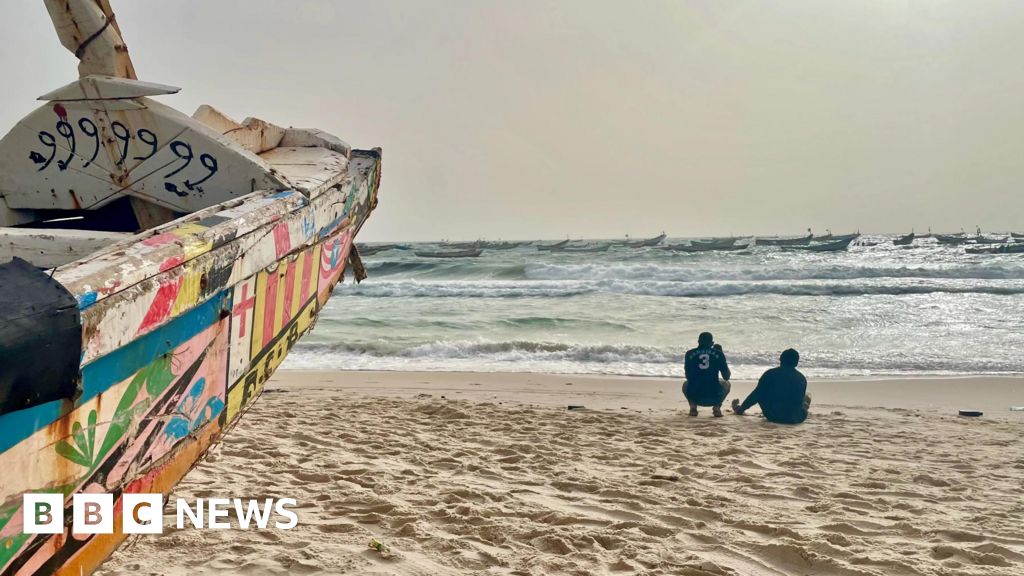
Mauritania’s security forces have been systematically abusing migrants from other African countries, a report by Human Rights Watch (HRW) says.
The violations have been exacerbated by a deal with the European Union (EU) and Spain, which aims to curb dangerous sea crossings to the Canary Islands, the rights group alleges.
It documents how migrants and asylum seekers often trying to leave Mauritania have been subjected to rape, torture and extortion at the hands of the military, border personnel and other security staff.
Mauritania has rejected the findings, saying it has taken recent steps to protect migrant rights. The European Commission has said its deal is “anchored” in upholding rights.
Mauritania has become an increasingly common departure point for African migrants trying to reach Europe via Spain’s Canary Islands by boat.
Nearly 47,000 people reached the islands last year after making the extremely perilous crossing over the Atlantic Ocean.
In 2024, Mauritania signed a new migration partnership with the EU in exchange for €210m (£181m, $244m) in funding.
The HRW report details that between 2020 and early 2025 Mauritania had allegedly pursued an “abusive migration control playbook”, highlighting that in some cases Spanish security personnel witnessed the violations.
Aside from the allegations of sexual assault, torture and extortion, the 142-page dossier also accuses Mauritania’s security forces of racism, keeping migrants in poor conditions and other violations.
HRW says all the victims their researchers interviewed were black, with many alleging that racial discrimination played a role in the violations they faced at the hands of the primarily lighter-skinned security staff from the Beidane ethnic group.
“If you have black skin, they don’t respect you, they insult you and take your papers,” a Senegalese person returned home told HRW.
A Togolese woman added: “When they see me, a foreigner, it’s like they see something strange or shady.”
The report was conducted over a four-year period and included interviews with more than 220 people, HRW says.
The group of people who were cited to have been victims of alleged abuses were a mix of asylum seekers and migrants, both with regular and irregular statuses, from countries such as Senegal, Guinea, Mali, Cameroon, Sierra Leone, and Liberia, HRW said.
Women and children were also among those said to have faced rights violations.
Some of the recommendations made by HRW include increased training for security staff as well as the establishment of an independent process to probe alleged violations.
The right groups also acknowledged that migration reforms in recent months had improved the situation.
BBC News

Khamrah by Lattafa for Men - 3.4 oz EDP Spray
4% Off
Ghost Sweetheart Eau de Toilette | Pineapple, Jasmine and Sandalwood | Perfume for Women 50 ml
50% Off
Marc Jacobs Dot Eau De Parfum for Women, 100 ml
42% Off
Ted Baker W Eau de Toilette for Her, Fig Leaf, White Peony and Violet Top Notes, Pink Orchid and Raspberry Middle Notes, 75ml
£11.77 (£15.69 / 100 ml) (as of 01/09/2026 04:56 GMT +01:00 - More infoProduct prices and availability are accurate as of the date/time indicated and are subject to change. Any price and availability information displayed on [relevant Amazon Site(s), as applicable] at the time of purchase will apply to the purchase of this product.)
Ted Baker Woman Pink Eau de Toilette Spray Floral Green Feminine Fragrance, Opening Notes are Fresh Peach, Bergamot and Tangerine with Warm Musk, Vanilla and Vetiver Base, 100ml
11% Off
Vera Wang Princess Eau de Toilette - 30 ml

Choco Musk 50ml Eau De Parfum for men and women | Chocolate Musk by Jannat Aromas
17% Off
Christina Aguilera Signature Eau de Parfum (50ml) Floral, Fruity & Exotic Scent, Luxury Fragrance for Women
9% Off
Calvin Klein - Eau De Toilette CKIN2U - Calvin Klein Women, Ladies Perfume, Women's Perfume, Calvin Klein Perfume, Calvin Klein One - 150 ml
5% Off
Jimmy Choo Flash Eau de Parfum, 60 ml (Pack of 1)
3% Off
Fruit of the Loom Men's Heavy T Shirt, White, XL UK
28% Off
ATNKE LED Lighted Beanie Cap,USB Rechargeable Running Hat Ultra Bright 4 LED Waterproof Light Winter Warm Gifts for Men and Women/Pink
17% Off
Men's 1/4 Zip Pullover UK Sale Clearance, Fleece Sweatshirt Casual Jumper Long Sleeve T-shirt Top Stand Collar Sweater Plain Pullover Sports Leisure Workwear Quarter Zip Sweater Lightweight Jumpers

Crevice Cleaning Brush, Bathroom Tile Groove Gap Cleaning Brush,Premium Crevice Cleaning Tool Aluminum Support with 15° Angle Magic Brush, Thin Brush for Home Kitchen
19% Off
Wireless Earbuds, Bluetooth 5.3 Headphones in Ear with HiFi Stereo Deep Bass, 4 ENC Noise Cancelling Mic Wireless Earphones 40H Playtime, Bluetooth Earbuds Dual LED Display, IP7 Waterproof, USB-C
42% Off