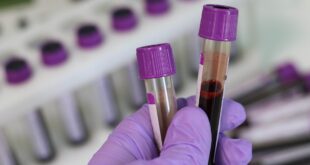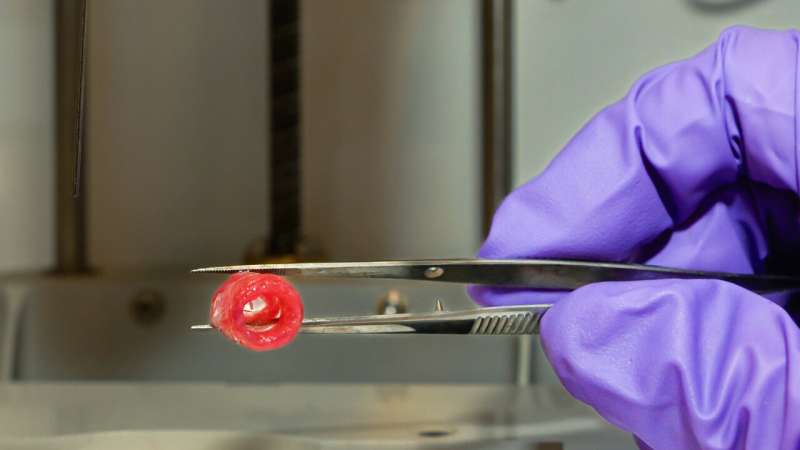
The model blood vessel was made using 3D bioprinting to help investigate how weightlessness changes the cardiovascular systems of astronauts in orbit.
Microgravity alters the human body in myriad ways, including changes to blood flow through the body, increased risk of blood clots and even the shape of the heart, which grows more spherical over time. These bioprinted models will be used to assess the mechanics of these changes.
“We used a blend of sodium alginate and gelatine as ‘bio-ink,’ with a bath of calcium chloride to serve as a support for the printed structure,” explains Benedetto Caracci, biomedical engineering student at the University of Pavia and current trainee at ESA’s ESTEC technical center, leading this ESA-supported study, known as “Special”: the impact of SPacE CondItions on ArteriaL biology using a bioprinted vessel model.
“It is a challenge for the soft biofabricated structure to retain its desired shape following extrusion, so we applied the FRESH—’freeform reversible embedding of suspended hydrogels’—3D bioprinting method, providing a temporary support that can then be removed after the print process.”
Once these high-resolution blood vessel models are complete they will be subjected to preliminary examination, including micro-CT scans to check their external and internal dimensions, porosity, material density distribution, and roughness; tensile test and dynamic mechanical analysis to test their overall strength and elasticity; and fluid dynamics testing where a blood-like liquid will be pumped through them.
Next the models will be placed in Random Positioning Machines—which continuously change their orientation relative to the ground, to simulate weightlessness—in ESA’s Life Support and Physical Sciences Instrumentation Laboratory to see how their structure and functioning evolves. They will also be subjected to sustained hypergravity using the Lab’s Large Diameter Centrifuge.
In the future the FRESH 3D bioprinting technique could also be used to test the effectiveness of drugs and the treatment of vascular diseases both on Earth and in space.
Citation:
Engineers create 3D-bioprinted blood vessel (2024, April 4)
retrieved 5 April 2024
from https://medicalxpress.com/news/2024-04-3d-bioprinted-blood-vessel.html
This document is subject to copyright. Apart from any fair dealing for the purpose of private study or research, no
part may be reproduced without the written permission. The content is provided for information purposes only.

Khamrah by Lattafa for Men - 3.4 oz EDP Spray
4% Off
Ghost Sweetheart Eau de Toilette | Pineapple, Jasmine and Sandalwood | Perfume for Women 50 ml
50% Off
Marc Jacobs Dot Eau De Parfum for Women, 100 ml
42% Off
Ted Baker W Eau de Toilette for Her, Fig Leaf, White Peony and Violet Top Notes, Pink Orchid and Raspberry Middle Notes, 75ml
£11.77 (£15.69 / 100 ml) (as of 25/06/2026 03:50 GMT +01:00 - More infoProduct prices and availability are accurate as of the date/time indicated and are subject to change. Any price and availability information displayed on [relevant Amazon Site(s), as applicable] at the time of purchase will apply to the purchase of this product.)
Ted Baker Woman Pink Eau de Toilette Spray Floral Green Feminine Fragrance, Opening Notes are Fresh Peach, Bergamot and Tangerine with Warm Musk, Vanilla and Vetiver Base, 100ml
11% Off
Vera Wang Princess Eau de Toilette - 30 ml

Choco Musk 50ml Eau De Parfum for men and women | Chocolate Musk by Jannat Aromas
17% Off
Christina Aguilera Signature Eau de Parfum (50ml) Floral, Fruity & Exotic Scent, Luxury Fragrance for Women
9% Off
Calvin Klein - Eau De Toilette CKIN2U - Calvin Klein Women, Ladies Perfume, Women's Perfume, Calvin Klein Perfume, Calvin Klein One - 150 ml
5% Off
Jimmy Choo Flash Eau de Parfum, 60 ml (Pack of 1)
3% Off
Fruit of the Loom Men's Heavy T Shirt, White, XL UK
28% Off
ATNKE LED Lighted Beanie Cap,USB Rechargeable Running Hat Ultra Bright 4 LED Waterproof Light Winter Warm Gifts for Men and Women/Pink
17% Off
Men's 1/4 Zip Pullover UK Sale Clearance, Fleece Sweatshirt Casual Jumper Long Sleeve T-shirt Top Stand Collar Sweater Plain Pullover Sports Leisure Workwear Quarter Zip Sweater Lightweight Jumpers
£5.88 (as of 12/11/2025 00:52 GMT +01:00 - More infoProduct prices and availability are accurate as of the date/time indicated and are subject to change. Any price and availability information displayed on [relevant Amazon Site(s), as applicable] at the time of purchase will apply to the purchase of this product.)
Crevice Cleaning Brush, Bathroom Tile Groove Gap Cleaning Brush,Premium Crevice Cleaning Tool Aluminum Support with 15° Angle Magic Brush, Thin Brush for Home Kitchen
19% Off
Wireless Earbuds, Bluetooth 5.3 Headphones in Ear with HiFi Stereo Deep Bass, 4 ENC Noise Cancelling Mic Wireless Earphones 40H Playtime, Bluetooth Earbuds Dual LED Display, IP7 Waterproof, USB-C
42% Off