[
[
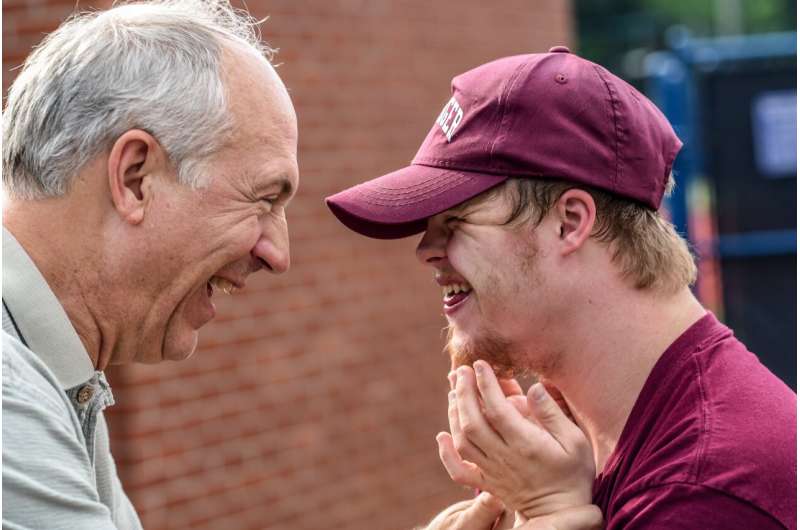
For more than a century, people with Down syndrome have been defined by what medicine says they cannot do. That framing has consequences. It shapes the information families receive during prenatal screening, the choices they feel they have and the assumptions that go unexamined. Often, it has resulted in institutionalization and societal ostracism.
A recent viral post on X by popular YouTuber Jesse Ridgway (also known as McJuggerNuggets) is the latest public example of this pattern. In it, he announced that he and his wife terminated a pregnancy because of a Down syndrome diagnosis.
As disability scholars who support reproductive autonomy, we believe the inaccuracies and omissions that guided this family’s decision represent a damaging perspective based on eugenic ideas.
What Ridgway got wrong medically
Citing health and intellectual conditions that are more common in people with Down syndrome, Ridgway said, “50% of babies with Down syndrome have heart defects. 75% will have hearing challenges. Over 50% will have vision problems.” He concludes that the genetic condition “isn’t a ‘blessing,” it is objectively shitty from a health perspective.”
This assessment is what Ridgway and his spouse used to explain their decision to terminate the pregnancy. However, by framing Down syndrome as a string of health problems, he perpetuates a problematic “medical model” of disability.
From the late 19th century, this model presented disability as a matter of individuals’ health deficiencies. Although a new “social model” emerged in the 1970s, redefining disability as the product of structural and attitudinal barriers, the medicalization of Down syndrome is a perspective that stubbornly persists.
Viewing Down syndrome through this lens also reinforces eugenics, an ideology from the 19th century infamously taken to its extreme by Nazis in World War II. Eugenics treats human worth as measurable, sorting people through ethnicity, class, and physical and intellectual traits to determine who deserves to exist.
Ridgway’s emphasis on the “imperfections” of Down syndrome rests on a selective reading of medical evidence. Focusing on the physical conditions that can coincide with Down syndrome disregards important nuance and context.
For instance, Ridgway presents the congenital heart disease that occurs in 50% of babies with Down syndrome with stark fatalism and ignores a more complex reality. Until the 1980s, cardiac care was routinely denied to babies who had Down syndrome. Today, heart conditions are highly treatable with early surgical intervention.
Additionally, the risk of heart surgery is generally no greater for people with Down syndrome than for other people. In fact, they often have better survival outcomes than those without Down syndrome after many types of cardiac surgery.
Ridgway’s post also seems to overlook the ways people with Down syndrome enjoy better health. For example, they are less likely to develop tumour-based cancers.
Conflating Down syndrome with illness and suffering obscures dramatic improvements in life expectancy for people with Down syndrome as well. Those who lived to age 25 in the 1980s now typically reach 60 years of age.
Happy, proud and pushing back
Ridgway’s conclusion that life “is rough” for people with Down syndrome and their families is directly contradicted by this community and its lived experiences—99% say they are happy, and 97% report they like who they are.
When it comes to parents, 99% say they love their child, 97% report they’re proud of their child, and 79% say their child has improved their outlook on life. Their siblings feel similarly: 96% have affection for their siblings with Down syndrome, and 94% of older siblings are proud of them.
Yet the information families receive during prenatal screening rarely reflects this reality. Negative medical views of Down syndrome persist, and a prenatal diagnosis continues to prompt discussions about abortion in ways that few other prenatal findings do.
In a 2023 American study of 242 parents of children with Down syndrome, 61.3% reported that a physician delivered a Down syndrome determination as “bad news“—a response they understood as bias against continuing the pregnancy. Parents urged medical staff to provide “well-rounded and balanced information,” including helpful resources on social supports.
Similarly, in a 2025 British survey of 317 birth mothers of children with Ds, respondents would have preferred more neutral language. For example, doctors could have replaced the word “risk” with “probability” or “chance.” Mothers also expressed a desire for prenatal screenings “which more fully promote reproductive autonomy and welcome diversity of choice.”
Society shapes the experience
We must recognize that stereotypes about Down syndrome that begin prenatally continue over the life span, affecting everyone involved.
The social context in which these children are raised is critical to their development. Our research shows that inclusive, responsive education systems, along with housing and employment that foster participation and belonging, enhance the experiences of all children with disabilities, including those with Down syndrome.
The more society respects human diversity and rights, including disability rights and accessibility, the more people with disabilities will flourish.
In response to Ridgway’s X post, some have taken to social media to challenge what they saw as an overt devaluation of their lives. Among them was American entrepreneur John Cronin, co-founder of John’s Crazy Socks, who has Down syndrome: “Down syndrome never holds me back. I have a great life.”
Ridgway framed his family’s decision as a health choice. The framework he used is outdated, and the evidence has never supported it. This viral moment won’t be the last iteration of that kind of narrative. What needs to change is the information ecosystem that made his conclusions feel reasonable.


This article is republished from The Conversation under a Creative Commons license. Read the original article.
Citation:
Down syndrome isn’t a tragedy, but misinformation about it is (2026, June 21)
retrieved 21 June 2026
from https://medicalxpress.com/news/2026-06-syndrome-isnt-tragedy-misinformation.html
This document is subject to copyright. Apart from any fair dealing for the purpose of private study or research, no
part may be reproduced without the written permission. The content is provided for information purposes only.

Khamrah by Lattafa for Men - 3.4 oz EDP Spray
4% Off
Ghost Sweetheart Eau de Toilette | Pineapple, Jasmine and Sandalwood | Perfume for Women 50 ml
50% Off
Marc Jacobs Dot Eau De Parfum for Women, 100 ml
42% Off
Ted Baker W Eau de Toilette for Her, Fig Leaf, White Peony and Violet Top Notes, Pink Orchid and Raspberry Middle Notes, 75ml
£11.77 (£15.69 / 100 ml) (as of 16/07/2026 03:58 GMT +01:00 - More infoProduct prices and availability are accurate as of the date/time indicated and are subject to change. Any price and availability information displayed on [relevant Amazon Site(s), as applicable] at the time of purchase will apply to the purchase of this product.)
Ted Baker Woman Pink Eau de Toilette Spray Floral Green Feminine Fragrance, Opening Notes are Fresh Peach, Bergamot and Tangerine with Warm Musk, Vanilla and Vetiver Base, 100ml
11% Off
Vera Wang Princess Eau de Toilette - 30 ml

Choco Musk 50ml Eau De Parfum for men and women | Chocolate Musk by Jannat Aromas
17% Off
Christina Aguilera Signature Eau de Parfum (50ml) Floral, Fruity & Exotic Scent, Luxury Fragrance for Women
9% Off
Calvin Klein - Eau De Toilette CKIN2U - Calvin Klein Women, Ladies Perfume, Women's Perfume, Calvin Klein Perfume, Calvin Klein One - 150 ml
5% Off
Jimmy Choo Flash Eau de Parfum, 60 ml (Pack of 1)
3% Off
Fruit of the Loom Men's Heavy T Shirt, White, XL UK
28% Off
ATNKE LED Lighted Beanie Cap,USB Rechargeable Running Hat Ultra Bright 4 LED Waterproof Light Winter Warm Gifts for Men and Women/Pink
17% Off
Men's 1/4 Zip Pullover UK Sale Clearance, Fleece Sweatshirt Casual Jumper Long Sleeve T-shirt Top Stand Collar Sweater Plain Pullover Sports Leisure Workwear Quarter Zip Sweater Lightweight Jumpers
£5.88 (as of 12/11/2025 00:52 GMT +01:00 - More infoProduct prices and availability are accurate as of the date/time indicated and are subject to change. Any price and availability information displayed on [relevant Amazon Site(s), as applicable] at the time of purchase will apply to the purchase of this product.)
Crevice Cleaning Brush, Bathroom Tile Groove Gap Cleaning Brush,Premium Crevice Cleaning Tool Aluminum Support with 15° Angle Magic Brush, Thin Brush for Home Kitchen
19% Off
Wireless Earbuds, Bluetooth 5.3 Headphones in Ear with HiFi Stereo Deep Bass, 4 ENC Noise Cancelling Mic Wireless Earphones 40H Playtime, Bluetooth Earbuds Dual LED Display, IP7 Waterproof, USB-C
42% Off