
 [
[

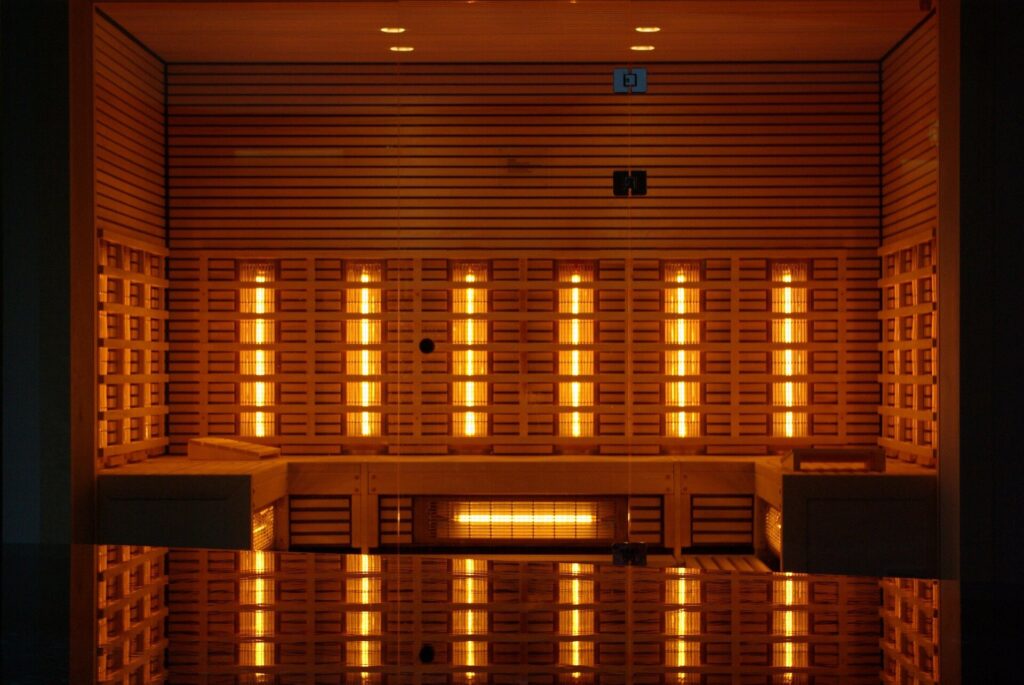
Infrared saunas are increasingly marketed as a post-exercise recovery tool that can reduce pain and fatigue, but the scientific evidence supporting these claims remains limited and conflicting.
So do infrared saunas cause physiological changes that accelerate recovery, or do they simply reduce the feeling of aching muscles?
Traditional Finnish saunas heat the surrounding air to approximately 70°C (158°F) to 100°C (212°F). In contrast, infrared saunas use panels that emit infrared radiation to heat the body more directly, allowing them to operate at a lower air temperature of 40°C (104°F) to 60°C (140°F). Both methods heat the body, but deliver the heat differently.
Infrared saunas should not be confused with photobiomodulation, sometimes called red light therapy. That technique uses controlled doses of red or near-infrared light to produce biological effects without substantially heating tissue. Its clinical applications are still being investigated and are not fully standardized. An infrared sauna primarily provides whole-body heat.
Why heat might aid recovery
Heat exposure widens blood vessels in the skin and activates heat-shock proteins and other cellular pathways involved in stress protection and tissue repair. These effects provide a plausible reason for studying heat as a recovery strategy.
However, physiological plausibility does not necessarily translate into meaningful improvements in recovery. Most studies have not measured intramuscular temperature, making it difficult to determine whether the target muscles were heated enough to produce the proposed effects.
Heat has also been claimed to support recovery by increasing blood flow and accelerating the removal of lactate. Lactate is often mistakenly called lactic acid. It accumulates during intense exercise but is cleared relatively quickly, long before delayed muscle soreness usually develops. Research shows that lactate accumulation does not cause the soreness experienced after strenuous exercise. Clearing it more quickly would therefore not demonstrate faster muscle repair or explain reduced soreness the following day.
A 2025 systematic review evaluated whole-body heating after exercise, including infrared saunas, traditional saunas and hot-water immersion. It identified 14 studies involving a total of 194 participants. Nine studies examined short-term recovery, but only two investigated infrared saunas.
Of the nine recovery studies, four reported some benefit, four found no effect and one observed worse subsequent performance. However, the studies varied considerably in their methods and outcome measures. The overall quality of evidence was rated low to moderate, and all studies had at least some risk-of-bias concerns. Whole-body heating also showed little or no consistent effect on markers of muscle damage or inflammation.
In a 2015 study of 10 physically active men, participants completed strength or maximal endurance exercise, followed by 30 minutes in a far-infrared sauna or passive rest. The sauna did not improve recovery after strength training. Following endurance exercise, jump performance was slightly better during the 30-minute recovery period after the sauna.
The heat may simply have kept the muscles warm. A systematic review of muscle warming found that raising muscle temperature can improve rapid force development and power, but not maximum force. A short-term improvement could therefore resemble a warm-up effect rather than accelerated repair.
A 2023 crossover study involved 16 male basketball players. Each completed resistance training followed by either 20 minutes in an infrared sauna or passive rest.
After 14 hours, the reduction in jump performance was smaller following the sauna, and the participants reported less soreness, but the sauna did not improve the recovery of sprint speed or maximum leg strength. Blood markers of muscle damage were also no different, and neither sleep duration nor sleep quality improved.
The study could not provide a convincing placebo sauna, so participants knew when they were receiving the intervention. As physiological changes were not detected, it is possible that the participants had positive expectations that may have influenced their perception of recovery and muscle soreness.
These studies suggest that infrared saunas may affect how recovered someone feels and perhaps preserve particular forms of explosive performance. They do not demonstrate faster muscle repair or consistent recovery of physical performance markers such as strength or sprinting ability.
A different use for heat
Repeated heating may be more useful for athletes preparing to compete in hot conditions. Heat acclimation involves regular heat exposure over several days, which causes physiological changes that allow the body to regulate its temperature more effectively.
In one study, 17 men exercised and then bathed in hot 40°C (104°F) or warm 34°C (93°F) water for 40 minutes on six consecutive days. The hot-water group subsequently experienced less physiological strain and improved 5 km (3.1 miles) running performance in hot, but not temperate, conditions. This study used hot water rather than an infrared sauna, so the results cannot automatically be applied to infrared heating.
Sauna bathing may feel relaxing, and cross-sectional survey data suggest that users commonly perceive reductions in stress and improvements in sleep. However, because these findings were based on self-reported experiences collected at a single moment in time, they cannot establish that sauna use caused the reported benefits. Evidence that infrared saunas improve sleep remains insufficient. In the 2023 post-exercise recovery study, subjective sleep quality after infrared sauna use was no better than after passive rest.
Infrared saunas may ease perceived soreness and promote relaxation, but evidence that post-exercise heat accelerates physical recovery remains limited and inconclusive. Any immediate performance benefit could partly reflect warmer muscles rather than faster tissue repair. Regular sauna use may offer separate cardiovascular benefits, but this does not demonstrate faster post-exercise muscle recovery.
Infrared saunas are therefore best regarded as a recovery strategy to promote relaxation rather than a replacement for the proven recovery methods of sleep, nutrition and hydration.
Sauna heat can temporarily lower blood pressure while raising heart rate. Anyone who becomes dizzy, nauseated or unusually weak should leave the sauna and cool down. Moderate sauna use is generally well tolerated by healthy adults, but individual responses vary, and people with unstable cardiovascular conditions should seek medical advice before using one.
Key medical concepts


This article is republished from The Conversation under a Creative Commons license. Read the original article.
Citation:
Do infrared saunas improve workout recovery? The evidence is still lukewarm (2026, July 22)
retrieved 23 July 2026
from https://medicalxpress.com/news/2026-07-infrared-saunas-workout-recovery-evidence.html
This document is subject to copyright. Apart from any fair dealing for the purpose of private study or research, no
part may be reproduced without the written permission. The content is provided for information purposes only.

Khamrah by Lattafa for Men - 3.4 oz EDP Spray
4% Off
Ghost Sweetheart Eau de Toilette | Pineapple, Jasmine and Sandalwood | Perfume for Women 50 ml
50% Off
Marc Jacobs Dot Eau De Parfum for Women, 100 ml
42% Off
Ted Baker W Eau de Toilette for Her, Fig Leaf, White Peony and Violet Top Notes, Pink Orchid and Raspberry Middle Notes, 75ml
£11.77 (£15.69 / 100 ml) (as of 23/07/2026 04:02 GMT +01:00 - More infoProduct prices and availability are accurate as of the date/time indicated and are subject to change. Any price and availability information displayed on [relevant Amazon Site(s), as applicable] at the time of purchase will apply to the purchase of this product.)
Ted Baker Woman Pink Eau de Toilette Spray Floral Green Feminine Fragrance, Opening Notes are Fresh Peach, Bergamot and Tangerine with Warm Musk, Vanilla and Vetiver Base, 100ml
11% Off
Vera Wang Princess Eau de Toilette - 30 ml

Choco Musk 50ml Eau De Parfum for men and women | Chocolate Musk by Jannat Aromas
17% Off
Christina Aguilera Signature Eau de Parfum (50ml) Floral, Fruity & Exotic Scent, Luxury Fragrance for Women
9% Off
Calvin Klein - Eau De Toilette CKIN2U - Calvin Klein Women, Ladies Perfume, Women's Perfume, Calvin Klein Perfume, Calvin Klein One - 150 ml
5% Off
Jimmy Choo Flash Eau de Parfum, 60 ml (Pack of 1)
3% Off
Fruit of the Loom Men's Heavy T Shirt, White, XL UK
28% Off
ATNKE LED Lighted Beanie Cap,USB Rechargeable Running Hat Ultra Bright 4 LED Waterproof Light Winter Warm Gifts for Men and Women/Pink
17% Off
Men's 1/4 Zip Pullover UK Sale Clearance, Fleece Sweatshirt Casual Jumper Long Sleeve T-shirt Top Stand Collar Sweater Plain Pullover Sports Leisure Workwear Quarter Zip Sweater Lightweight Jumpers
£5.88 (as of 12/11/2025 00:52 GMT +01:00 - More infoProduct prices and availability are accurate as of the date/time indicated and are subject to change. Any price and availability information displayed on [relevant Amazon Site(s), as applicable] at the time of purchase will apply to the purchase of this product.)
Crevice Cleaning Brush, Bathroom Tile Groove Gap Cleaning Brush,Premium Crevice Cleaning Tool Aluminum Support with 15° Angle Magic Brush, Thin Brush for Home Kitchen
19% Off
Wireless Earbuds, Bluetooth 5.3 Headphones in Ear with HiFi Stereo Deep Bass, 4 ENC Noise Cancelling Mic Wireless Earphones 40H Playtime, Bluetooth Earbuds Dual LED Display, IP7 Waterproof, USB-C
42% Off


