[
[

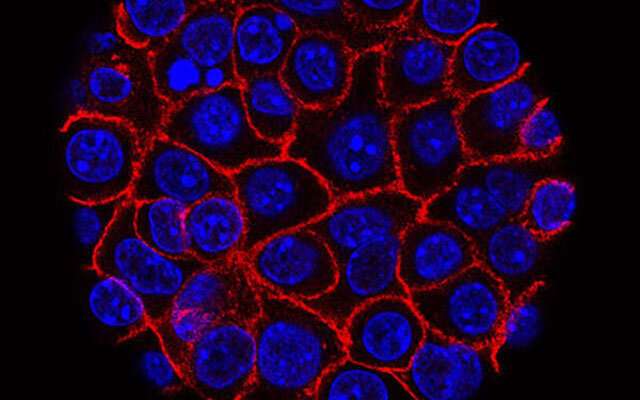
An analysis of nearly half a million cells from dozens of patients’ tumors reveals how cancer cells continuously reshape their genetic makeup over time, enabling them to evade treatment for one of the deadliest forms of cancer.
Led by researchers at NYU Langone Health and its Perlmutter Cancer Center, the study focused on pancreatic ductal adenocarcinoma, an often difficult-to-treat disease known to kill nearly 85% of people within five years of diagnosis.
While more than half a dozen genes have been implicated in the complex disease, the analysis of single tumor cells provided new insights into how subpopulations of pancreatic cancer cells reconfigure their DNA within tumors over time.
Genetic shifts drive tumor evolution
The team’s analysis revealed a diverse set of clones, or clusters of tumor cells that have a similar genetic makeup. These clones showed striking differences in behavior, with some evolving to resist therapy and others acquiring the ability to spread rapidly. The findings suggest that ongoing reshaping of the cancer cells’ DNA fuels both treatment resistance and metastasis.
Past research analyzing bulk groups of pancreatic cancer cells had focused on separating them into two subtypes—classical (less aggressive) and basal (more aggressive). However, the research could not explain how cancer cells shift between these subtypes. The new findings show that genetic reconfiguration within a tumor enables cancer cells to transition between subtypes.
Blocking MYC changes cancer cell behavior
Published online Oct. 13 in the journal Nature Genetics, the new study identified specific genetic changes that emerge during tumor evolution, including increased activity of the MYC gene in aggressive tumor cell populations.
Further experiments with pancreatic basal tumor cells showed that blocking MYC activity reverted the cells to the less aggressive classical form and exposed them to more immune cells, potentially making them more vulnerable to immune attack.
“Our study provides the most granular view to date of pancreatic ductal adenocarcinoma, revealing how ongoing genetic reshaping drives tumor evolution over the course of disease,” said study lead investigator Despoina Kalfakakou, Ph.D., a postdoctoral research fellow at NYU Grossman School of Medicine and Perlmutter Cancer Center. “These findings suggest that targeting the mechanisms underlying tumor evolution, including MYC, may help restrain the cancer’s rapid progression.”
“Our research also suggests that single-cell clonal analysis offers a better approach to understanding complex cancers, like pancreatic ductal adenocarcinoma, as they develop over time, by mapping how tumors evolve and adapt at each stage of disease progression,” said study co-senior investigator Aristotelis Tsirigos, Ph.D., a professor in the departments of medicine and pathology at NYU Grossman School of Medicine and a member of Perlmutter Cancer Center.
“More broadly, our study results highlight the critical role of clonal diversity, genetic plasticity and interactions with the tumor’s microenvironment in shaping human pancreatic ductal adenocarcinoma biology,” said Tsirigos, who also serves as co-director of the Division of Precision Medicine and director of NYU Langone’s Applied Bioinformatics Laboratories.
Clones reveal routes around immune defenses
Among the study’s other key findings was how cell clones influenced the tumor’s ability to evade immune detection, possibly explaining why pancreatic ductal carcinoma resists immune therapy.
The researchers found that in some clones, the TIGIT gene was also more active, producing proteins that help cancer evade immune detection. In the same clonal cells, activity of the PD1 gene was found to be suppressed, which may help explain why some immunotherapies that target PD1 are rarely effective.
Tsirigos said that clinical trials using MYC inhibitors or TIGIT inhibitors for pancreatic ductal carcinoma and other cancers are underway, and that his team’s latest findings should encourage larger investigations into different cancer cell states and how to target treatment toward them.
Tracing clones across 62 tumors
For the study, researchers analyzed the genetic activity (using transcriptomics) in clones of 443,451 single cells taken from 62 tumors in 56 men and women with pancreatic ductal adenocarcinoma. Six patients provided tumor samples before and after chemotherapy. Traditionally, cells have been analyzed in bulk for increases and decreases in gene activity, and not individually, as in the latest analysis.
Single-cell analysis showed that individual tumors contained, on average, between two and 11 mixes, or clones, of basal and classical tumor cells. When the researchers traced the clones’ genetic origins, based on gene activity, they were able to link cell copy variations to the cell composition of tumors. This was then used to find which genes, such as MYC and TIGIT, were most active at different stages of disease progression.
Publication details
Clonal heterogeneity in human pancreatic ductal adenocarcinoma and its impact on tumor progression, Nature Genetics (2026). DOI: 10.1038/s41588-026-02779-5
Journal information:
Nature Genetics
Key medical concepts


Citation:
Continuously evolving cells help pancreatic cancer evade treatment and spread (2026, October 13)
retrieved 13 October 2026
from https://medicalxpress.com/news/2026-10-evolving-cells-pancreatic-cancer-evade.html
This document is subject to copyright. Apart from any fair dealing for the purpose of private study or research, no
part may be reproduced without the written permission. The content is provided for information purposes only.

Khamrah by Lattafa for Men - 3.4 oz EDP Spray
4% Off
Ghost Sweetheart Eau de Toilette | Pineapple, Jasmine and Sandalwood | Perfume for Women 50 ml
50% Off
Marc Jacobs Dot Eau De Parfum for Women, 100 ml
42% Off
Ted Baker W Eau de Toilette for Her, Fig Leaf, White Peony and Violet Top Notes, Pink Orchid and Raspberry Middle Notes, 75ml
£11.77 (£15.69 / 100 ml) (as of 14/10/2026 06:35 GMT +01:00 - More infoProduct prices and availability are accurate as of the date/time indicated and are subject to change. Any price and availability information displayed on [relevant Amazon Site(s), as applicable] at the time of purchase will apply to the purchase of this product.)
Ted Baker Woman Pink Eau de Toilette Spray Floral Green Feminine Fragrance, Opening Notes are Fresh Peach, Bergamot and Tangerine with Warm Musk, Vanilla and Vetiver Base, 100ml
11% Off
Vera Wang Princess Eau de Toilette - 30 ml

Choco Musk 50ml Eau De Parfum for men and women | Chocolate Musk by Jannat Aromas
17% Off
Christina Aguilera Signature Eau de Parfum (50ml) Floral, Fruity & Exotic Scent, Luxury Fragrance for Women
9% Off
Calvin Klein - Eau De Toilette CKIN2U - Calvin Klein Women, Ladies Perfume, Women's Perfume, Calvin Klein Perfume, Calvin Klein One - 150 ml
5% Off
Jimmy Choo Flash Eau de Parfum, 60 ml (Pack of 1)
3% Off
Fruit of the Loom Men's Heavy T Shirt, White, XL UK
28% Off
ATNKE LED Lighted Beanie Cap,USB Rechargeable Running Hat Ultra Bright 4 LED Waterproof Light Winter Warm Gifts for Men and Women/Pink
17% Off
Men's 1/4 Zip Pullover UK Sale Clearance, Fleece Sweatshirt Casual Jumper Long Sleeve T-shirt Top Stand Collar Sweater Plain Pullover Sports Leisure Workwear Quarter Zip Sweater Lightweight Jumpers
£5.88 (as of 12/11/2025 00:52 GMT +01:00 - More infoProduct prices and availability are accurate as of the date/time indicated and are subject to change. Any price and availability information displayed on [relevant Amazon Site(s), as applicable] at the time of purchase will apply to the purchase of this product.)
Crevice Cleaning Brush, Bathroom Tile Groove Gap Cleaning Brush,Premium Crevice Cleaning Tool Aluminum Support with 15° Angle Magic Brush, Thin Brush for Home Kitchen
19% Off
Wireless Earbuds, Bluetooth 5.3 Headphones in Ear with HiFi Stereo Deep Bass, 4 ENC Noise Cancelling Mic Wireless Earphones 40H Playtime, Bluetooth Earbuds Dual LED Display, IP7 Waterproof, USB-C
42% Off