[
[

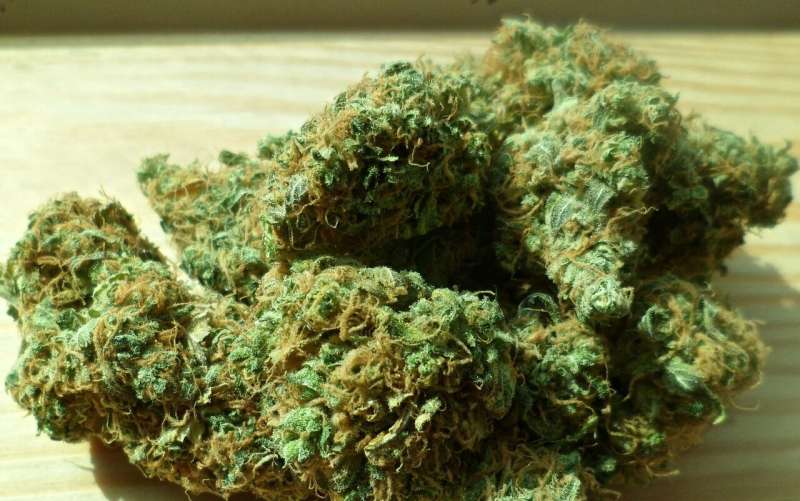
In what looked like a return to the dark days of “Reefer Madness”—a 1936 film that portrayed cannabis as a drug that could drive people to madness and murder—a recent article in the Daily Telegraph claimed that cannabis users are “twice as likely to be violent.”
The claim comes from a systematic review by King’s College London that combined 63 studies covering more than 265,000 people. The researchers did find a link between cannabis use and violence, but the headline overstates what the numbers can tell us.
There are three reasons to be cautious: other factors that could explain the link (known as confounders), the way the studies were designed and potential biases in how the data were gathered.
Confounders
Poverty, alcohol, other drugs and a difficult upbringing are all linked to violence in their own right. Cannabis is also illegal in many places, and buying it can bring people into contact with people and places where violence is more common. Some of these factors are more common among cannabis users, so these confounders could partly explain the link.
Ice cream sales rise and fall alongside drownings, yet nobody thinks ice cream causes drowning. Hot weather makes people eat more ice cream and swim more, linking the two. Cannabis and violence may be connected in a similarly roundabout way.
The review did try to account for other factors. But its authors generally favored the versions of studies that adjusted for the fewest of these factors, making it harder to rule out alternative explanations.
Study design
Of the 63 studies in the review, 46 were cross-sectional, meaning they measured cannabis use and violence at one point in time. This makes it difficult to tell whether cannabis use came before the violence, followed it or simply occurred alongside other circumstances that contributed to it. These studies found the strongest link between cannabis use and violence.
Studies that follow people over time—called longitudinal studies—can help establish which came first. These studies found a much weaker link between cannabis use and violence than the cross-sectional studies.
In the one-off studies, the odds of violence were more than twice as high among cannabis users. The Telegraph presented these figures as meaning cannabis users were up to twice as likely to be violent. In the longitudinal studies, cannabis users had 17% higher odds of violence than nonusers.
It should also be noted that twice the odds is not the same as twice as likely. Likelihood looks at your chance out of the entire group. Odds compare the people an event happens to against those it doesn’t.
The two are close when violence is rare, but they drift apart when it is common.
For example, if one in 100 people experiences something, doubling the likelihood gives you two in 100 (2%). Doubling the odds gives you two in 101 (1.98%)—a tiny distinction.
The gap widens a lot when an event is common. Imagine something that already happens to 50 out of 100 people. Twice as likely doubles that 50% chance to 100% (it happens to everyone). Twice the odds only increases that 50% chance to 67%.
Bias
One of the review’s authors told the Telegraph that a study of this size lets researchers “speak with more confidence about the risks.” That is true only in a narrow sense. Imagine measuring a room with a slightly stretched tape measure: a thousand repeat measurements might give a consistent answer, but the wrong one.
A large sample reduces random error—the chance that researchers happen to study an unusual group of people. It cannot fix systematic bias, where the original studies measured the wrong things or measured them badly.
Bias can creep in at every stage. Studies disagree on what counts as cannabis use (once, in the past month or daily?) and violence (a shove, a fight or a criminal conviction?). The review groups together domestic incidents, sexual assault, fights and robbery, which may have very different causes.
Results across the 63 studies also varied widely. Three analyses of the same U.S. national drug survey, all included in the review, produced odds ratios ranging from about 1.3 to nearly 10. This may reflect differences in how cannabis use and violence were defined and measured, as well as in who was surveyed.
Also, some studies may be missing because research showing little or no link is less likely to be published. This could make the link between cannabis and violence look stronger than it is. The review found signs of this problem, and its attempts to account for it could not rule it out.
Finally, the review’s supplementary material rates the certainty of the evidence as very low. In other words, the authors have very little confidence in the size of their estimate, though they consider the association itself likely to be real. This important qualification does not appear in the Telegraph report.
None of this means cannabis and violence are unrelated, and the authors themselves acknowledge many of these limitations. But the headline figure leaves readers with a number that looks much more certain than the evidence warrants.
Key medical concepts


This article is republished from The Conversation under a Creative Commons license. Read the original article.
Citation:
Cannabis doesn’t make you violent—despite what recent reports have claimed (2026, October 17)
retrieved 17 October 2026
from https://medicalxpress.com/news/2026-10-cannabis-doesnt-violent.html
This document is subject to copyright. Apart from any fair dealing for the purpose of private study or research, no
part may be reproduced without the written permission. The content is provided for information purposes only.

Khamrah by Lattafa for Men - 3.4 oz EDP Spray
4% Off
Ghost Sweetheart Eau de Toilette | Pineapple, Jasmine and Sandalwood | Perfume for Women 50 ml
50% Off
Marc Jacobs Dot Eau De Parfum for Women, 100 ml
42% Off
Ted Baker W Eau de Toilette for Her, Fig Leaf, White Peony and Violet Top Notes, Pink Orchid and Raspberry Middle Notes, 75ml
£11.77 (£15.69 / 100 ml) (as of 18/10/2026 06:36 GMT +01:00 - More infoProduct prices and availability are accurate as of the date/time indicated and are subject to change. Any price and availability information displayed on [relevant Amazon Site(s), as applicable] at the time of purchase will apply to the purchase of this product.)
Ted Baker Woman Pink Eau de Toilette Spray Floral Green Feminine Fragrance, Opening Notes are Fresh Peach, Bergamot and Tangerine with Warm Musk, Vanilla and Vetiver Base, 100ml
11% Off
Vera Wang Princess Eau de Toilette - 30 ml

Choco Musk 50ml Eau De Parfum for men and women | Chocolate Musk by Jannat Aromas
17% Off
Christina Aguilera Signature Eau de Parfum (50ml) Floral, Fruity & Exotic Scent, Luxury Fragrance for Women
9% Off
Calvin Klein - Eau De Toilette CKIN2U - Calvin Klein Women, Ladies Perfume, Women's Perfume, Calvin Klein Perfume, Calvin Klein One - 150 ml
5% Off
Jimmy Choo Flash Eau de Parfum, 60 ml (Pack of 1)
3% Off
Fruit of the Loom Men's Heavy T Shirt, White, XL UK
28% Off
ATNKE LED Lighted Beanie Cap,USB Rechargeable Running Hat Ultra Bright 4 LED Waterproof Light Winter Warm Gifts for Men and Women/Pink
17% Off
Men's 1/4 Zip Pullover UK Sale Clearance, Fleece Sweatshirt Casual Jumper Long Sleeve T-shirt Top Stand Collar Sweater Plain Pullover Sports Leisure Workwear Quarter Zip Sweater Lightweight Jumpers
£5.88 (as of 12/11/2025 00:52 GMT +01:00 - More infoProduct prices and availability are accurate as of the date/time indicated and are subject to change. Any price and availability information displayed on [relevant Amazon Site(s), as applicable] at the time of purchase will apply to the purchase of this product.)
Crevice Cleaning Brush, Bathroom Tile Groove Gap Cleaning Brush,Premium Crevice Cleaning Tool Aluminum Support with 15° Angle Magic Brush, Thin Brush for Home Kitchen
19% Off
Wireless Earbuds, Bluetooth 5.3 Headphones in Ear with HiFi Stereo Deep Bass, 4 ENC Noise Cancelling Mic Wireless Earphones 40H Playtime, Bluetooth Earbuds Dual LED Display, IP7 Waterproof, USB-C
42% Off