
 [
[

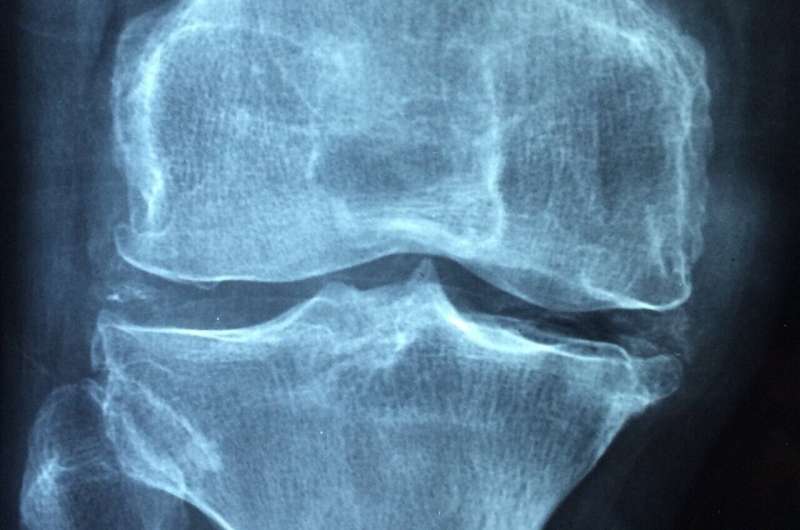
A new position statement from the International Osteoporosis Foundation’s (IOF) Committee of Scientific Advisors Fracture Working Group urges orthopedic surgeons and bone health specialists to work together to assess and treat osteoporosis before and after joint replacement and spinal fusion surgery.
Bringing together expertise across multiple disciplines, the position paper published in Osteoporosis International presents a framework linking poor bone quality to complications across both types of procedures and provides evidence-informed recommendations to improve outcomes for the millions of patients undergoing these surgeries worldwide. It introduces the concept of implant fixation failure as a common endpoint, describing the progressive mechanical failure of bone–implant constructs resulting from compromised bone quality, specifically due to osteoporosis.
The problem: Osteoporosis is undermining surgical success
Each year, millions of hip replacements and spinal fusions are performed globally, with numbers continuing to rise as populations age. While these procedures are highly effective, a growing proportion of complications, including periprosthetic fractures, implant loosening, cage subsidence, pseudoarthrosis (nonunion) and junctional failure, arise from the interaction between osteoporotic bone and orthopedic implants.
Manju Chandran, lead author and co-chair of the IOF Fracture Working Group at Singapore General Hospital and clinical professor at Duke-NUS Medical School, Singapore, stated: “We urge the orthopedic and bone health communities to see implant failure and osteoporosis as two sides of the same coin. A hip replacement or spinal fusion is only as durable as the bone that supports it. We need to think about bone quality as a determinant of surgical durability, not just fracture risk. Identifying and treating osteoporosis before and after these operations is a practical, low-cost way to protect patients from painful, dangerous and expensive complications.”
Key findings
The position statement synthesizes evidence from randomized controlled trials, cohort studies, registry analyses, meta-analyses and systematic reviews. Among the key findings:
- Osteoporosis is highly prevalent and underdiagnosed in surgical candidates. Between 60–80% of patients presenting for knee replacement have osteopenia or osteoporosis, and nearly three-quarters of osteoporotic patients undergoing hip replacement are undiagnosed preoperatively.
- Low bone mineral density (BMD) is often associated with implant fixation failure across both arthroplasty and spinal fusion, including higher rates of periprosthetic fracture, screw loosening, cage subsidence and pseudoarthrosis.
- Periprosthetic fractures carry severe consequences. One-year mortality rates for periprosthetic femoral fractures after hip arthroplasty range from 11–18%, comparable to mortality after native hip fractures, and reach 18.6% for periprosthetic distal femur fractures.
- Osteoporosis therapies can improve surgical outcomes. In arthroplasty, bisphosphonates preserve peri-implant bone stock and may improve implant survival. In spinal fusion, anabolic therapies influence fixation-related parameters.
- Falls are the dominant trigger for postsurgical fractures. Most periprosthetic fractures follow low-energy falls from standing or sitting height, underscoring the importance of fall-prevention strategies in perioperative care.
Expert recommendations
Among the expert recommendations for perioperative bone health optimization are the following:
- Who should be assessed: Patients undergoing arthroplasty or instrumented spinal fusion who are age 65 or older, have a prior fragility fracture, have clinical risk factors for osteoporosis/secondary bone loss, or are undergoing high-demand procedures such as revision arthroplasty, long-segment spinal fusion or surgery after prior fixation/implant failure. (Strength of Recommendation: Strong | Moderate certainty of evidence)
- Surgery should not be delayed in acute fracture or spinal fusion settings (Strength of Recommendation: Strong | Moderate certainty of evidence), but bone health assessment should be initiated as early as possible in the perioperative period. (Strength of Recommendation: Conditional | Moderate certainty of evidence)
- Vitamin D and calcium status should be corrected perioperatively, with target serum 25(OH)D of at least 50 nmol/L (20 ng/ml) in patients with deficiency and total calcium intake of 1,000–1,200 mg/day, preferably through dietary sources. Calcium supplementation should be considered only where dietary intake is inadequate. (Strength of Recommendation: Conditional | Certainty of Evidence: Low)
- Fall-risk assessment and prevention should be integrated into perioperative care pathways. (Strength of Recommendation: Strong | Moderate certainty of evidence)
- Pharmacotherapy in arthroplasty: Bisphosphonates are recommended postoperatively in patients with osteoporosis or a high-risk bone phenotype. Denosumab is an alternative when bisphosphonates are contraindicated. (Strength of Recommendation: Strong | Moderate certainty of evidence)
- Pharmacotherapy in spinal fusion: Teriparatide is recommended in osteoporotic patients, ideally initiated at least one month preoperatively and continued for 6–12 months postoperatively. (Strength of Recommendation: Strong | Moderate certainty of evidence)
- Sequential therapy: Transition to antiresorptive therapy after completion of an anabolic course to maintain skeletal gains. (Strength of Recommendation: Conditional | Certainty of Evidence: Low)
- Multidisciplinary coordination between orthopedic surgeons and bone health specialists is essential. (Strength of Recommendation: Strong | Certainty of Evidence: Moderate)
A call for bone health optimization
The authors emphasize that bone health optimization should not be treated as an adjunct to surgical care but as an integral component of perioperative planning.
Eugene McCloskey, of the Mellanby Center for Musculoskeletal Research at the University of Sheffield, UK, and chair of the IOF Committee of Scientific Advisors, added: “This is a very important and timely position statement that calls for a fundamental shift in how orthopedic and metabolic bone specialists collaborate. I highly commend the Fracture Working Group for highlighting this important clinical gap and providing a roadmap for more integrated care.
“Every patient undergoing arthroplasty or spinal fusion who has or is at risk of poor bone quality deserves a structured assessment and, where indicated, targeted therapy. This would help improve surgical outcomes and reduce complications for patients worldwide.”
Publication details
Manju Chandran et al, Osteoporosis and osteoporosis therapies as determinants of implant fixation failure in arthroplasty and spinal fusion constructs: a position statement from the Fracture Working Group of the Council of Scientific Advisors of the International Osteoporosis Foundation, Osteoporosis International (2026). DOI: 10.1007/s00198-026-08086-3
Journal information:
Osteoporosis International


Citation:
Call for systematic bone health optimization before joint replacement and spinal fusion surgery (2026, July 20)
retrieved 20 July 2026
from https://medicalxpress.com/news/2026-07-systematic-bone-health-optimization-joint.html
This document is subject to copyright. Apart from any fair dealing for the purpose of private study or research, no
part may be reproduced without the written permission. The content is provided for information purposes only.

Khamrah by Lattafa for Men - 3.4 oz EDP Spray
4% Off
Ghost Sweetheart Eau de Toilette | Pineapple, Jasmine and Sandalwood | Perfume for Women 50 ml
50% Off
Marc Jacobs Dot Eau De Parfum for Women, 100 ml
42% Off
Ted Baker W Eau de Toilette for Her, Fig Leaf, White Peony and Violet Top Notes, Pink Orchid and Raspberry Middle Notes, 75ml
£11.77 (£15.69 / 100 ml) (as of 15/10/2026 06:35 GMT +01:00 - More infoProduct prices and availability are accurate as of the date/time indicated and are subject to change. Any price and availability information displayed on [relevant Amazon Site(s), as applicable] at the time of purchase will apply to the purchase of this product.)
Ted Baker Woman Pink Eau de Toilette Spray Floral Green Feminine Fragrance, Opening Notes are Fresh Peach, Bergamot and Tangerine with Warm Musk, Vanilla and Vetiver Base, 100ml
11% Off
Vera Wang Princess Eau de Toilette - 30 ml

Choco Musk 50ml Eau De Parfum for men and women | Chocolate Musk by Jannat Aromas
17% Off
Christina Aguilera Signature Eau de Parfum (50ml) Floral, Fruity & Exotic Scent, Luxury Fragrance for Women
9% Off
Calvin Klein - Eau De Toilette CKIN2U - Calvin Klein Women, Ladies Perfume, Women's Perfume, Calvin Klein Perfume, Calvin Klein One - 150 ml
5% Off
Jimmy Choo Flash Eau de Parfum, 60 ml (Pack of 1)
3% Off
Fruit of the Loom Men's Heavy T Shirt, White, XL UK
28% Off
ATNKE LED Lighted Beanie Cap,USB Rechargeable Running Hat Ultra Bright 4 LED Waterproof Light Winter Warm Gifts for Men and Women/Pink
17% Off
Men's 1/4 Zip Pullover UK Sale Clearance, Fleece Sweatshirt Casual Jumper Long Sleeve T-shirt Top Stand Collar Sweater Plain Pullover Sports Leisure Workwear Quarter Zip Sweater Lightweight Jumpers
£5.88 (as of 12/11/2025 00:52 GMT +01:00 - More infoProduct prices and availability are accurate as of the date/time indicated and are subject to change. Any price and availability information displayed on [relevant Amazon Site(s), as applicable] at the time of purchase will apply to the purchase of this product.)
Crevice Cleaning Brush, Bathroom Tile Groove Gap Cleaning Brush,Premium Crevice Cleaning Tool Aluminum Support with 15° Angle Magic Brush, Thin Brush for Home Kitchen
19% Off
Wireless Earbuds, Bluetooth 5.3 Headphones in Ear with HiFi Stereo Deep Bass, 4 ENC Noise Cancelling Mic Wireless Earphones 40H Playtime, Bluetooth Earbuds Dual LED Display, IP7 Waterproof, USB-C
42% Off