Michael Bloomberg has pledged $260m (£196m) to conserve the world’s oceans, as major funders including the US and UK scale back science and conservation budgets.
The investment is designed to “help close the gap between ocean protection commitments and action”, Bloomberg Philanthropies said as it disclosed the details to Sky News.
Leaders have pledged to protect 30% of the world’s oceans by 2030 but, with four years left, so far only 10% is protected.
It comes as countries like the US and the UK – the latter scrabbling to meet defence spending commitments – are trimming funding for climate, nature and science.
But it is also a critical time for oceans, which usually absorb 90% of the world’s heat and which are partly fuelling the current heatwave in Britain and Europe.
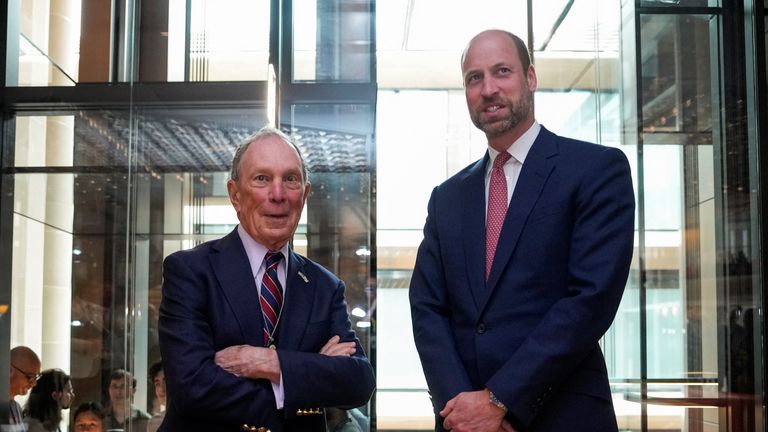
Michael Bloomberg met Prince William during last year’s London Climate Action Week, one of the biggest such global gatherings. Pic: Reuters
Bloomberg will channel some of the new funding towards enforcing the landmark High Seas Treaty, an international agreement to establish protected areas in international waters.
The pact came into effect in January after being ratified by the necessary 60 countries, but doubts remain about how it will be resourced and enforced in far-off, fish-rich waters.
“The High Seas Treaty shows that the world has the will to protect the ocean,” said Bloomberg, who amassed his fortune through his financial-data company Bloomberg LP.
“This investment will help ensure we have the way, by scaling up measures that have proven effective and focusing on some of the areas where we can make the biggest difference,” he told Sky News before unveiling the plans during London Climate Action Week on Tuesday.
Last year, the philanthropist plugged the hole in the UN climate body’s (UNFCCC) budget after President Donald Trump withdrew US funding.
Now Bloomberg Philanthropies hopes to identify, establish and enforce the first protected areas under the High Seas Treaty.
Tom Brook, ocean conservation specialist at WWF, called it a “pivotal time for our ocean”, with the treaty creating an “unprecedented opportunity to protect the ocean at the scale it operates”.
It will also finance small coastal and island nations to participate in global negotiations on oceans – a group often drowned out in talks by richer countries.
The prime minister of low-lying Tonga in the South Pacific, Lord Fatafehi Fakafanua, said “stewardship [of the ocean] is a shared responsibility”.
He said the new money will give “island nations like Tonga a seat at the table”, as new maritime protections take shape.
Jane Fonda, actor and activist, said governments must “rise to meet” a moment when change is possible, and this additional funding “makes it harder for them to look away”.
Why UK has trimmed nature funding
Countries that have ratified the High Seas Treaty, which the UK is in the process of doing, are legally bound to support conservation and sustainable management of high‑seas biodiversity.
But the UK is planning to scale back its international environmental funding from £11.6bn to £9bn over the next five-year period, and is scrapping the rule that ring-fenced £3bn of that cash for nature, including coastlines.
Across the pond, President Trump has cut some ocean science, aid and environment programmes – though both countries remain in the top five aid donors globally.
Meanwhile the European Union is on a different tack, aiming to become the “global leader in ocean intelligence” via its new OceanEye project to monitor the seas, backed by €92m (£80m).
A UK government spokesperson said the “world has changed” and the government had reduced its aid budget (official Development Assistance or ODA) in order to “fund a necessary increase in defence spending”.
“However, our commitment to tackling climate change and nature loss has not changed,” remaining at 20% of its ODA budget over the spending review.
They added they were prioritising aid for “communities hardest hit by crisis, conflict and climate change, and fully protecting funding for Ukraine, Sudan and Palestine”.
Source link

Khamrah by Lattafa for Men - 3.4 oz EDP Spray
4% Off
Ghost Sweetheart Eau de Toilette | Pineapple, Jasmine and Sandalwood | Perfume for Women 50 ml
50% Off
Marc Jacobs Dot Eau De Parfum for Women, 100 ml
42% Off
Ted Baker W Eau de Toilette for Her, Fig Leaf, White Peony and Violet Top Notes, Pink Orchid and Raspberry Middle Notes, 75ml
£11.77 (£15.69 / 100 ml) (as of 24/07/2026 04:02 GMT +01:00 - More infoProduct prices and availability are accurate as of the date/time indicated and are subject to change. Any price and availability information displayed on [relevant Amazon Site(s), as applicable] at the time of purchase will apply to the purchase of this product.)
Ted Baker Woman Pink Eau de Toilette Spray Floral Green Feminine Fragrance, Opening Notes are Fresh Peach, Bergamot and Tangerine with Warm Musk, Vanilla and Vetiver Base, 100ml
11% Off
Vera Wang Princess Eau de Toilette - 30 ml

Choco Musk 50ml Eau De Parfum for men and women | Chocolate Musk by Jannat Aromas
17% Off
Christina Aguilera Signature Eau de Parfum (50ml) Floral, Fruity & Exotic Scent, Luxury Fragrance for Women
9% Off
Calvin Klein - Eau De Toilette CKIN2U - Calvin Klein Women, Ladies Perfume, Women's Perfume, Calvin Klein Perfume, Calvin Klein One - 150 ml
5% Off
Jimmy Choo Flash Eau de Parfum, 60 ml (Pack of 1)
3% Off
Fruit of the Loom Men's Heavy T Shirt, White, XL UK
28% Off
ATNKE LED Lighted Beanie Cap,USB Rechargeable Running Hat Ultra Bright 4 LED Waterproof Light Winter Warm Gifts for Men and Women/Pink
17% Off
Men's 1/4 Zip Pullover UK Sale Clearance, Fleece Sweatshirt Casual Jumper Long Sleeve T-shirt Top Stand Collar Sweater Plain Pullover Sports Leisure Workwear Quarter Zip Sweater Lightweight Jumpers
£5.88 (as of 12/11/2025 00:52 GMT +01:00 - More infoProduct prices and availability are accurate as of the date/time indicated and are subject to change. Any price and availability information displayed on [relevant Amazon Site(s), as applicable] at the time of purchase will apply to the purchase of this product.)
Crevice Cleaning Brush, Bathroom Tile Groove Gap Cleaning Brush,Premium Crevice Cleaning Tool Aluminum Support with 15° Angle Magic Brush, Thin Brush for Home Kitchen
19% Off
Wireless Earbuds, Bluetooth 5.3 Headphones in Ear with HiFi Stereo Deep Bass, 4 ENC Noise Cancelling Mic Wireless Earphones 40H Playtime, Bluetooth Earbuds Dual LED Display, IP7 Waterproof, USB-C
42% Off