
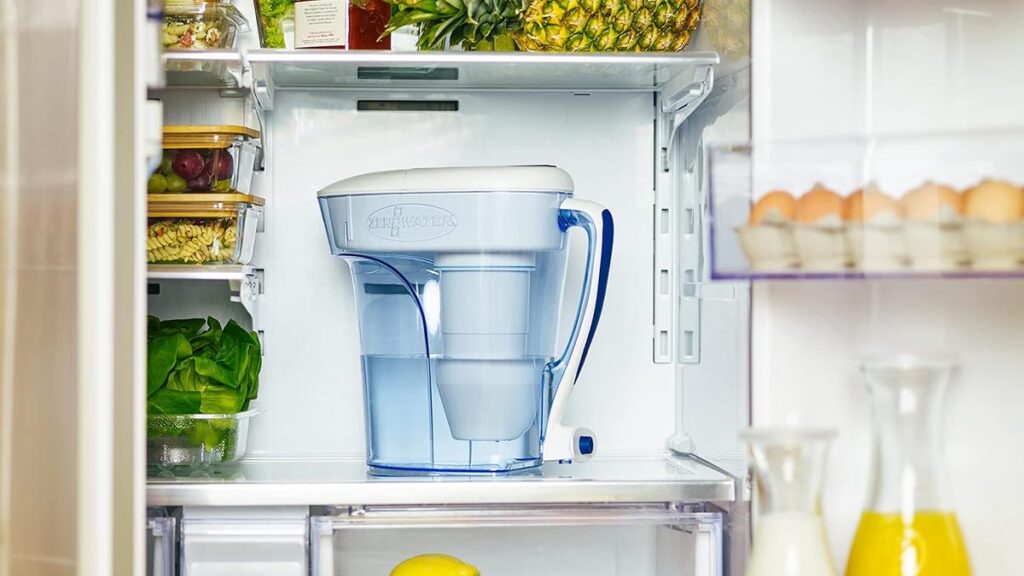
As mentioned earlier in this article, there are quite a variety of contaminants worth removing from your tap water. The team here at our lab settled on three primary tests to benchmark the efficacy of these filters: TDS, pH and chlorine. Before we began the actual testing process, each pitcher was removed from the packaging, cleaned and then prepared per the manufacturer’s instructions. This is very important, as most of these filters utilize activated carbon filtration, which will deposit sediment into the first batches of water that you filter if not cleaned properly in advance.
Testing for TDS
TDS stands for total dissolved solids and encompasses many different impurities present in water. Examples of the most common TDS include “calcium, magnesium, sodium, potassium, bicarbonate, sulfate, chloride, nitrate and silica,” according to the US Geological Survey. In practice, calcium and magnesium deposits in your tap water result in so-called “hard water” that tastes bad and can be actively detrimental to your health at higher concentrations. (Read more about TDS from the EPA and USGS.)
We began TDS testing by mixing an 8-gallon bucket of tap water, measured at 220 ppm TDS, with table salt until we reached a TDS measurement of 300. Generally speaking, 50-150 TDS is considered an ideal range for drinking water. We used an Orapxi water quality tester to take these measurements and since the ZeroWater filter includes a TDS tester as well, all TDS readings were verified on both devices. Once we had established our control source, we measured 1 liter of the 300 TDS water into each of the water filter pitchers and allowed the full quantity to pass through the filter.
Once finished, we measured the TDS again and noted the percentage change. This process was repeated for higher and lower TDS concentrations, and our findings indicate that each of the units we tested is very consistent at removing the same percentage of overall TDS from any water passing through it.
Testing for chlorine
Chlorine in your drinking water may sound strange, but it is actually a very common practice for water treatment facilities to add chlorine to the water supply as a disinfectant. This is extremely effective at getting rid of other, nastier contaminants in the water, but the World Health Organization estimates that a concentration of ~0.2-4 ppm is standard for tap water, indicating that at least some is left over after disinfection.
For our testing, we decided to ramp things up a notch and test water prepared at a concentration similar to that of a swimming pool — 10 ppm chlorine. This gave us a clear indication of the changes after filtration. Once again, each filter was tested with 1 liter of solution and compared to results from the water prefiltration and once again, filters such as the ZeroWater substantially outperformed the others.
Testing pH changes
Finally, during TDS testing, we also measured the change in pH. pH stands for “potential of hydrogen” and is used to quantify the acidity of a substance. A pH of zero is extremely acidic, seven is considered neither acidic nor basic, and 14 represents an extremely basic substance. Since the minerals that comprise the TDS in tap water increase the alkalinity, we expected the filtration process to decrease the pH of the water. Indeed this did turn out to be the case, and you can see a table of the pH changes below.
Here’s a table of our most recent TDS removal test results. The data represents an average of three test runs for each filter pitcher.
Test results
undefined
| TDS (% change) | ||
|---|---|---|
| Aarke Purifier | -39 | |
| Brita Metro Standard | -45.6 | |
| Brita Everyday | -45.6 | |
| Brita Longlast | -3.1 | |
| Hydros | -17.5 | |
| Larg self-cleaning | -2.2 | |
| Lifestraw | -2 | |
| Pur Plus | -6 | |
| ZeroWater | -100 |

Khamrah by Lattafa for Men - 3.4 oz EDP Spray
4% Off
Ghost Sweetheart Eau de Toilette | Pineapple, Jasmine and Sandalwood | Perfume for Women 50 ml
50% Off
Marc Jacobs Dot Eau De Parfum for Women, 100 ml
42% Off
Ted Baker W Eau de Toilette for Her, Fig Leaf, White Peony and Violet Top Notes, Pink Orchid and Raspberry Middle Notes, 75ml
£11.77 (£15.69 / 100 ml) (as of 09/09/2026 05:00 GMT +01:00 - More infoProduct prices and availability are accurate as of the date/time indicated and are subject to change. Any price and availability information displayed on [relevant Amazon Site(s), as applicable] at the time of purchase will apply to the purchase of this product.)
Ted Baker Woman Pink Eau de Toilette Spray Floral Green Feminine Fragrance, Opening Notes are Fresh Peach, Bergamot and Tangerine with Warm Musk, Vanilla and Vetiver Base, 100ml
11% Off
Vera Wang Princess Eau de Toilette - 30 ml

Choco Musk 50ml Eau De Parfum for men and women | Chocolate Musk by Jannat Aromas
17% Off
Christina Aguilera Signature Eau de Parfum (50ml) Floral, Fruity & Exotic Scent, Luxury Fragrance for Women
9% Off
Calvin Klein - Eau De Toilette CKIN2U - Calvin Klein Women, Ladies Perfume, Women's Perfume, Calvin Klein Perfume, Calvin Klein One - 150 ml
5% Off
Jimmy Choo Flash Eau de Parfum, 60 ml (Pack of 1)
3% Off
Fruit of the Loom Men's Heavy T Shirt, White, XL UK
28% Off
ATNKE LED Lighted Beanie Cap,USB Rechargeable Running Hat Ultra Bright 4 LED Waterproof Light Winter Warm Gifts for Men and Women/Pink
17% Off
Men's 1/4 Zip Pullover UK Sale Clearance, Fleece Sweatshirt Casual Jumper Long Sleeve T-shirt Top Stand Collar Sweater Plain Pullover Sports Leisure Workwear Quarter Zip Sweater Lightweight Jumpers
£5.88 (as of 12/11/2025 00:52 GMT +01:00 - More infoProduct prices and availability are accurate as of the date/time indicated and are subject to change. Any price and availability information displayed on [relevant Amazon Site(s), as applicable] at the time of purchase will apply to the purchase of this product.)
Crevice Cleaning Brush, Bathroom Tile Groove Gap Cleaning Brush,Premium Crevice Cleaning Tool Aluminum Support with 15° Angle Magic Brush, Thin Brush for Home Kitchen
19% Off
Wireless Earbuds, Bluetooth 5.3 Headphones in Ear with HiFi Stereo Deep Bass, 4 ENC Noise Cancelling Mic Wireless Earphones 40H Playtime, Bluetooth Earbuds Dual LED Display, IP7 Waterproof, USB-C
42% Off


