 [

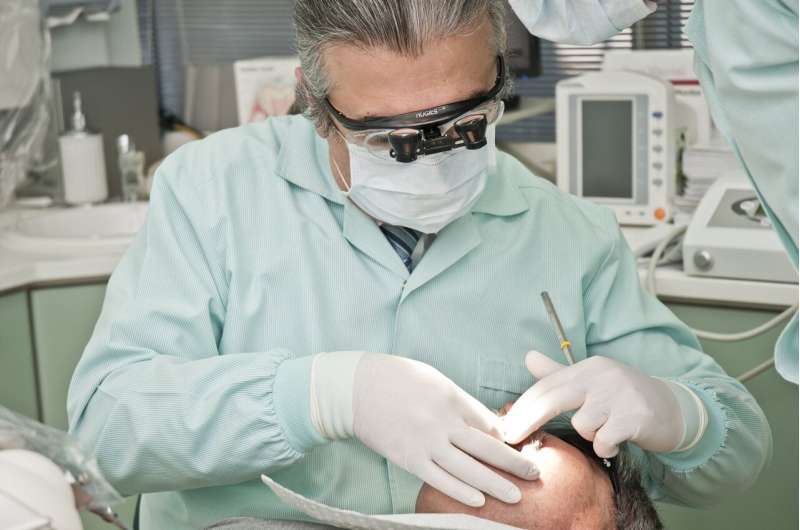
Gum disease bacteria may spur calcium buildup in the heart’s aortic valve, leading to a common and serious heart valve disease, according to preliminary, independent research presented at the American Heart Association’s Basic Cardiovascular Sciences Scientific Sessions 2026, held in Boston, July 13–16, 2026.
According to the American Heart Association, calcific aortic valve stenosis (CAVS) occurs when the aortic valve thickens and calcifies, restricting blood flow from the heart to the rest of the body. In early stages, there may be no symptoms. However, as the condition progresses, it can cause fatigue, chest pain, shortness of breath, fainting, heart failure and sometimes premature death. Standard treatment for severe CAVS is valve replacement surgery.
This study identifies a potential biological pathway linking chronic oral gum disease and infection to calcific aortic valve stenosis.
“There are currently no medications proven to prevent or slow the progression of CAVS. We hope our findings demonstrating the link between periodontal disease and CAVS will stimulate further research into new preventive and therapeutic approaches for this condition,” said co-lead author Chenyang Li, M.D., a Ph.D. candidate in the department of cardiology at the State Key Laboratory of Cardiovascular Disease of Fuwai Hospital’s National Center for Cardiovascular Diseases, the Chinese Academy of Medical Sciences and Peking Union Medical College, all in Beijing.
The researchers focused on the bacteria called Porphyromonas gingivalis (P. gingivalis), which plays a disproportionately large role in causing gum inflammation and the destruction of gum tissue. P. gingivalis has also previously been associated with systemic inflammation and the risk of cardiovascular disease, including plaque buildup in the arteries and coronary artery disease.
The researchers measured different bacterial levels in human cardiac valve tissue removed during valve replacement surgery. They studied samples from people with CAVS and from those with other valve diseases.
“We were surprised by how much P. gingivalis was present in the calcified aortic valves,” Li said. “Although it was not one of the most abundant bacteria overall, it showed one of the largest differences between valves with CAVS and valves without CAVS. This unexpected finding led us to investigate its potential role in the development of CAVS.”
Using mice, researchers also explored how P. gingivalis might be linked to the development of CAVS. Researchers gave mice live and heat-inactivated P. gingivalis to see if the bacteria built up in the aortic valve, caused more calcification and led to symptoms of aortic stenosis. Some mice received antibiotics, while in others the IL-1β inflammatory pathway was genetically disabled or removed.
Researchers found that repeated exposure of mice to live P. gingivalis led to the accumulation of bacteria in aortic valves, increased valve calcification and symptoms of aortic stenosis, while preventive antibiotic treatment reduced these effects. In the mouse valve cells, P. gingivalis activated interleukin-1 beta (IL-1b), an inflammation-spurring protein made mainly by the body’s immune cells.
In further testing, when researchers genetically deleted IL-1b in the mice, calcification and valve symptoms were significantly reduced even in the presence of P. gingivalis.
“The key message is simple: take good care of your oral health,” Li said. “Good oral hygiene and treatment of periodontal disease are important for overall health and may also have benefits for cardiovascular health. While it is still too early to recommend specific treatments for preventing CAVS, our findings suggest that periodontal health could be an important piece of the puzzle.”
“This study adds to the growing evidence that oral health and heart health are closely connected,” said Eduardo Sanchez, M.D., M.P.H., FAHA, chief medical officer for prevention for the American Heart Association.
“For many people, regular visits to the dentist are their only connection to the health care system. That makes dental professionals important partners in spotting health conditions, including periodontal disease, early—which can lead to quicker health care referrals and results, better health and lives saved.”
The American Heart Association’s Healthy Smiles, Healthy Hearts initiative provides dental care teams with professional education highlighting the connection between oral health and heart health, a standard blood pressure screening and referral guide for patients in dental settings, and educational materials for patients to help improve both their oral and heart health.
The study has limitations because its findings have not been confirmed in people. The researchers have started a clinical study to further evaluate the link between gum disease and CAVS.


Citation:
Bacteria from gum disease may cause inflammation, harden heart valves (2026, July 12)
retrieved 12 July 2026
from https://medicalxpress.com/news/2026-07-bacteria-gum-disease-inflammation-harden.html
This document is subject to copyright. Apart from any fair dealing for the purpose of private study or research, no
part may be reproduced without the written permission. The content is provided for information purposes only.

Khamrah by Lattafa for Men - 3.4 oz EDP Spray
4% Off
Ghost Sweetheart Eau de Toilette | Pineapple, Jasmine and Sandalwood | Perfume for Women 50 ml
50% Off
Marc Jacobs Dot Eau De Parfum for Women, 100 ml
42% Off
Ted Baker W Eau de Toilette for Her, Fig Leaf, White Peony and Violet Top Notes, Pink Orchid and Raspberry Middle Notes, 75ml
£11.77 (£15.69 / 100 ml) (as of 02/11/2026 05:39 GMT +00:00 - More infoProduct prices and availability are accurate as of the date/time indicated and are subject to change. Any price and availability information displayed on [relevant Amazon Site(s), as applicable] at the time of purchase will apply to the purchase of this product.)
Ted Baker Woman Pink Eau de Toilette Spray Floral Green Feminine Fragrance, Opening Notes are Fresh Peach, Bergamot and Tangerine with Warm Musk, Vanilla and Vetiver Base, 100ml
11% Off
Vera Wang Princess Eau de Toilette - 30 ml

Choco Musk 50ml Eau De Parfum for men and women | Chocolate Musk by Jannat Aromas
17% Off
Christina Aguilera Signature Eau de Parfum (50ml) Floral, Fruity & Exotic Scent, Luxury Fragrance for Women
9% Off
Calvin Klein - Eau De Toilette CKIN2U - Calvin Klein Women, Ladies Perfume, Women's Perfume, Calvin Klein Perfume, Calvin Klein One - 150 ml
5% Off
Jimmy Choo Flash Eau de Parfum, 60 ml (Pack of 1)
3% Off
Fruit of the Loom Men's Heavy T Shirt, White, XL UK
28% Off
ATNKE LED Lighted Beanie Cap,USB Rechargeable Running Hat Ultra Bright 4 LED Waterproof Light Winter Warm Gifts for Men and Women/Pink
17% Off
Men's 1/4 Zip Pullover UK Sale Clearance, Fleece Sweatshirt Casual Jumper Long Sleeve T-shirt Top Stand Collar Sweater Plain Pullover Sports Leisure Workwear Quarter Zip Sweater Lightweight Jumpers
£5.88 (as of 11/11/2025 23:52 GMT +00:00 - More infoProduct prices and availability are accurate as of the date/time indicated and are subject to change. Any price and availability information displayed on [relevant Amazon Site(s), as applicable] at the time of purchase will apply to the purchase of this product.)
Crevice Cleaning Brush, Bathroom Tile Groove Gap Cleaning Brush,Premium Crevice Cleaning Tool Aluminum Support with 15° Angle Magic Brush, Thin Brush for Home Kitchen
19% Off
Wireless Earbuds, Bluetooth 5.3 Headphones in Ear with HiFi Stereo Deep Bass, 4 ENC Noise Cancelling Mic Wireless Earphones 40H Playtime, Bluetooth Earbuds Dual LED Display, IP7 Waterproof, USB-C
42% Off