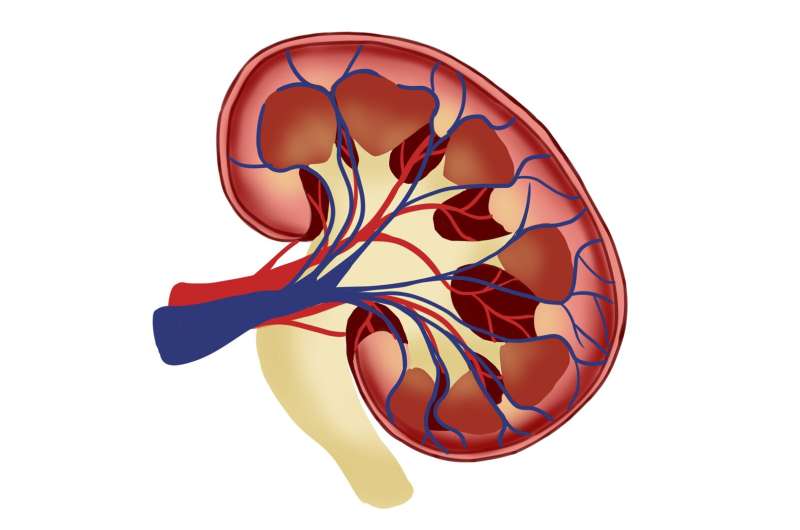
Hospital-acquired acute kidney injury (HA-AKI) is a common complication in hospitalized patients that can lead to chronic kidney disease and is associated with longer hospital stays, higher health care costs and increased mortality. Given these negative consequences, preventing HA-AKI can improve hospitalized patient outcomes. However, anticipating HA-AKI onset is difficult due to a large number of contributing factors involved.
Researchers from Mass General Brigham Digital tested a commercial machine learning tool, the Epic Risk of HA-AKI predictive model, and found it was moderately successful at predicting risk of HA-AKI in recorded patient data. The study found a lower performance than those recorded by Epic Systems Corporation’s internal validation, highlighting the importance of validating AI models before clinical implementation.
The Epic model works by assessing adult inpatient encounters for the risk of HA-AKI, marked by predefined increases in serum creatinine levels. After training the model using data from MGB hospitals, the researchers tested it on data from nearly 40,000 inpatient hospital stays for a five-month period between August 2022 and January 2023. The dataset was extensive with many points collected on patient encounters, including information such as patient demographics, comorbidities, principal diagnoses, serum creatinine levels and length of hospital stay. Two analyses were completed looking at encounter-level and prediction-level model performance.
The investigators observed that the tool was more reliable when assessing patients with lower risk of HA-AKI. Although the model could confidently identify which low-risk patients would not develop HA-AKI, it struggled to predict when higher-risk patients might develop HA-AKI. Results also varied depending on the stage of HA-AKI being evaluated —predictions were more successful for Stage 1 HA-AKI compared to more severe cases.
The authors concluded overall that implementation may result in high false-positive rates and called for further study of the tool’s clinical impact.
“We found that the Epic predictive model was better at ruling out low-risk patients than identifying high-risk patients,” said lead study author Sayon Dutta, MD, MPH, of Mass General Brigham Digital’s Clinical Informatics team, and an emergency medicine physician at Massachusetts General Hospital. “Identifying HA-AKI risk with predictive models could help support clinical decisions such as by warning providers against ordering nephrotoxic medications, but further study is needed before clinical implementation.”
The study is published in the journal NEJM AI.
More information:
Sayon Dutta et al, External Validation of a Commercial Acute Kidney Injury Predictive Model, NEJM AI (2024). DOI: 10.1056/AIoa2300099
Citation:
Commercial AI tool moderately successful at predicting hospitalization-related kidney injury (2024, February 18)
retrieved 18 February 2024
from https://medicalxpress.com/news/2024-02-commercial-ai-tool-moderately-successful.html
This document is subject to copyright. Apart from any fair dealing for the purpose of private study or research, no
part may be reproduced without the written permission. The content is provided for information purposes only.

Khamrah by Lattafa for Men - 3.4 oz EDP Spray
4% Off
Ghost Sweetheart Eau de Toilette | Pineapple, Jasmine and Sandalwood | Perfume for Women 50 ml
50% Off
Marc Jacobs Dot Eau De Parfum for Women, 100 ml
42% Off
Ted Baker W Eau de Toilette for Her, Fig Leaf, White Peony and Violet Top Notes, Pink Orchid and Raspberry Middle Notes, 75ml
£11.77 (£15.69 / 100 ml) (as of 18/09/2026 05:04 GMT +01:00 - More infoProduct prices and availability are accurate as of the date/time indicated and are subject to change. Any price and availability information displayed on [relevant Amazon Site(s), as applicable] at the time of purchase will apply to the purchase of this product.)
Ted Baker Woman Pink Eau de Toilette Spray Floral Green Feminine Fragrance, Opening Notes are Fresh Peach, Bergamot and Tangerine with Warm Musk, Vanilla and Vetiver Base, 100ml
11% Off
Vera Wang Princess Eau de Toilette - 30 ml

Choco Musk 50ml Eau De Parfum for men and women | Chocolate Musk by Jannat Aromas
17% Off
Christina Aguilera Signature Eau de Parfum (50ml) Floral, Fruity & Exotic Scent, Luxury Fragrance for Women
9% Off
Calvin Klein - Eau De Toilette CKIN2U - Calvin Klein Women, Ladies Perfume, Women's Perfume, Calvin Klein Perfume, Calvin Klein One - 150 ml
5% Off
Jimmy Choo Flash Eau de Parfum, 60 ml (Pack of 1)
3% Off
Fruit of the Loom Men's Heavy T Shirt, White, XL UK
28% Off
ATNKE LED Lighted Beanie Cap,USB Rechargeable Running Hat Ultra Bright 4 LED Waterproof Light Winter Warm Gifts for Men and Women/Pink
17% Off
Men's 1/4 Zip Pullover UK Sale Clearance, Fleece Sweatshirt Casual Jumper Long Sleeve T-shirt Top Stand Collar Sweater Plain Pullover Sports Leisure Workwear Quarter Zip Sweater Lightweight Jumpers
£5.88 (as of 12/11/2025 00:52 GMT +01:00 - More infoProduct prices and availability are accurate as of the date/time indicated and are subject to change. Any price and availability information displayed on [relevant Amazon Site(s), as applicable] at the time of purchase will apply to the purchase of this product.)
Crevice Cleaning Brush, Bathroom Tile Groove Gap Cleaning Brush,Premium Crevice Cleaning Tool Aluminum Support with 15° Angle Magic Brush, Thin Brush for Home Kitchen
19% Off
Wireless Earbuds, Bluetooth 5.3 Headphones in Ear with HiFi Stereo Deep Bass, 4 ENC Noise Cancelling Mic Wireless Earphones 40H Playtime, Bluetooth Earbuds Dual LED Display, IP7 Waterproof, USB-C
42% Off