

Airports across Asia have put urgent steps in place to stop the spread of a highly lethal virus.
Temperature screening has been set up by authorities in Singapore, Thailand and Malaysia after two cases of Nipah virus were detected in India in late December.
The Indian health ministry said in a statement on 27 January that the cases in the eastern state of West Bengal have been contained but precautions in neighbouring countries as well as Nepal and Hong Kong remain in place.
While there has never been a case reported in the UK, the country’s Health and Security Agency (UKHSA) has released information about the disease to educate Britons planning to travel to areas where it circulates.
Here’s what you need to know about Nipah virus, from how it spreads, possible symptoms and whether it can be treated.
What is Nipah virus?
Nipah virus infection is a zoonotic illness (meaning it can be spread between animals and humans) that can cause a range of illnesses, the World Health Organization (WHO) says.
The virus can also spread quickly from person to person through close contact, as well as through contaminated food.
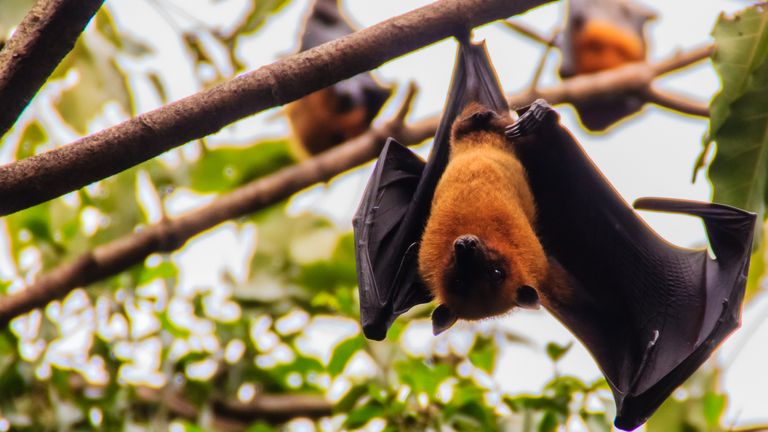
The large flying fox spreads the virus. Pic: Reuters
It is typically carried by fruit bats, particularly a breed of megabat known as the large flying fox, but other animals, including pigs, can also carry the virus.
What are the symptoms?
Symptoms in humans can range from an asymptomatic infection – when you show little to no symptoms – to deadly brain-swelling known as encephalitis.
Infected people are likely to develop symptoms that include:
• Fever
• Headaches
• Muscle pain
• Vomiting
• Sore throat
These symptoms can be followed by dizziness, drowsiness, altered consciousness, and neurological signs that indicate acute encephalitis, according to WHO.
Most people make a full recovery from the virus, but some cases of relapse have been reported.
The fatality rate is an estimated 40-75%, WHO reports, but this can vary depending on the outbreak.
Health authorities in India identified and traced 196 contacts linked to the two latest cases, with all of them testing negative for the virus and none of them displaying symptoms.
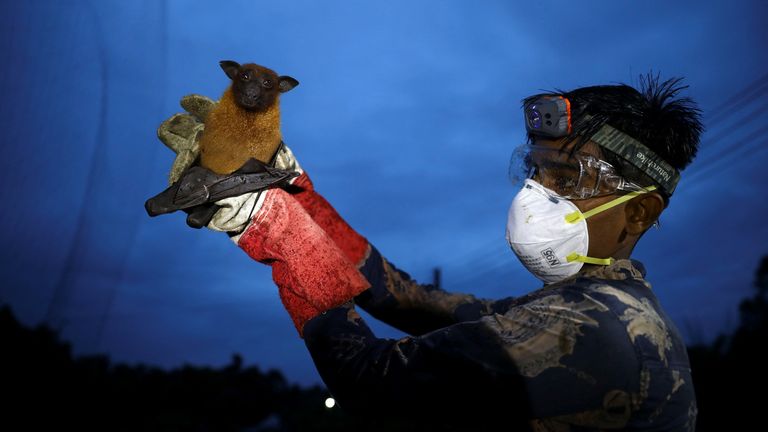
An assistant holds up a bat for research into Nipah virus in Bangladesh. Pic: Reuters
Can it be treated?
There is currently no proven treatment for the virus. Several vaccines against it are in development, but remain in the testing phase.
Treatment often involves intensive care in a hospital to help with severe respiratory or neurological conditions.
Are outbreaks common?
The first recognised outbreak was among pig farmers in Malaysia in 1999. Singapore was also affected.
India is considered among the world’s most at risk regions for Nipah outbreaks, while human infections have been reported almost every year in Bangladesh since it first appeared in 2001, according to WHO.
The current cases are the first in West Bengal in nearly two decades, local media reported. In 2007 five people died from the virus.

Malaysian soldiers react to the virus outbreak in 1999. Pic: Reuters
How are countries responding to the outbreak?
Singapore’s Communicable Diseases Agency said on 28 January that passengers on flights arriving from affected areas in India will be subject to temperature screening at its airport.
The country’s Ministry of Manpower said it is stepping up surveillance over newly arrived migrant workers from South Asia, and engaging primary care providers to increase vigilance.
Authorities in Thailand also said passengers arriving from areas with Nipah infections must complete health declarations before clearing immigration.
China’s disease control authority said that while no cases have been detected in the country, there were risks of imported cases. While Nepal said it was on “high alert” and had also implemented tightened screening for travellers.
Read more from Sky News:
What is the Doomsday clock?
UK rolls out free AI training, but will it save your job?
How to prepare if you are travelling to at-risk countries
The UKHSA says Britons travelling to areas at risk of the virus should focus on avoiding contact with bats and sick animals, as well as ensuring to wash all fruit thoroughly with clean water and peel it before eating.
Other advice to help limit potential exposure to the virus includes:
• Wearing protective clothing when handling sick animals
• Practice good hygiene techniques, particularly after caring for or visiting sick people
• Avoid close contact to anyone infected with Nipah virus
Source link

Khamrah by Lattafa for Men - 3.4 oz EDP Spray
4% Off
Ghost Sweetheart Eau de Toilette | Pineapple, Jasmine and Sandalwood | Perfume for Women 50 ml
50% Off
Marc Jacobs Dot Eau De Parfum for Women, 100 ml
42% Off
Ted Baker W Eau de Toilette for Her, Fig Leaf, White Peony and Violet Top Notes, Pink Orchid and Raspberry Middle Notes, 75ml
£11.77 (£15.69 / 100 ml) (as of 30/01/2026 01:21 GMT +00:00 - More infoProduct prices and availability are accurate as of the date/time indicated and are subject to change. Any price and availability information displayed on [relevant Amazon Site(s), as applicable] at the time of purchase will apply to the purchase of this product.)
Ted Baker Woman Pink Eau de Toilette Spray Floral Green Feminine Fragrance, Opening Notes are Fresh Peach, Bergamot and Tangerine with Warm Musk, Vanilla and Vetiver Base, 100ml
11% Off
Vera Wang Princess Eau de Toilette - 30 ml

Choco Musk 50ml Eau De Parfum for men and women | Chocolate Musk by Jannat Aromas
17% Off
Christina Aguilera Signature Eau de Parfum (50ml) Floral, Fruity & Exotic Scent, Luxury Fragrance for Women
9% Off
Calvin Klein - Eau De Toilette CKIN2U - Calvin Klein Women, Ladies Perfume, Women's Perfume, Calvin Klein Perfume, Calvin Klein One - 150 ml
5% Off
Jimmy Choo Flash Eau de Parfum, 60 ml (Pack of 1)
3% Off
Fruit of the Loom Men's Heavy T Shirt, White, XL UK
28% Off
ATNKE LED Lighted Beanie Cap,USB Rechargeable Running Hat Ultra Bright 4 LED Waterproof Light Winter Warm Gifts for Men and Women/Pink
17% Off
Men's 1/4 Zip Pullover UK Sale Clearance, Fleece Sweatshirt Casual Jumper Long Sleeve T-shirt Top Stand Collar Sweater Plain Pullover Sports Leisure Workwear Quarter Zip Sweater Lightweight Jumpers
£5.88 (as of 11/11/2025 23:52 GMT +00:00 - More infoProduct prices and availability are accurate as of the date/time indicated and are subject to change. Any price and availability information displayed on [relevant Amazon Site(s), as applicable] at the time of purchase will apply to the purchase of this product.)
Crevice Cleaning Brush, Bathroom Tile Groove Gap Cleaning Brush,Premium Crevice Cleaning Tool Aluminum Support with 15° Angle Magic Brush, Thin Brush for Home Kitchen
19% Off
Wireless Earbuds, Bluetooth 5.3 Headphones in Ear with HiFi Stereo Deep Bass, 4 ENC Noise Cancelling Mic Wireless Earphones 40H Playtime, Bluetooth Earbuds Dual LED Display, IP7 Waterproof, USB-C
42% Off


