
 [
[
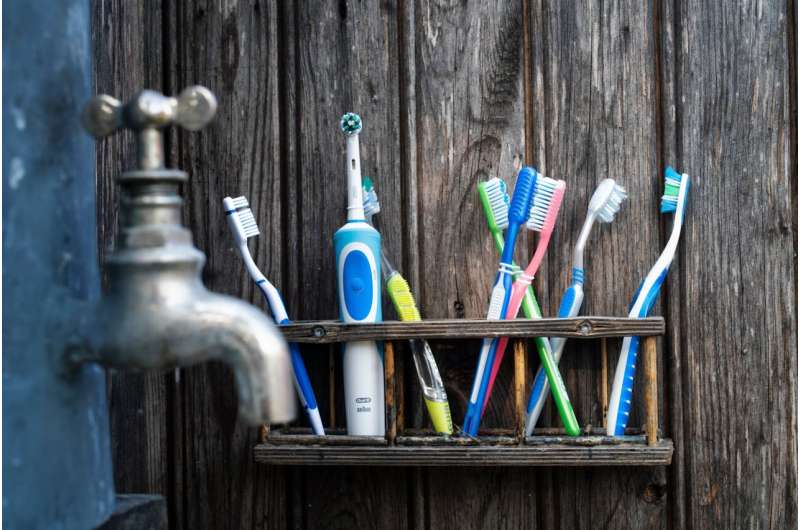
Real progress in oral health doesn’t come from expensive gadgets, but from better daily habits. That is the conclusion of dentist-periodontist Tim Thomassen in his dissertation Oral Disease Prevention, which he will defend on 12 December at the University of Amsterdam. In his research, he examines how effective different types of toothbrushes are and how much impact the actual time people spend brushing has on oral health.
Worldwide, close to 3.5 billion people suffer from oral diseases, such as cavities and gum diseases. Dental plaque often plays a major role in these problems—which is why good brushing is the standard advice. But what does ‘good’ actually mean?
Thomassen investigated various aspects of preventing tooth and gum diseases, including the effectiveness of toothbrushes, brushing duration, and oral hygiene instructions. He reviewed dozens of international clinical studies, combined them in systematic reviews, and conducted several experiments of his own.
“Expensive technology plays a much smaller role in preventing cavities and gum diseases than many people think,” Thomassen says. “Because the differences between products are often minimal in practice, it is people themselves who ultimately make the biggest difference.”
Which toothbrush should you use: Powered or manual?
An oscillating–rotating toothbrush, a high-frequency sonic toothbrush, or just a manual one? The price differences are significant, but does that also apply to how well they clean our teeth?
“For removing dental plaque, a powered toothbrush performs better than a manual one,” says Thomassen. “But the difference between the two main powered types is negligible in everyday use.”
According to Thomassen, manufacturers would be better off investing in user education and affordable, sustainable designs rather than launching yet another—and often even more expensive—model.
How long should you brush?
The global recommendation is clear: brush twice a day for two minutes to effectively remove dental plaque. Thomassen’s research confirms that two minutes of brushing removes more plaque than one minute. He then examined whether brushing for three minutes works even better. It doesn’t—the added benefit is minimal.
And how long do we actually brush?
People who use a manual toothbrush, still the majority worldwide, brush for less time: on average, just under 1.5 minutes. “We know brushing works, and fortunately the average brushing time has been increasing in recent years, but many people still don’t brush long enough,” Thomassen says.
Users of powered toothbrushes do reach the two-minute mark more often, and even exceed it, brushing for almost 2.5 minutes on average. “Built-in timers may help people brush longer,” he notes.
Better information
Finally, Thomassen analyzed the brushing advice provided by dental organizations around the world. Only one-third offer clear instructions online. “That needs to improve,” he says. “Good oral care starts with accessible, understandable, and practical information that people can apply immediately.”
He therefore advocates for practical guidelines tailored to people’s lifestyles, abilities, and budgets so that good oral care becomes achievable for everyone. “There is a clear need for a national oral-care guideline that is evidence-based and adapted to different needs and preferences. Such a guideline would help bridge the gap between research and everyday practice, supporting both patients and oral-health professionals.”
Thomassen hopes that his research can contribute to this goal. Preparations for such a guideline are already underway—the next challenge he is committed to taking on.
More information:
Tim Thomassen, 2025, “Oral Disease Prevention. Primum est dentes purgare.” Supervisors: Prof. D.E. Slot and Prof. G.A. van der Weijden.
Citation:
Brushing well is more important for a healthy mouth than high-tech tools (2025, December 4)
retrieved 4 December 2025
from https://medicalxpress.com/news/2025-12-important-healthy-mouth-high-tech.html
This document is subject to copyright. Apart from any fair dealing for the purpose of private study or research, no
part may be reproduced without the written permission. The content is provided for information purposes only.

Khamrah by Lattafa for Men - 3.4 oz EDP Spray
4% Off
Ghost Sweetheart Eau de Toilette | Pineapple, Jasmine and Sandalwood | Perfume for Women 50 ml
50% Off
Marc Jacobs Dot Eau De Parfum for Women, 100 ml
42% Off
Ted Baker W Eau de Toilette for Her, Fig Leaf, White Peony and Violet Top Notes, Pink Orchid and Raspberry Middle Notes, 75ml
£11.77 (£15.69 / 100 ml) (as of 04/12/2025 00:47 GMT +00:00 - More infoProduct prices and availability are accurate as of the date/time indicated and are subject to change. Any price and availability information displayed on [relevant Amazon Site(s), as applicable] at the time of purchase will apply to the purchase of this product.)
Ted Baker Woman Pink Eau de Toilette Spray Floral Green Feminine Fragrance, Opening Notes are Fresh Peach, Bergamot and Tangerine with Warm Musk, Vanilla and Vetiver Base, 100ml
11% Off
Vera Wang Princess Eau de Toilette - 30 ml

Choco Musk 50ml Eau De Parfum for men and women | Chocolate Musk by Jannat Aromas
17% Off
Christina Aguilera Signature Eau de Parfum (50ml) Floral, Fruity & Exotic Scent, Luxury Fragrance for Women
9% Off
Calvin Klein - Eau De Toilette CKIN2U - Calvin Klein Women, Ladies Perfume, Women's Perfume, Calvin Klein Perfume, Calvin Klein One - 150 ml
5% Off
Jimmy Choo Flash Eau de Parfum, 60 ml (Pack of 1)
3% Off
Fruit of the Loom Men's Heavy T Shirt, White, XL UK
28% Off
ATNKE LED Lighted Beanie Cap,USB Rechargeable Running Hat Ultra Bright 4 LED Waterproof Light Winter Warm Gifts for Men and Women/Pink
17% Off
Men's 1/4 Zip Pullover UK Sale Clearance, Fleece Sweatshirt Casual Jumper Long Sleeve T-shirt Top Stand Collar Sweater Plain Pullover Sports Leisure Workwear Quarter Zip Sweater Lightweight Jumpers
£5.88 (as of 11/11/2025 23:52 GMT +00:00 - More infoProduct prices and availability are accurate as of the date/time indicated and are subject to change. Any price and availability information displayed on [relevant Amazon Site(s), as applicable] at the time of purchase will apply to the purchase of this product.)
Crevice Cleaning Brush, Bathroom Tile Groove Gap Cleaning Brush,Premium Crevice Cleaning Tool Aluminum Support with 15° Angle Magic Brush, Thin Brush for Home Kitchen
19% Off
Wireless Earbuds, Bluetooth 5.3 Headphones in Ear with HiFi Stereo Deep Bass, 4 ENC Noise Cancelling Mic Wireless Earphones 40H Playtime, Bluetooth Earbuds Dual LED Display, IP7 Waterproof, USB-C
42% Off


