
 [
[
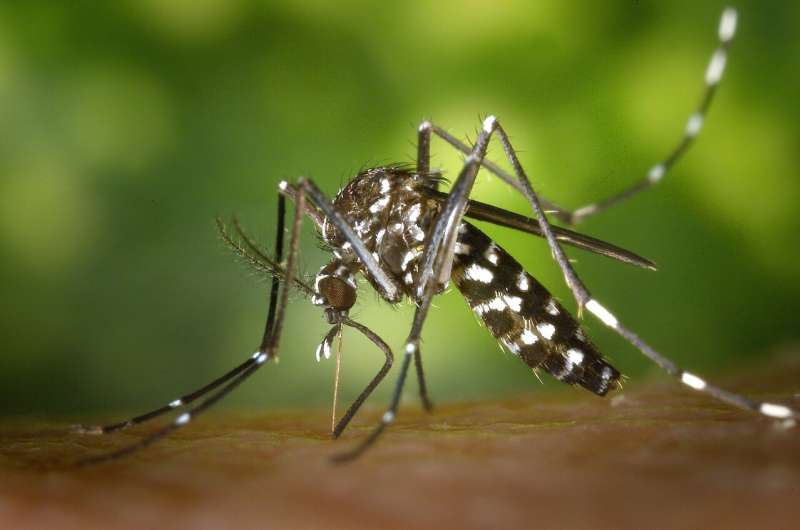
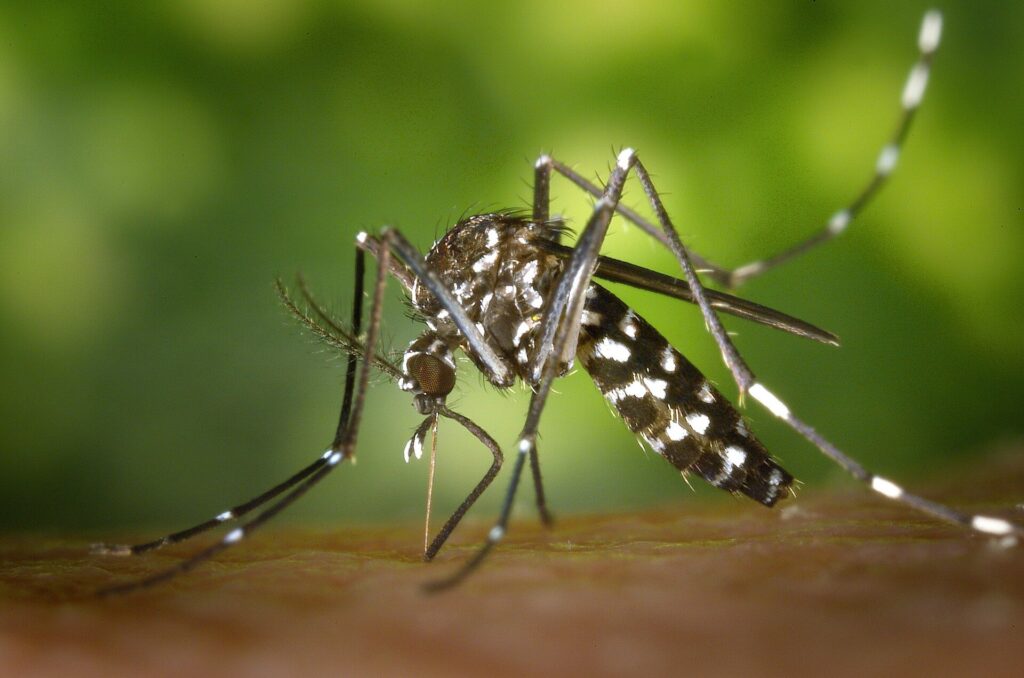
Dengue is caused by the dengue virus and transmitted by mosquito bites. Traditionally endemic in tropical regions such as Latin America and the Caribbean, as well as Southeast Asia, local transmission across several countries in mainland Europe has been documented since 2010. In particular, the mosquito species Aedes albopictus, which is now well established in southern Europe, can act as a dengue vector even though the main dengue vector is Aedes aegypti.
In their article published in Eurosurveillance, a team has analyzed data from a dengue outbreak across three municipalities in Italy between July and October 2024. The outbreak resulted in 296 probable and confirmed locally acquired infections with dengue virus serotype 2, of which 286 occurred among residents in the municipalities of Fano, Cavezzo and Ortona.
The authors aimed to characterize possible transmission patterns of this outbreak to understand how the virus can spread in specific settings and surroundings in Europe. Even though the extensive investigations could not identify the primary case that initiated local transmission, the study found that 270 of the reported cases were probably exposed near someone who was already infected. For the remaining 26 cases, no likely exposure site could be identified.
Transmission influenced by spatial proximity
Based on their data analysis, the researchers found that transmission during this dengue outbreak was largely localized: More than half of linked transmission events involved people whose probable exposure sites were located less than 100 meters (328 feet) apart. Among people for whom a likely source of infection could be identified, 18% were linked to transmission within the same household and 41% to transmission in the immediate neighborhood.
The data imply that the likelihood of transmission went down with increasing distance, as 27% of transmission events were associated with exposure sites located between 100 and 200 meters (328 and 656 feet) apart, while only 10% happened between 200 and 300 meters (656 and 984 feet) apart. Transmission beyond 400 meters (1,312 feet) was rare, accounting for less than 1% of identified links. According to the authors, these findings are consistent with the limited flight range of Aedes albopictus mosquitoes.
The study estimates that 15% of cases were acquired from an infectious household member, while more than two-thirds (68%) were linked to someone with dengue close to their likely exposure site. For the remaining 16%, the infection was likely caused by viral circulation within one of the main transmission clusters but could not be attributed to a specific case.
Impact of control measures and temperatures
The researchers describe that before the outbreak was detected, each person with dengue symptoms infected—on average—more than one other person. Following outbreak detection and the implementation of mosquito control measures within a 200-meter radius (656-foot radius) around identified exposure sites, this average fell to below one secondary infection per infected person, indicating a decline in transmission.
In addition, the data analysis showed that a drop in temperatures during the autumn of 2024 likely contributed to reducing transmission. In turn, the authors estimate that each 1° C increase in temperature was associated with an approximate 20% rise in transmission.
The authors conclude, “The high proportion of focal transmission suggests that when cases are diagnosed promptly, vector control and active case finding within a buffer of ca. 400 m around detected cases may substantially reduce onward transmission. However, when delays in case detection occur, extending mosquito control to nearby surrounding areas or at the municipality level might be advisable to cope with the undetected transmission spread.”
More information
Carla Molina Grané et al, Autochthonous transmission patterns of dengue virus serotype 2 in Italy: evidence from outbreaks in 2024, Eurosurveillance (2026). DOI: 10.2807/1560-7917.ES.2026.31.27.2600035
Key medical concepts
Provided by
European Centre for Disease Prevention and Control (ECDC)
Who’s behind this story?


Citation:
From mosquito flight range to impact of temperatures: Understanding dengue transmission in Europe (2026, July 9)
retrieved 10 July 2026
from https://medicalxpress.com/news/2026-07-mosquito-flight-range-impact-temperatures.html
This document is subject to copyright. Apart from any fair dealing for the purpose of private study or research, no
part may be reproduced without the written permission. The content is provided for information purposes only.

Khamrah by Lattafa for Men - 3.4 oz EDP Spray
4% Off
Ghost Sweetheart Eau de Toilette | Pineapple, Jasmine and Sandalwood | Perfume for Women 50 ml
50% Off
Marc Jacobs Dot Eau De Parfum for Women, 100 ml
42% Off
Ted Baker W Eau de Toilette for Her, Fig Leaf, White Peony and Violet Top Notes, Pink Orchid and Raspberry Middle Notes, 75ml
£11.77 (£15.69 / 100 ml) (as of 10/07/2026 03:55 GMT +01:00 - More infoProduct prices and availability are accurate as of the date/time indicated and are subject to change. Any price and availability information displayed on [relevant Amazon Site(s), as applicable] at the time of purchase will apply to the purchase of this product.)
Ted Baker Woman Pink Eau de Toilette Spray Floral Green Feminine Fragrance, Opening Notes are Fresh Peach, Bergamot and Tangerine with Warm Musk, Vanilla and Vetiver Base, 100ml
11% Off
Vera Wang Princess Eau de Toilette - 30 ml

Choco Musk 50ml Eau De Parfum for men and women | Chocolate Musk by Jannat Aromas
17% Off
Christina Aguilera Signature Eau de Parfum (50ml) Floral, Fruity & Exotic Scent, Luxury Fragrance for Women
9% Off
Calvin Klein - Eau De Toilette CKIN2U - Calvin Klein Women, Ladies Perfume, Women's Perfume, Calvin Klein Perfume, Calvin Klein One - 150 ml
5% Off
Jimmy Choo Flash Eau de Parfum, 60 ml (Pack of 1)
3% Off
Fruit of the Loom Men's Heavy T Shirt, White, XL UK
28% Off
ATNKE LED Lighted Beanie Cap,USB Rechargeable Running Hat Ultra Bright 4 LED Waterproof Light Winter Warm Gifts for Men and Women/Pink
17% Off
Men's 1/4 Zip Pullover UK Sale Clearance, Fleece Sweatshirt Casual Jumper Long Sleeve T-shirt Top Stand Collar Sweater Plain Pullover Sports Leisure Workwear Quarter Zip Sweater Lightweight Jumpers
£5.88 (as of 12/11/2025 00:52 GMT +01:00 - More infoProduct prices and availability are accurate as of the date/time indicated and are subject to change. Any price and availability information displayed on [relevant Amazon Site(s), as applicable] at the time of purchase will apply to the purchase of this product.)
Crevice Cleaning Brush, Bathroom Tile Groove Gap Cleaning Brush,Premium Crevice Cleaning Tool Aluminum Support with 15° Angle Magic Brush, Thin Brush for Home Kitchen
19% Off
Wireless Earbuds, Bluetooth 5.3 Headphones in Ear with HiFi Stereo Deep Bass, 4 ENC Noise Cancelling Mic Wireless Earphones 40H Playtime, Bluetooth Earbuds Dual LED Display, IP7 Waterproof, USB-C
42% Off


