 [
[

Researchers at Karolinska Institutet have demonstrated that it is possible to create early germ cells from preserved testicular tissue of young boys facing cancer therapy. The study, published in the journal Human Reproduction Open, may eventually contribute to new ways of protecting and restoring fertility after childhood cancer.
Some children undergoing intensive cancer treatments are at risk of becoming infertile because these therapies can also damage the cells that will later form sperm. In the current study, researchers investigated whether other remaining cells in the testicle can be used to recreate these sperm precursors.
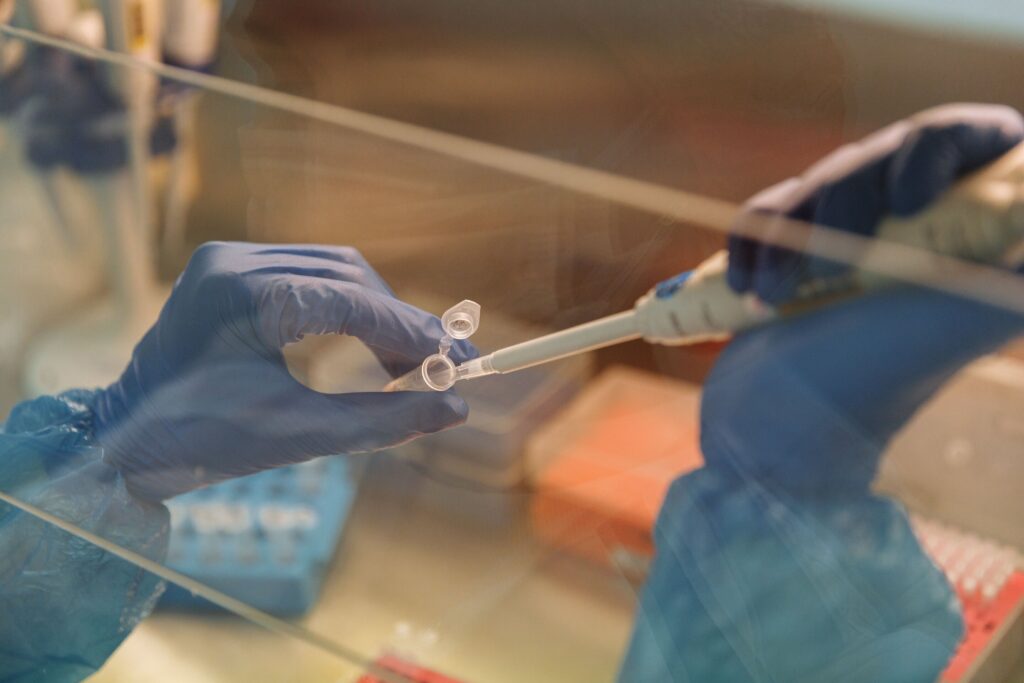
The researchers used frozen testicular tissue from two prepubertal boys who had been treated for cancer and had very few remaining germ cells. The remaining supporting cells were isolated from the tissue and reprogrammed into so-called induced pluripotent stem cells, cells that can develop into many different cell types. These were then directed to become early germ cells, known as primordial germ cells.
A crucial proof-of-concept
“Our results show that it is possible to generate induced pluripotent stem cells to produce early germ cells from frozen testicular tissue, even when these samples are severely affected by cancer treatment,” says the first author Tiago Macedo, researcher at the Department of Women’s and Children’s Health.
The researchers used a clinically compatible reprogramming protocol that facilitates future translational applications. The reprogrammed stem cells passed standard quality checks and were further directed into early germ cells using two different methods with relatively high efficiency.
This is a proof-of-concept study, which means it shows that the methods and experimental pipeline are possible, but not that they are ready for use in health care. More studies are needed to ensure the robustness of the results, to further mature the germ cells obtained here, and to comprehensively validate safety before any clinical application.
Long-term vision for regenerative medicine
“In the short term, the findings will contribute to understanding how cancer treatment affects germ cells and the regenerative potential of the preserved tissues, helping us develop protective strategies. In the long term, it could pave the way for new regenerative treatments to restore fertility in cancer survivors,” says the lead author João Pedro Alves-Lopes, researcher at the Department of Women’s and Children’s Health.
More information
Tiago Macedo et al, Human iPSCs derived from cryopreserved testicular somatic cells enable germline regeneration in childhood cancer survivors, Human Reproduction Open (2026). DOI: 10.1093/hropen/hoag054
Key medical concepts


Citation:
Preserved testicular tissue produces early germ cells after childhood cancer treatment (2026, July 2)
retrieved 2 July 2026
from https://medicalxpress.com/news/2026-07-testicular-tissue-early-germ-cells.html
This document is subject to copyright. Apart from any fair dealing for the purpose of private study or research, no
part may be reproduced without the written permission. The content is provided for information purposes only.

Khamrah by Lattafa for Men - 3.4 oz EDP Spray
4% Off
Ghost Sweetheart Eau de Toilette | Pineapple, Jasmine and Sandalwood | Perfume for Women 50 ml
50% Off
Marc Jacobs Dot Eau De Parfum for Women, 100 ml
42% Off
Ted Baker W Eau de Toilette for Her, Fig Leaf, White Peony and Violet Top Notes, Pink Orchid and Raspberry Middle Notes, 75ml
£11.77 (£15.69 / 100 ml) (as of 02/07/2026 03:53 GMT +01:00 - More infoProduct prices and availability are accurate as of the date/time indicated and are subject to change. Any price and availability information displayed on [relevant Amazon Site(s), as applicable] at the time of purchase will apply to the purchase of this product.)
Ted Baker Woman Pink Eau de Toilette Spray Floral Green Feminine Fragrance, Opening Notes are Fresh Peach, Bergamot and Tangerine with Warm Musk, Vanilla and Vetiver Base, 100ml
11% Off
Vera Wang Princess Eau de Toilette - 30 ml

Choco Musk 50ml Eau De Parfum for men and women | Chocolate Musk by Jannat Aromas
17% Off
Christina Aguilera Signature Eau de Parfum (50ml) Floral, Fruity & Exotic Scent, Luxury Fragrance for Women
9% Off
Calvin Klein - Eau De Toilette CKIN2U - Calvin Klein Women, Ladies Perfume, Women's Perfume, Calvin Klein Perfume, Calvin Klein One - 150 ml
5% Off
Jimmy Choo Flash Eau de Parfum, 60 ml (Pack of 1)
3% Off
Fruit of the Loom Men's Heavy T Shirt, White, XL UK
28% Off
ATNKE LED Lighted Beanie Cap,USB Rechargeable Running Hat Ultra Bright 4 LED Waterproof Light Winter Warm Gifts for Men and Women/Pink
17% Off
Men's 1/4 Zip Pullover UK Sale Clearance, Fleece Sweatshirt Casual Jumper Long Sleeve T-shirt Top Stand Collar Sweater Plain Pullover Sports Leisure Workwear Quarter Zip Sweater Lightweight Jumpers
£5.88 (as of 12/11/2025 00:52 GMT +01:00 - More infoProduct prices and availability are accurate as of the date/time indicated and are subject to change. Any price and availability information displayed on [relevant Amazon Site(s), as applicable] at the time of purchase will apply to the purchase of this product.)
Crevice Cleaning Brush, Bathroom Tile Groove Gap Cleaning Brush,Premium Crevice Cleaning Tool Aluminum Support with 15° Angle Magic Brush, Thin Brush for Home Kitchen
19% Off
Wireless Earbuds, Bluetooth 5.3 Headphones in Ear with HiFi Stereo Deep Bass, 4 ENC Noise Cancelling Mic Wireless Earphones 40H Playtime, Bluetooth Earbuds Dual LED Display, IP7 Waterproof, USB-C
42% Off