More travel frustration is on the way for Tube users in London next week as drivers stage another walkout across four days.
It follows similar action last month by members of the Rail, Maritime and Transport union (RMT).
Here’s everything you need to know.
When are the strikes?
The first 24-hour Tube strike begins at noon on Tuesday 19 May, and the second starts on Thursday 21 May at midday – again lasting 24 hours.
However, Transport for London (TfL) says disruption is likely to linger into the afternoon and evening after the strikes officially end.
Here’s a breakdown of how it’s expected to play out.
Tuesday 19 May and Thursday 21 May:
Morning – normal services until mid-morning
Mid morning – some disruption to journeys as services reduced ahead of strike starting
After midday – disruption to journeys on all lines continuing through the following day and Tube services that do run will finish early
Wednesday 20 May and Friday 22 May:
Morning – disruption to journeys on all lines. Tube services that do run will start later than normal
After midday: some continued disruption to journeys throughout the afternoon and evening as we return the service to normal
Evening – normal service
TfL says to use its journey planner to map out your route in advance of travel, and to check the status of lines in real time with its live page.
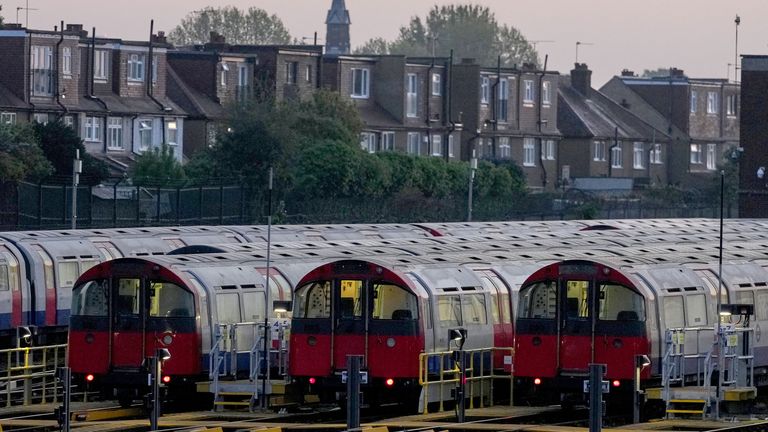
Pic: AP
Which lines are affected?
No service is expected on:
• The Piccadilly and Circle lines
• The Metropolitan line between Baker Street and Aldgate
• The Central line between White City and Liverpool Street
Other Tube lines are unaffected.
Buses, the Elizabeth line, DLR, London Overground, and tram services will also be running normally but are likely to be busier.
Are there any other strikes coming up?
Yes, strikes are planned on seven Stagecoach bus routes from Bow garage in east London on Friday 15 May from 5am until 5am the next day.
The routes are affected: 8, 25, 205, 425, N8, N25 and N205
Two further 24-hour Tube strikes are also currently scheduled on 16 and 18 June unless a deal can be reached between transport bosses and unions.
They are expected to follow the same structure, and affect the same lines, as May’s walkout.
Why are the Tube strikes happening?
Drivers have taken issue with TfL imposing a new four-day working week and the RMT union has called the plan, which would condense drivers’ weekly hours, “fake”.
It initially suspended April’s strike, saying management had agreed to negotiate, but then accused them of a U-turn and decided to go ahead.
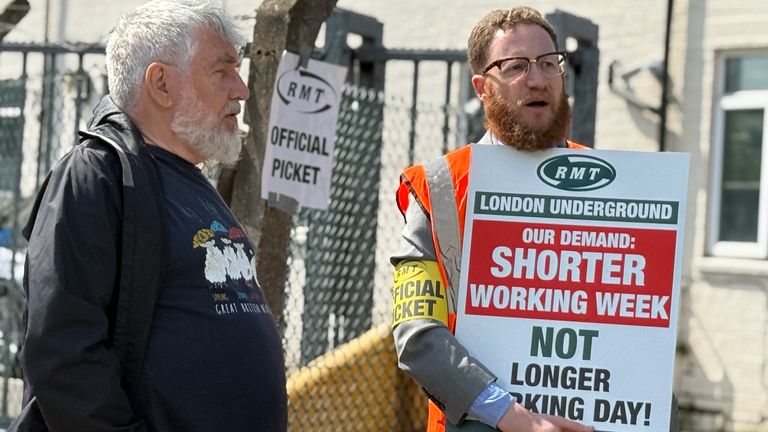
The RMT union opposes the planned changes. Pic: PA
RMT general secretary Eddie Dempsey said they had “approached negotiations with TfL in good faith” but “TfL seem unwilling to make any concessions”.
Claire Mann, TfL’s chief operating officer, defended the proposal for a four-day working week.
She said it would allow drivers an extra day off and bring the Underground “in line with the working patterns of other train operating companies”.
“The changes would be voluntary,” she added. “There would be no reduction in contractual hours and those who wish to continue a five-day working week pattern would be able to do so.”
Source link

Khamrah by Lattafa for Men - 3.4 oz EDP Spray
4% Off
Ghost Sweetheart Eau de Toilette | Pineapple, Jasmine and Sandalwood | Perfume for Women 50 ml
50% Off
Marc Jacobs Dot Eau De Parfum for Women, 100 ml
42% Off
Ted Baker W Eau de Toilette for Her, Fig Leaf, White Peony and Violet Top Notes, Pink Orchid and Raspberry Middle Notes, 75ml
£11.77 (£15.69 / 100 ml) (as of 15/05/2026 03:14 GMT +01:00 - More infoProduct prices and availability are accurate as of the date/time indicated and are subject to change. Any price and availability information displayed on [relevant Amazon Site(s), as applicable] at the time of purchase will apply to the purchase of this product.)
Ted Baker Woman Pink Eau de Toilette Spray Floral Green Feminine Fragrance, Opening Notes are Fresh Peach, Bergamot and Tangerine with Warm Musk, Vanilla and Vetiver Base, 100ml
11% Off
Vera Wang Princess Eau de Toilette - 30 ml

Choco Musk 50ml Eau De Parfum for men and women | Chocolate Musk by Jannat Aromas
17% Off
Christina Aguilera Signature Eau de Parfum (50ml) Floral, Fruity & Exotic Scent, Luxury Fragrance for Women
9% Off
Calvin Klein - Eau De Toilette CKIN2U - Calvin Klein Women, Ladies Perfume, Women's Perfume, Calvin Klein Perfume, Calvin Klein One - 150 ml
5% Off
Jimmy Choo Flash Eau de Parfum, 60 ml (Pack of 1)
3% Off
Fruit of the Loom Men's Heavy T Shirt, White, XL UK
28% Off
ATNKE LED Lighted Beanie Cap,USB Rechargeable Running Hat Ultra Bright 4 LED Waterproof Light Winter Warm Gifts for Men and Women/Pink
17% Off
Men's 1/4 Zip Pullover UK Sale Clearance, Fleece Sweatshirt Casual Jumper Long Sleeve T-shirt Top Stand Collar Sweater Plain Pullover Sports Leisure Workwear Quarter Zip Sweater Lightweight Jumpers
£5.88 (as of 12/11/2025 00:52 GMT +01:00 - More infoProduct prices and availability are accurate as of the date/time indicated and are subject to change. Any price and availability information displayed on [relevant Amazon Site(s), as applicable] at the time of purchase will apply to the purchase of this product.)
Crevice Cleaning Brush, Bathroom Tile Groove Gap Cleaning Brush,Premium Crevice Cleaning Tool Aluminum Support with 15° Angle Magic Brush, Thin Brush for Home Kitchen
19% Off
Wireless Earbuds, Bluetooth 5.3 Headphones in Ear with HiFi Stereo Deep Bass, 4 ENC Noise Cancelling Mic Wireless Earphones 40H Playtime, Bluetooth Earbuds Dual LED Display, IP7 Waterproof, USB-C
42% Off