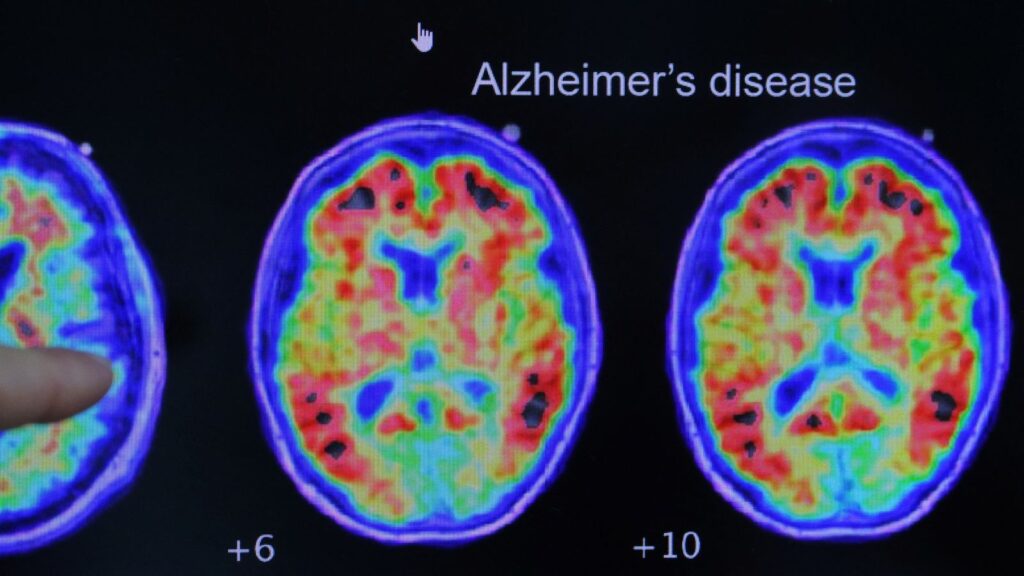
An at-home test can help predict a person’s risk of getting Alzheimer’s, according to a new study.
It involves an online brain assessment and a finger-prick blood test to look for markers linked to the disease.
Academics say it could “triage” people according to risk, who could then get more testing and treatment.
Professor Anne Corbett, from the University of Exeter Medical School, said their work built on previous research showing the effectiveness of a finger-prick test.
She said the biomarkers and brain tests together provide “a potential way to predict risk of dementia”.
Prof Corbett said it had the potential to effectively screen people without the need for a clinic visit or complex tests.
“It would ensure the people at highest risk could be prioritised for monitoring and diagnosis, unlocking the best support and treatment for those that need it most,” she added.
More than 170 people were involved in the study.
They submitted a blood test which looked for the p-tau217 and GFAP biomarkers, which are linked to Alzheimer’s and brain decline, and also did online brain tests.
“Almost a million people in the UK are estimated to have dementia, yet at the moment, only one in 1,000 people with the earliest signs of brain decline receives a specialist evaluation,” said Exeter’s Professor Clive Ballard, who was also involved in the study.
He said the combination test could offer a cost-effective and straightforward way to identify large numbers of people at risk of Alzheimer’s.
Prof Ballard also urged over-40s to join the online Protect study, which involves more than 30,000 adults taking regular tests for abilities linked to memory, attention and decision making.
Alzheimer Research UK’s research director, Dr Sheona Scales, said the test showed great potential and that “larger and more diverse” studies were now needed.
“Finger-prick blood tests could revolutionise dementia diagnosis – they offer a low-cost, scalable way to identify people who may be at higher risk of Alzheimer’s disease and who should be offered further checks,” she said.
“The results suggest the test can detect changes in a blood biomarker linked to Alzheimer’s disease and cognitive difficulties, with a high level of sensitivity.
“As an early step in the diagnostic pathway, this kind of self-administered test could give reassurance to some people, while helping others move more quickly towards follow-up tests and support.”
The study is published in the journal Nature Communications.
Source link

Khamrah by Lattafa for Men - 3.4 oz EDP Spray
4% Off
Ghost Sweetheart Eau de Toilette | Pineapple, Jasmine and Sandalwood | Perfume for Women 50 ml
50% Off
Marc Jacobs Dot Eau De Parfum for Women, 100 ml
42% Off
Ted Baker W Eau de Toilette for Her, Fig Leaf, White Peony and Violet Top Notes, Pink Orchid and Raspberry Middle Notes, 75ml
£11.77 (£15.69 / 100 ml) (as of 16/07/2026 03:58 GMT +01:00 - More infoProduct prices and availability are accurate as of the date/time indicated and are subject to change. Any price and availability information displayed on [relevant Amazon Site(s), as applicable] at the time of purchase will apply to the purchase of this product.)
Ted Baker Woman Pink Eau de Toilette Spray Floral Green Feminine Fragrance, Opening Notes are Fresh Peach, Bergamot and Tangerine with Warm Musk, Vanilla and Vetiver Base, 100ml
11% Off
Vera Wang Princess Eau de Toilette - 30 ml

Choco Musk 50ml Eau De Parfum for men and women | Chocolate Musk by Jannat Aromas
17% Off
Christina Aguilera Signature Eau de Parfum (50ml) Floral, Fruity & Exotic Scent, Luxury Fragrance for Women
9% Off
Calvin Klein - Eau De Toilette CKIN2U - Calvin Klein Women, Ladies Perfume, Women's Perfume, Calvin Klein Perfume, Calvin Klein One - 150 ml
5% Off
Jimmy Choo Flash Eau de Parfum, 60 ml (Pack of 1)
3% Off
Fruit of the Loom Men's Heavy T Shirt, White, XL UK
28% Off
ATNKE LED Lighted Beanie Cap,USB Rechargeable Running Hat Ultra Bright 4 LED Waterproof Light Winter Warm Gifts for Men and Women/Pink
17% Off
Men's 1/4 Zip Pullover UK Sale Clearance, Fleece Sweatshirt Casual Jumper Long Sleeve T-shirt Top Stand Collar Sweater Plain Pullover Sports Leisure Workwear Quarter Zip Sweater Lightweight Jumpers
£5.88 (as of 12/11/2025 00:52 GMT +01:00 - More infoProduct prices and availability are accurate as of the date/time indicated and are subject to change. Any price and availability information displayed on [relevant Amazon Site(s), as applicable] at the time of purchase will apply to the purchase of this product.)
Crevice Cleaning Brush, Bathroom Tile Groove Gap Cleaning Brush,Premium Crevice Cleaning Tool Aluminum Support with 15° Angle Magic Brush, Thin Brush for Home Kitchen
19% Off
Wireless Earbuds, Bluetooth 5.3 Headphones in Ear with HiFi Stereo Deep Bass, 4 ENC Noise Cancelling Mic Wireless Earphones 40H Playtime, Bluetooth Earbuds Dual LED Display, IP7 Waterproof, USB-C
42% Off